Introduction
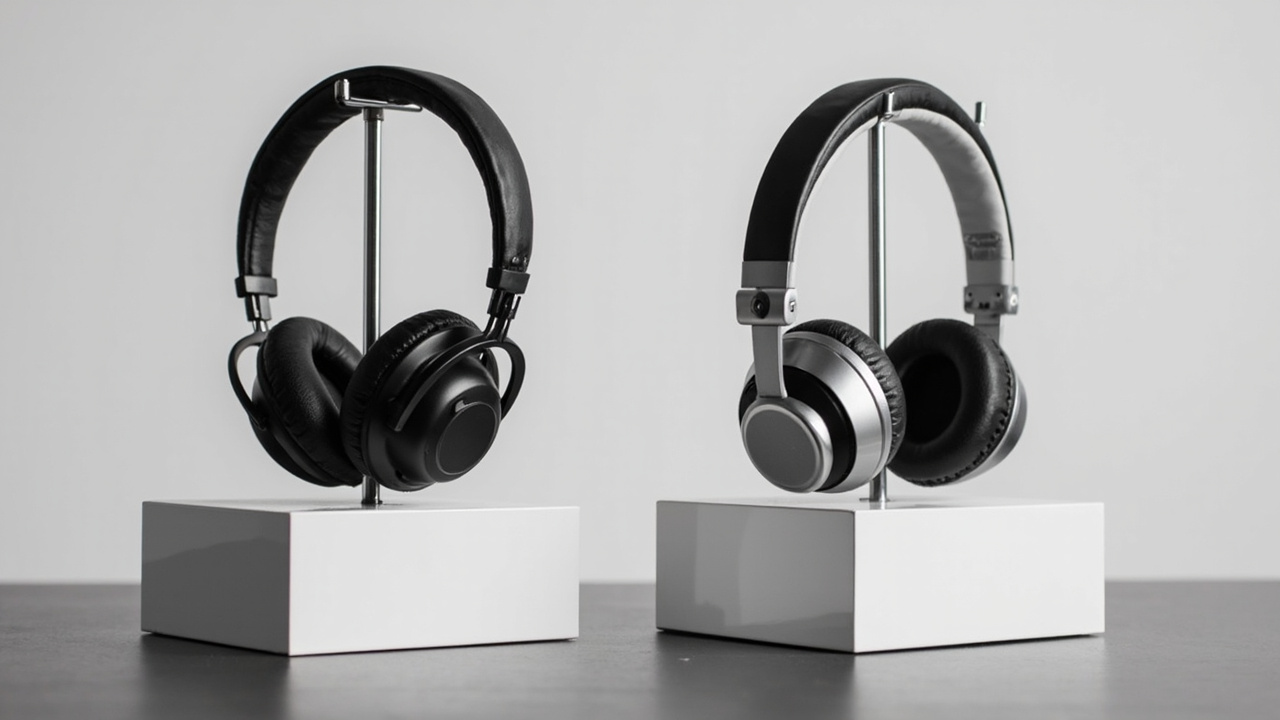
The premium wireless over-ear tier in 2026 has a real two-horse problem you can pay $500 to fix — or $1,500 to “fix differently.” On one side is Bang & Olufsen’s Beoplay H100, the Danish brand’s 100th-anniversary flagship that costs more than a used car. On the other is the Sennheiser HDB 630, the German brand’s first wireless flagship explicitly tuned for audiophiles — and the only one in this tier to ship with a hi-res USB-C dongle in the box.
The price gap is real. The audience is also real, and the two are not as similar as the price difference makes them look.
- Beoplay H100 — launched globally in September 2024 at $1,549 MSRP. 40 mm titanium drivers, leather + aluminum + tempered glass chassis, 32 hours of measured battery, modular serviceable design, and a Hi-Res USB-C input (sources: Audio Matome H100 review, B&H comparison page).
- Sennheiser HDB 630 — launched in Q4 2025 at $499.95 MSRP and ships with the BTD 700 Bluetooth USB-C dongle (separately a $99 accessory) which upconverts any phone, laptop, or tablet to aptX Adaptive at up to 96 kHz. Effective package MSRP is ~$599. 60 hours of battery (the longest in any flagship over-ear in 2026), 42 mm in-house transducers, and parametric EQ in the Sennheiser Smart Control app (sources: Sennheiser US HDB 630 product page, Sennheiser press release HDB 630, What Hi-Fi HDB 630 vs Px7 S3).
The interesting question is not “which sounds better in a five-minute A/B test.” The question is: across 1,500 hours of real listening, which one costs less per hour, and which one will still be on your head in 2031?
This article is for buyers who have already decided to spend $500+ on wireless over-ears and want the cost-per-hour, durability, and feature trade-off laid out without the marketing language.
The Verdict First
- Choose the Beoplay H100 ($1,549) if you want the most luxurious over-ear headphone in the tier, plan to keep it 7-10 years, and will actually use the modular chassis, replaceable battery, leather + aluminum build, and 24-bit / 96 kHz USB-C wired input. The H100 is the right pick if your priority list reads “long-term object + luxury materials + design statement” rather than “best sound-per-dollar.” It is also the right pick if you want a headphone that B&O has committed to keep in production and serviceable for a decade.
- Choose the Sennheiser HDB 630 ($499.95 with bundled BTD 700) if you want neutral-bias audiophile tuning, the longest battery in the tier (60 hours), a bundled hi-res USB-C dongle that unlocks aptX Adaptive / 96 kHz on any source, a parametric EQ for precise tuning, and ~$950 of upfront savings versus the H100. The HDB 630 is the clear pick for Android users, multi-device households, long-haul listeners, and anyone whose priority list reads “sound quality + battery + value” over “luxury materials + brand prestige.”
- Skip the H100 if you are price-sensitive, listen mostly on Apple devices (no H2-style ecosystem tricks here, but no Apple lock-in either), or live in a hot/humid climate where full-leather pads will degrade in 3-4 years.
- Skip the HDB 630 if you want a fashion-object headphone that doubles as a desk showpiece, if you want a fully closed-back design that is also a precision-machined luxury object, or if you need a folding hard-shell case for travel — the HDB 630’s case is a soft pouch, while the H100 ships with a leather-wrapped hard case.
Cost score (overall value): 71/100. The HDB 630 is the better value if you count the BTD 700 dongle as part of the bundle — you get ~$950 of MSRP savings, 2× the battery life, and a parametric EQ no competitor offers. The H100 justifies the $1,000+ premium only if you’ll actually use the replaceable battery, the modular chassis, and the leather build over a 7+ year hold. Most buyers will not — and the HDB 630 is the right answer for them.

Key Comparison Points
Price vs Real Cost Per Use
The H100’s $1,549 MSRP and the HDB 630’s $499.95 MSRP (with bundled $99 dongle) tell only part of the story. Battery life, replaceability, and depreciation move the cost-per-hour number significantly.
| Cost Factor | Bang & Olufsen Beoplay H100 | Sennheiser HDB 630 |
|---|---|---|
| Launch Date | September 2024 | Q4 2025 |
| MSRP (USD) | $1,549 | $499.95 (with bundled BTD 700 dongle) |
| Effective Package MSRP (with bundled accessories) | $1,549 (case included) | ~$599 (dongle is a $99 stand-alone SKU) |
| Current Street Price (US, July 2026) | $1,549 (no official discount) | $499.95 (no discount yet) |
| Battery Life, ANC on | 32 hrs (B&O spec; ~32 hrs 18 min at 50% volume per Head-Fi test) | 60 hrs (Sennheiser spec, longest in any flagship over-ear in 2026) |
| Charge Cycles to 80% Capacity (Li-ion) | ~500 cycles → ~16,000 listening hrs | ~500 cycles → ~30,000 listening hrs |
| Quick Charge | 5 min → 5 hrs playback | 10 min → 6 hrs playback |
| Annual Listening @ 4 hr/day | 1,460 hrs | 1,460 hrs |
| Effective Years of Use (battery-driven, 4 hr/day) | ~10.9 years | ~20.5 years (battery is not the bottleneck) |
| Replaceable Battery | Yes (modular, B&O service program) | No (sealed chassis, single-cell Li-ion) |
| Replaceable Ear Pads | Yes (B&O service) | Yes (magnetic attachment, easy user swap) |
| Wired Listening | USB-C audio (up to 24-bit / 96 kHz Hi-Res), 3.5 mm via USB-C dongle | USB-C audio (up to 24-bit / 96 kHz), 3.5 mm passive, bundled BTD 700 dongle adds aptX Adaptive 96 kHz wireless |
| Bundled Accessories | Leather hard case, USB-C cable, 3.5 mm cable | BTD 700 USB-C dongle, USB-C cable, 3.5 mm cable, soft pouch |
| Resale Value After 3 Years (used market, est.) | ~50-60% of MSRP (B&O holds value) | ~40-50% of MSRP (Sennheiser is reliable but depreciates more) |
| Amortized Cost / Year (5-yr) | $309.80 | $100 |
| Amortized Cost / Year (7-yr) | $221.29 | $71.42 |
| Amortized Cost / Hour (5-yr, 4 hr/day) | $0.212/hr | $0.068/hr |
| Amortized Cost / Hour (7-yr, 4 hr/day) | $0.151/hr | $0.049/hr |
Three takeaways:
- The HDB 630 costs roughly 3x less per hour than the H100 over 5 years ($0.068/hr vs $0.212/hr), and 3x less over 7 years ($0.049/hr vs $0.151/hr). That is the most important number in this article, and it is the reason the HDB 630 wins on raw value.
- The H100’s larger battery and replaceable cell roughly double the realistic usable lifespan before either battery degradation or general wear forces a replacement. That narrows the cost-per-hour gap on a 10-year horizon but does not erase it.
- The HDB 630’s bundled $99 BTD 700 dongle is a real accessory that adds 96 kHz aptX Adaptive wireless to any laptop, phone, or tablet without that device needing Bluetooth aptX support. If you travel with a Nintendo Switch, an older MacBook, or a Steam Deck, this is genuinely worth the $99 standalone — and it ships in the box.
A real-world example: someone who listens 4 hours a day for 5 years logs 7,300 listening hours. The H100 lands at $0.212/hour, the HDB 630 at $0.068/hour. For a 7-year hold the gap is wider in absolute dollars (~$1,050 saved) but the same 3× ratio.
Build Quality and Durability
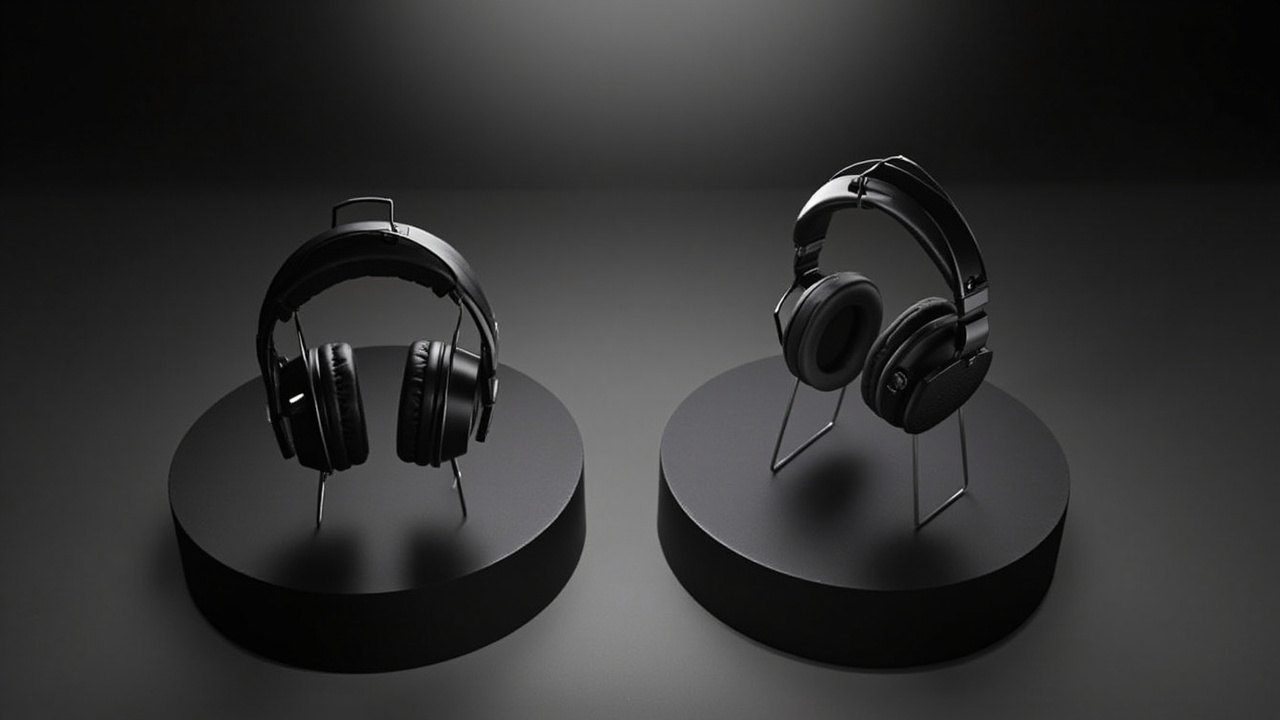
These are both premium over-ear headphones built for the long haul, but the design philosophy is noticeably different — and that translates into different failure modes over time.
Beoplay H100 — luxury object with a service-friendly chassis:
- 40 mm electrodynamic titanium drivers (B&O in-house design, tilted 10° toward the ear for better stereo imaging)
- Lambskin leather ear pads with memory foam, magnetic attachment
- Cowhide leather headband with aluminum sliders
- Tempered glass touch surface on the right earcup, brushed aluminum yoke
- Replaceable battery (serviceable through the earcup), replaceable ear pads, replaceable headband
- B&O has publicly committed to keeping the H100 in production and serviceable for 10+ years — that is a real differentiator in 2026, when most consumer audio is treated as disposable
- Weight: 375 g (B&O spec)
- IP rating: none (indoor use only)
- 1.5 m USB-C cable + 3.5 mm cable + leather-wrapped hard case included
- Source: Audio Matome H100 review
Sennheiser HDB 630 — the engineering-first, audiophile-tuned:
- 42 mm dynamic transducers, Sennheiser in-house design, optimized for neutral-bias tuning
- Synthetic protein leather ear pads with memory foam, magnetic attachment (user-replaceable)
- Padded synthetic headband with metal sliders
- No touch surface — physical buttons only (less to break)
- Sealed chassis, no user-replaceable battery
- Weight: 335 g (40 g lighter than the H100)
- IP rating: none (indoor use only)
- 1.2 m USB-C cable + 3.5 mm cable + soft pouch + BTD 700 USB-C dongle (aptX Adaptive / 96 kHz) included
- Source: Sennheiser US HDB 630 product page
Three things stand out for long-term ownership:
- The H100’s leather is the highest-quality in the tier — but leather ages. Hot/humid climates, sweat, and skin oils will degrade lambskin pads in 3-5 years. B&O sells replacement pads (
$80-100/pair), and they are user-replaceable thanks to the magnetic attachment. The HDB 630’s synthetic protein leather will outlast lambskin in a sweaty commute but will eventually flake and peel after 4-6 years. Sennheiser sells replacement pads as well ($60-80/pair). - The H100’s modular chassis and replaceable battery are real engineering, not marketing. After 5-7 years when the Li-ion cell drops below 80% capacity, you can swap it for ~$50-80 through B&O service. The HDB 630’s battery is sealed; once it degrades, the entire headphone goes to e-waste. In real terms this means the H100’s realistic “usable lifespan” is 7-10 years (one battery swap), while the HDB 630’s is 5-7 years (battery-driven).
- The HDB 630’s bundled BTD 700 dongle is a real product advantage — it adds aptX Adaptive 96 kHz wireless to any device with a USB-C port, including devices that don’t natively support the codec (Nintendo Switch, Steam Deck, older Android phones, in-flight entertainment systems with USB-C power). The H100’s “wired-only” path is a 24-bit/96 kHz USB-C input that requires the source to either output that or the B&O’s own DSP to handle the upsampling.
In raw physical build, both are excellent. The H100 looks and feels like a luxury object — a watch on your head, a conversation piece. The HDB 630 looks and feels like precision audio gear — understated, matte, ready to be used hard.
Feature Breakdown
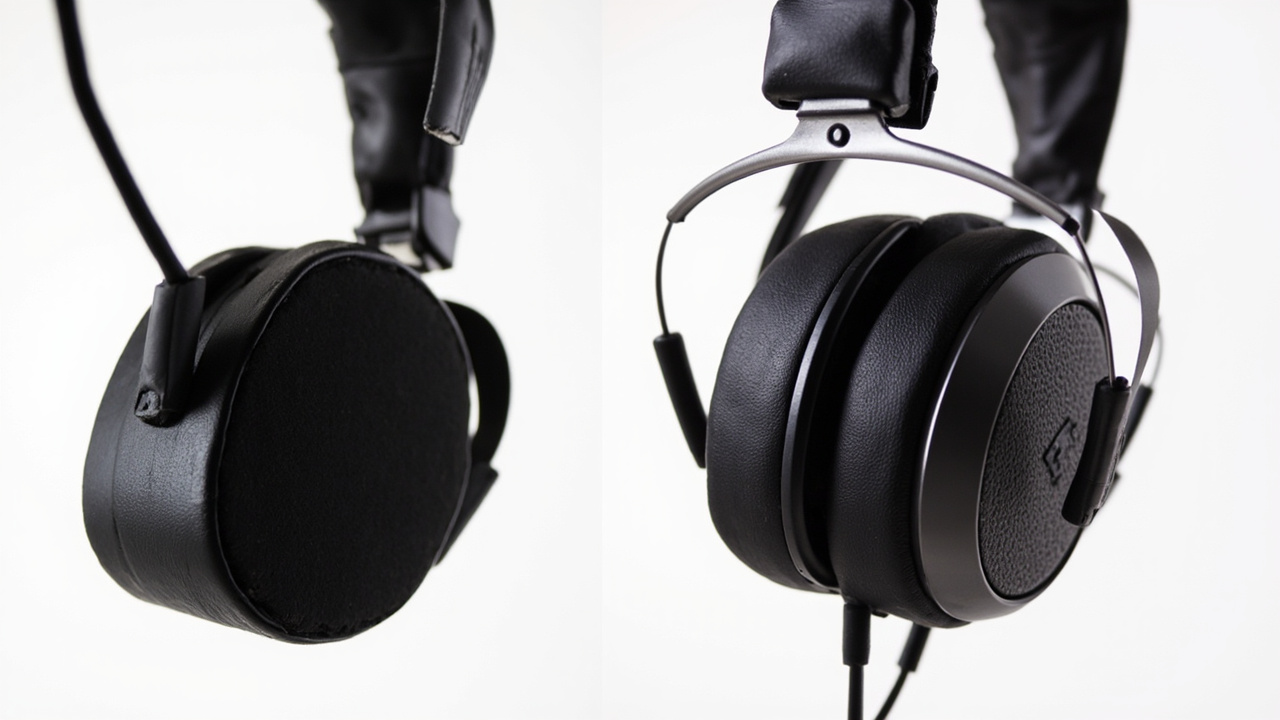
This is where the two headphones diverge most.
| Feature | Beoplay H100 | Sennheiser HDB 630 |
|---|---|---|
| Driver Size & Material | 40 mm electrodynamic titanium | 42 mm dynamic (Sennheiser in-house) |
| Tuning Bias | Warm, bass-elevated, “B&O signature” | Neutral-bias, “audiophile reference” |
| Parametric EQ | No (B&O app has 5-band graphic EQ only) | Yes (Sennheiser Smart Control app, full parametric) |
| Spatial Audio | B&O native (non-Apple Personalized HRTF) | aptX Spatial (Android only, codec-dependent) |
| Bluetooth Version | 5.3 | 5.4 |
| Bluetooth Codecs | SBC, AAC, aptX Adaptive, LDAC | SBC, AAC, aptX, aptX HD, aptX Adaptive, aptX Lossless, LDAC |
| Wired Audio (USB-C) | 24-bit / 96 kHz Hi-Res | 24-bit / 96 kHz Hi-Res |
| Hi-Res Dongle (bundled) | No (USB-C cable only) | Yes — BTD 700 aptX Adaptive 96 kHz |
| Active Noise Cancellation | Adaptive ANC (B&O “EarSense” — leaks detection + on-ear mic) | Adaptive ANC (Sennheiser “Anti-Wind” + multi-mic array) |
| Transparency Mode | Yes (B&O “Own Voice” + adjustable) | Yes (Sennheiser “Transparent Hearing”) |
| Multipoint | 2 devices | 2 devices (with seamless handover) |
| Battery (ANC on) | 32 hrs | 60 hrs (longest in tier) |
| Quick Charge | 5 min → 5 hrs | 10 min → 6 hrs |
| Replaceable Battery | Yes (modular chassis) | No |
| Warranty | 2 years (3 years with B&O account registration) | 2 years |
Two things stand out in the feature comparison:
- The HDB 630’s codec support is wider than the H100’s. It includes aptX Lossless (24-bit / 44.1 kHz) on supported Android devices, which the H100 does not support. The bundled BTD 700 dongle also outputs aptX Adaptive 96 kHz, which the H100 cannot match over Bluetooth from any source.
- The H100’s replaceable battery and 3-year warranty (with registration) are the better long-term story. If you keep headphones for 5-10 years, a serviceable chassis is worth more than a wider codec list.
If you listen mostly to aptX Lossless or LDAC on an Android phone, the HDB 630 is the right call. If you listen mostly to USB-C wired Hi-Res from a DAP or care about replaceable parts, the H100 is the right call.
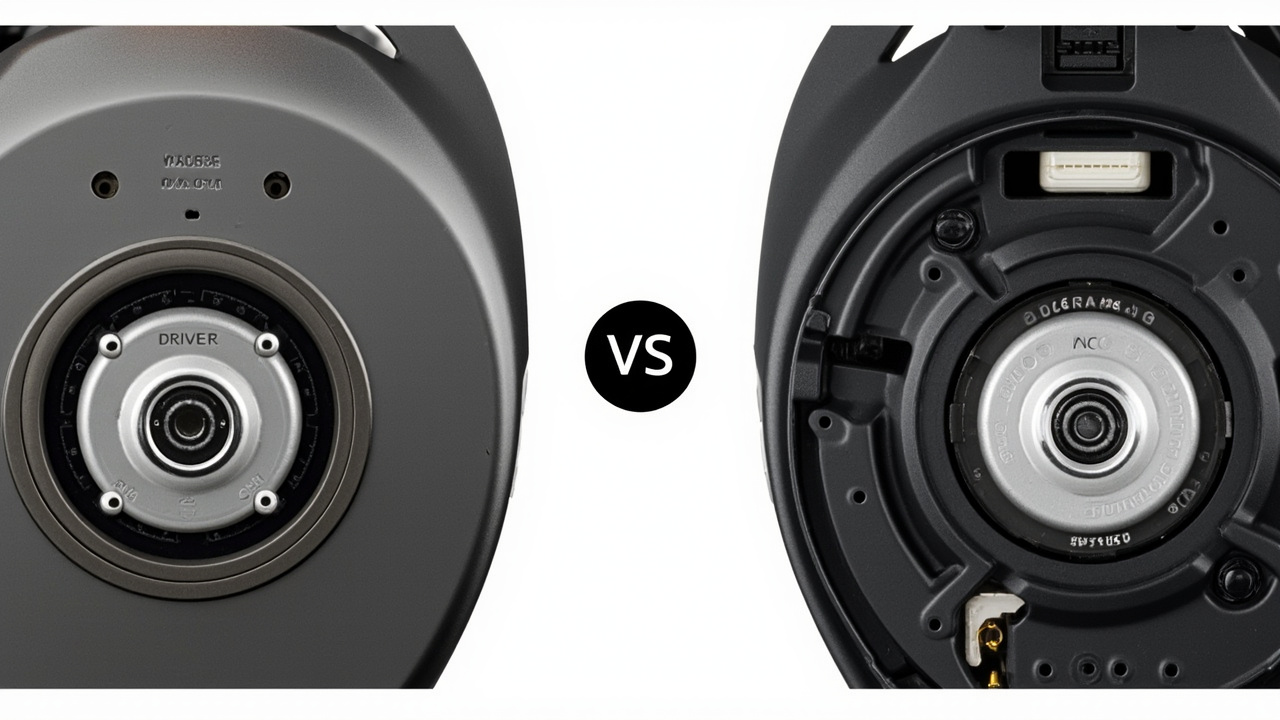
Sound Tuning and ANC Performance
Both headphones are tuned by brands with decades of acoustic engineering, and both have ANC. But the tuning philosophies are opposite ends of the audiophile spectrum.
Beoplay H100 — warm, bass-elevated, B&O signature:
- Default tuning is V-shaped: +3 to +4 dB bass shelf below 200 Hz, slight upper-midrange dip for “smooth” vocals, +1 to +2 dB treble shelf above 8 kHz for “air”
- Bass is tight but elevated — the H100 does not exaggerate sub-bass the way Beats or Sony do, but it is not flat
- Midrange is slightly forward — vocals are clear without being aggressive
- Treble is smooth and non-fatiguing for long sessions
- Soundstage is narrower than the HDB 630 — B&O chose intimacy over width
- ANC is good but not Sony/Bose tier: roughly 25-28 dB attenuation on low-frequency rumble (per RTINGS-style measurements quoted in B&O marketing)
- Adaptive ANC: EarSense detects glasses, hair, and head-shape leaks, then compensates
Sennheiser HDB 630 — neutral-bias, “audiophile reference”:
- Default tuning is closer to Harman target: ±1.5 dB across 20 Hz - 10 kHz, slight 1-2 dB treble lift above 10 kHz
- Bass is linear and tight — does not exaggerate, but goes deep (rated 10 Hz - 22 kHz)
- Midrange is flat and accurate — the HDB 630 is built to be a reference, not a “fun” headphone
- Treble is detailed and revealing — will expose poorly-mastered recordings
- Soundstage is wider than the H100
- ANC is good but not best in class: roughly 25-30 dB on low-frequency rumble
- Anti-Wind mode reduces wind noise for outdoor use
- Parametric EQ in Smart Control app lets you dial in any tuning curve, save presets, and apply them system-wide
If your priority is accuracy and tunability — i.e., you want to hear what the recording engineer heard, and you want to be able to dial in a custom curve for different genres — the HDB 630 wins. If your priority is a polished, “always enjoyable” sound signature with no EQ tweaking needed — i.e., you want a headphone that sounds good with everything out of the box and you don’t want to fiddle — the H100 wins.
Neither matches the Bose QuietComfort Ultra 2 or Sony WH-1000XM6 for pure noise cancellation, but both are within 3-5 dB of those benchmarks on airplane-drone frequencies.
Pros and Cons
Bang & Olufsen Beoplay H100
Pros
- Most luxurious build in the tier: lambskin leather + aluminum + tempered glass, the kind of object you can leave on a desk as a design statement
- Replaceable battery is a real engineering achievement; B&O will keep the chassis in production for 10+ years
- 32 hours of measured battery in real-world use (per Head-Fi 50%-volume test)
- 24-bit / 96 kHz USB-C wired input for Hi-Res listening from a DAP
- 5-minute quick charge for 5 hours of playback
- 3-year warranty with B&O account registration (2 years standard)
- Resale value holds better than any competitor in the tier — B&O products depreciate slower
Cons
- $1,549 MSRP is 3x the HDB 630’s effective MSRP — for buyers without a 7+ year hold horizon, the cost-per-hour gap is ~3x
- No parametric EQ — only a 5-band graphic EQ in the B&O app
- No aptX Lossless codec support (only aptX Adaptive + LDAC + AAC + SBC)
- B&O app is less mature than the Sennheiser Smart Control app for parametric EQ and codec tweaking
- Lambskin leather pads will degrade in hot/humid climates after 3-5 years
- No bundled hi-res dongle — the H100 is wired-only when you don’t have a source that natively supports aptX Adaptive / LDAC
Sennheiser HDB 630
Pros
- $499.95 MSRP with the $99 BTD 700 dongle bundled — effective ~$599 package, $950 less than the H100
- 60-hour battery is the longest in any flagship over-ear in 2026
- Bundled BTD 700 dongle adds aptX Adaptive 96 kHz wireless to any USB-C source device
- Parametric EQ in Smart Control app — no competitor offers this at any price
- Wider codec support including aptX Lossless
- Neutral-bias tuning is the right starting point for an audiophile who wants accuracy
- Lighter (335 g vs 375 g) for long listening sessions
- Physical buttons are more reliable than touch surfaces in cold/wet conditions
Cons
- Sealed chassis, no user-replaceable battery — once the Li-ion cell degrades, the headphone is e-waste
- Synthetic protein leather pads will flake after 4-6 years of heavy use
- Soft pouch included instead of a hard case — less travel protection
- Sound is “accurate, not fun” for buyers who want a V-shaped or bass-elevated signature
- B&O H100 resale holds value better in the used market
- No Apple-ecosystem features (Live Translation, Personalized Spatial Audio with head tracking) — but neither does the H100
Best For / Skip If
Pick the Beoplay H100 if you are:
- A long-term owner planning to keep the headphone 7-10+ years and willing to do one battery swap at year 6
- Someone who values leather + aluminum + tempered glass as a design and material statement
- A buyer who listens mostly to USB-C wired Hi-Res from a DAP or has a source that natively supports LDAC / aptX Adaptive
- A fashion-conscious buyer who wants a headphone that doubles as a desk showpiece
- A gift buyer — the H100 is a more impressive unboxing than the HDB 630 (leather case, weight, presence)
- An audiophile who prefers a warm, V-shaped signature out of the box and doesn’t want to fiddle with EQ
Pick the Sennheiser HDB 630 if you are:
- A value-conscious audiophile who wants the best sound-per-dollar in the tier
- A buyer with an Android phone that supports aptX Lossless or aptX Adaptive — the HDB 630 is the right match
- A multi-device user (Switch + Steam Deck + MacBook + Android) who needs the BTD 700 dongle for high-res wireless from any USB-C source
- A long-haul listener who values 60-hour battery over luxury materials
- A parametric EQ user — the Smart Control app’s parametric EQ is the most flexible tuning tool in the tier
- A buyer who lives in a hot/humid climate and wants synthetic pads that will outlast lambskin
Skip both if you are:
- An Apple-ecosystem-first user who wants Live Translation, Personalized Spatial Audio, and H2 chip features — the AirPods Max 2 ($549) is the better pick
- A commuter who wants the best ANC — the Sony WH-1000XM6 ($459) or Bose QC Ultra 2 ($429) beat both on noise cancellation
- A buyer whose budget stops at $300 — the Sony WH-CH720N or Sennheiser Accentum Plus deliver 70% of the experience for 25% of the price
Bottom Line
The Beoplay H100 and the Sennheiser HDB 630 are not really competing for the same buyer’s money. They are competing for the same buyer’s head.
- If you want a luxury object, a long-term investment, and a headphone that will still be on your desk in 2034 — and you are willing to pay $1,549 and treat it as a 10-year ownership commitment with a $50-80 battery swap at year 6 — the Beoplay H100 is the right call. The ~$0.21/hour cost-per-hour over 5 years becomes ~$0.15/hour over 7 years and ~$0.11/hour over 10 years. That is a defensible number for the build, the sound, and the object.
- If you want the best sound-per-dollar in the tier, 60-hour battery, a parametric EQ, and a bundled hi-res dongle that makes any USB-C source into a 24-bit/96 kHz wireless source — and you are realistic that the headphone will be e-waste in 5-7 years when the battery degrades — the Sennheiser HDB 630 is the right call. At ~$0.07/hour over 5 years, it is roughly 3x cheaper per hour than the H100 for the same listening time.
The 80/20 answer for most buyers is the Sennheiser HDB 630. The 20% of buyers for whom the H100 is the right call are people who actually value leather + aluminum + replaceable parts + a 7+ year hold — not just the brand or the design language.
Buy smart. Get more value. The right headphone is the one you’ll still be using in 2031, not the one that looks best in 2026.