Introduction
In the creator-camera market above USD 500 in 2026, two philosophies are battling for the same pocket. On one side, the DJI Osmo Pocket 4 — a 1-inch CMOS, 4K/240fps gimbal camera with 10-bit D-Log, 107 GB of onboard storage, and a brand-new modular accessory system. DJI launched it globally in June 2026 at ~$799 for the Standard Combo and ~$999 for the Creator Combo. On the other side, the Insta360 X5 — an 8K 30 fps 360° action camera with replaceable lenses, a removable battery, IP68 waterproofing to 15 m, and a heavy AI-editing app. Insta360 launched it in April 2025 at $519 (Standard) or $649 (Creator Kit) and it is still the brand’s flagship.
Both cameras claim to be “the only vlogging camera you need.” They are not competing on the same spec sheet. The Osmo Pocket 4 is a single-lens gimbal camera: you frame in-camera, the 3-axis gimbal does the stabilization, and the 1-inch sensor does the heavy lifting in low light. The Insta360 X5 is a dual-lens 360° camera: you capture everything around you, then reframe in post (or in the Insta360 app’s “Shot Lab”). The X5’s value comes from never missing a shot; the Pocket 4’s value comes from capturing the shot you intended, beautifully, the first time.
The savings question is real. The wrong camera here costs you $140-$280 over 5 years in accessory ecosystem lock-in, battery replacements, and the in-app editing time tax. Pocket 4 owners pay a $280 premium upfront and gain the DJI Mimo/ActiveTrack ecosystem plus D-Log grading flexibility. X5 owners save $280 upfront, get AI reframing that cuts editing time to minutes, and accept a smaller sensor, a fixed dual-lens body, and dependency on Insta360’s subscription-free (but app-locked) workflow.
The Verdict First
- Pick the DJI Osmo Pocket 4 (~$799 Standard, ~$999 Creator Combo) if: you shoot mostly single-subject, locked-frame content (talking-head vlogs, travel diaries, restaurant reviews, real-estate walkthroughs), you care about 1-inch sensor low-light quality and the cleanest 4K image in the category, you already own DJI microphones or DJI drone batteries and want ecosystem continuity, or you grade in DaVinci Resolve and want true 10-bit D-Log with 14 stops of dynamic range.
- Pick the Insta360 X5 (~$519 Standard, $649 Creator Kit) if: you shoot active, multi-subject, “never miss the shot” content (action sports, travel where anything could happen, group vlogs, kids and pets, real-estate virtual tours), you want 8K reframing flexibility plus a waterproof, replaceable-lens body, you prefer AI-driven editing in the Insta360 app instead of NLE post-production, or you need a removable battery for all-day shoots.
Cost score: 68/100. The Pocket 4 wins on image quality and ecosystem. The X5 wins on workflow flexibility, durability, and total cost of ownership. The 5-year cost math favors the X5 by $140-$280, but only if you actually use the AI reframing and replaceable-lens system. If you shoot like a traditional vlogger and never reframe, the X5’s flexibility is wasted money.
Key Comparison Points
Price vs Real Cost Per Use
| Spec / Cost Line | DJI Osmo Pocket 4 | Insta360 X5 |
|---|---|---|
| MSRP (US-equivalent, June 2026) | ~$799 Standard Combo / ~$999 Creator Combo | $519 Standard / $649 Creator Kit |
| Sensor | 1-inch CMOS | Dual 1/1.28-inch CMOS |
| Max video resolution | 4K (3840×2160) up to 240 fps slow-mo | 8K (7680×4320) 360° at 30 fps; 5.2K 60 fps; 4K 100 fps slow-mo |
| Lens | Fixed 20 mm equiv., f/2.0 | Dual fisheye, replaceable lenses (~$29/pair) |
| Stabilization | 3-axis mechanical gimbal (±0.005°) | 6-axis FlowState electronic stabilization |
| Storage | 107 GB internal + microSD up to 1 TB | microSD only (no internal storage) |
| Battery | 1,545 mAh built-in (non-removable) | 2,400 mAh removable (~135 min 4K) |
| Battery replaceable | No (factory service only) | Yes (~$49 spare) |
| Waterproof | No (gimbal needs protection) | IP68 to 15 m (49 ft) |
| Weight | 190.5 g | 200 g |
| Audio | 3-mic array with audio zoom + spatial audio | 4-mic array with wind reduction |
| Display | 2.0-inch rotatable touchscreen (1000 nits) | 2.5-inch fixed touchscreen |
| Connectivity | Wi-Fi 6, Bluetooth 5.4, USB-C, UVC/UVA webcam | Wi-Fi, Bluetooth, USB-C, webcam mode |
| Max bitrate | 180 Mbps | ~200 Mbps |
| Warranty (US/global) | 1 year (DJI Care Refresh available) | 1 year |
The 5-year cost math is where the X5’s lower sticker starts to matter for the long term.
- Pocket 4 consumables: 1 microSD card every 2-3 years (
$30 for 256 GB V30), 1 factory battery service around year 3 if endurance drops ($79-$129 via DJI Care), DJI Mimo app free but DJI Mic 2 / DJI Mic Mini add ~$99-$249 if you expand. ~$180 over 5 years in direct add-ons. - X5 consumables: 1 spare battery at purchase (
$49), 1 set of replacement lenses every 12-18 months if you shoot in risky environments ($29), 1 microSD every 2-3 years (~$30), optional Insta360 AI editing features are free. ~$190 over 5 years in direct add-ons. - Hidden Pocket 4 cost: non-replaceable battery. After 500-800 charge cycles (typical 2-3 years of daily vlogging), built-in lithium cells often drop to 70-80% capacity. DJI offers factory replacement but charges $79-$129 plus shipping and 1-2 weeks of downtime. X5 owners swap a $49 battery in 5 seconds and keep shooting.
- Hidden X5 cost: app-locked workflow. Reframing in Insta360 Studio (desktop) or the Insta360 app works smoothly, but exports to standard flat video require a render step. Pocket 4 footage is already framed — drag-and-drop into Premiere or DaVinci with no re-export. If you edit on a deadline, the Pocket 4 saves hours per project.
- Hidden Pocket 4 cost: not officially sold in the US. As of June 2026, DJI has not announced US retail availability (per Engadget’s review). US buyers must import via gray market (~$850-$950 landed with shipping and tariff) or wait for an official launch. This is a real $50-$150 effective premium over the MSRP.
- Hidden X5 cost: single-lens mode uses only part of the sensor. When you shoot in single-lens mode (no 360 reframe), the X5’s image quality drops noticeably below the Pocket 4 — Film Alliance’s head-to-head test confirms “the Pocket 3 outperformed the X5” in low light and dynamic range. If you rarely reframe, you’re paying for a feature you don’t use.
Net 5-year cost estimate (purchase + consumables + 1 battery + 1 lens service + 1 microSD):
| Cost Line | DJI Osmo Pocket 4 (Creator Combo, imported) | Insta360 X5 (Creator Kit) |
|---|---|---|
| Purchase (landed in US) | ~$1,050 | $649 |
| Spare battery | N/A (built-in) | $49 |
| Replacement lenses (1× over 5 yrs) | N/A | $29 |
| microSD card (256 GB V30, 1× over 5 yrs) | $30 | $30 |
| DJI Mic Mini (optional expansion) | $169 (likely add-on) | $0 (use onboard mic) |
| Total over 5 years | ~$1,250 | ~$760 |
Pocket 4 premium: ~$490 over 5 years — but this assumes you actually need the DJI Mic Mini and you import at $1,050 landed. A user who buys the Standard Combo at $850 landed (no Creator Kit markups) closes the gap to ~$290.
Build Quality and Durability
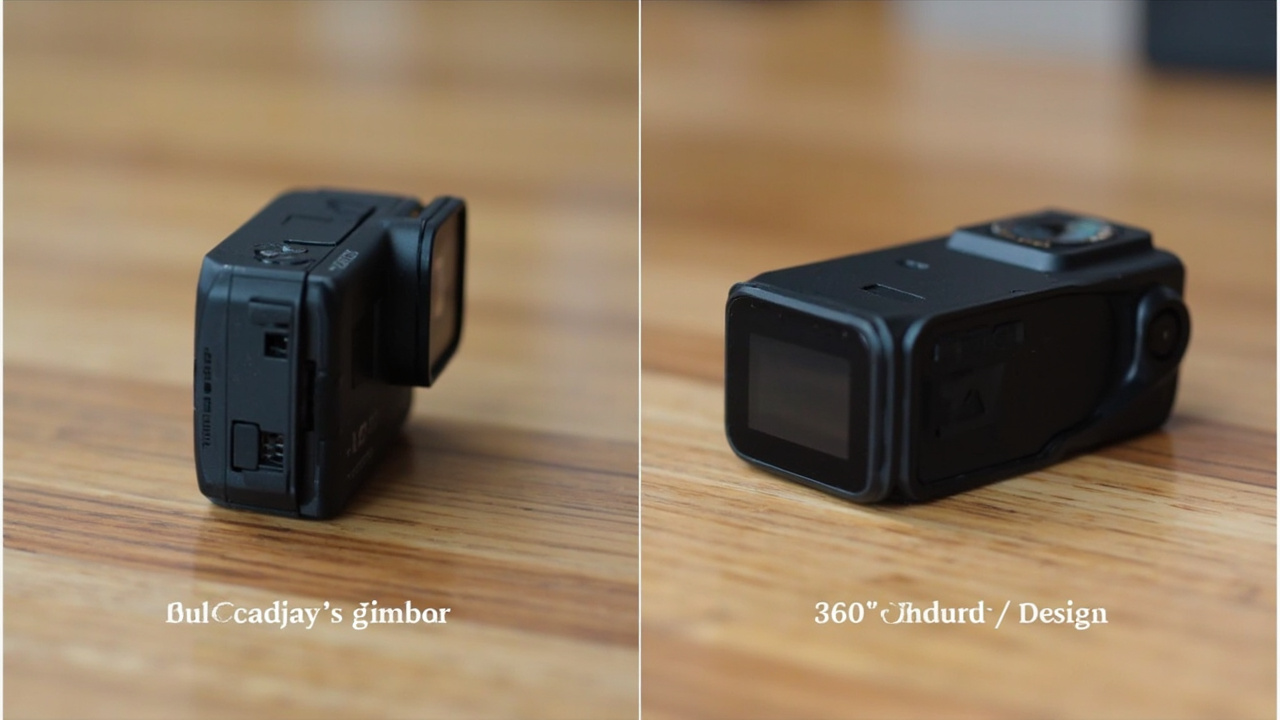
DJI Osmo Pocket 4 build notes (from DJI’s official June 2026 spec sheet and Engadget review):
- Body: plastic with metal internal gimbal frame, 190.5 g.
- Gimbal: 3-axis with ±0.005° angular vibration — same precision-class spec as the Pocket 3, no measurable improvement.
- Hinge: rotatable 2-inch display, same folding form factor as Pocket 3 (screen folds flat against body for protection).
- Ports: USB-C on the bottom, microSD on the side, no HDMI out.
- No official IP rating. The gimbal mechanism is the weak point in any weather. DJI sells a waterproof case (~$) for underwater use but the body itself is splash-resistant at best.
- Operating temperature 0°C to 40°C — fine for most climates, marginal in extreme cold.
- Modular accessory system (new in Pocket 4): magnetic fill light included in Creator Combo, magnetic mount for future mics or attachments. This is the most important durability-adjacent upgrade because it means accessories attach without removing the protective cage.
Insta360 X5 build notes (from Insta360’s product page and Film Alliance / TechRadar reviews):
- Body: matte plastic with metal lens rings, 200 g.
- Lenses: replaceable — first in the Insta360 360 line. Each lens twist-locks and can be swapped in 30 seconds with the included removal tool.
- IP68 waterproofing to 15 m (49 ft) without a case — usable for surfing, snorkeling, pool days.
- Operating temperature -20°C to 40°C — better cold tolerance than the Pocket 4.
- Battery: removable door on the side, charges via USB-C in the camera or in an external dual charger (~$39).
- No mechanical gimbal — the X5’s 6-axis FlowState stabilization is purely electronic, which means no moving parts to fail but also no mechanical smoothness advantage over a well-tuned gimbal.
Real-world durability differences come down to three scenarios:
- Beach / pool / ocean shooting. Pocket 4 needs a waterproof case (~$40-60) and you cannot use the gimbal underwater. X5 goes in raw. If you shoot water sports 3+ times per year, the X5’s IP68 rating saves you $40-$80 in case purchases over 5 years and removes the hassle.
- Crowded events / concerts / street shooting. Both are pocketable, but the Pocket 4’s folding display protects the screen; the X5’s exposed lenses need the included lens guard or a hard case. The Pocket 4 is more “throw in a jacket pocket” rugged.
- Battery longevity. The Pocket 4’s built-in battery is the single most criticized durability point on Reddit r/dji and r/vlogging. The X5’s removable battery is the single most praised. Real-world reports from Engadget and The Film Alliance confirm the Pocket 3/4 will outlast an X5 if you never drop it, but the X5 will outlast a Pocket 3/4 if you ever drop it or shoot past 80% battery in a day.
Verdict on durability: Pocket 4 has more refined mechanical engineering (gimbal precision, hinge design). X5 has better environmental durability (waterproof, replaceable lenses, removable battery). For “I shoot indoors and on city streets,” Pocket 4. For “I shoot outdoors, travel, and don’t baby my gear,” X5.
Feature Breakdown
Sensor and Image Quality
The Pocket 4’s 1-inch sensor is the single largest differentiator. Engadget’s review confirms the new sensor delivers “two stops of improved low-light performance” over the Pocket 3 and matches or beats the Sony ZV-1 Mark II in low-light vlogging. The X5’s dual 1/1.28-inch sensors are smaller individually but capture everything around you. When you reframe to a 16:9 output in the Insta360 app, the effective output sensor area is roughly equivalent to a 1/1.7-inch single-lens cam. That’s a real gap — and The Film Alliance’s head-to-head test confirmed it: “the Pocket 3 [and presumably Pocket 4] handled sky colors better… better in dynamic range, especially in shadows.”
Where the X5 wins: 8K reframing. If you crop to a 1080p or 4K frame from the 360° capture, the resolution headroom is enormous. You can stabilize a shaky handheld shot in post without losing 4K quality. The Pocket 4’s 4K capture is exactly what you shot — no crop headroom.
Stabilization: Gimbal vs Electronic
- Pocket 4: 3-axis mechanical gimbal, ±0.005° angular vibration, max speed 180°/s. Works in real time, no crop, no processing. Subject tracking via ActiveTrack 7.0.
- X5: 6-axis electronic stabilization (FlowState), 360° horizon lock at 5.7K 60 fps and below. Crops the image slightly (~10%) and applies algorithmic warping. Subject tracking via Insta360 AI.
For “walk-and-talk vlogs,” the Pocket 4’s gimbal is objectively smoother — the X5 electronic stab is excellent but introduces the slight “warping” you can see at the edges of the frame during fast movements. For “active sports,” the X5’s 360° horizon lock is hard to match with a fixed-lens camera — the horizon stays level no matter how you rotate it. Different tools.
Audio
- Pocket 4: 3-mic array with new “audio zoom” (boosts subject volume as you zoom in), spatial audio recording, DJI Mic 2 / Mic Mini compatible via USB-C.
- X5: 4-mic array with wind reduction, Insta360 Mic Air compatible via Bluetooth or USB-C.
The Pocket 4’s audio zoom is a real vlogging feature — it lets you lean into a subject and get both closer framing AND louder audio without a separate mic. The X5’s audio is good but not class-leading; serious YouTubers will add a dedicated mic to either camera.
Software and Ecosystem
- DJI Mimo app (free): live view, ActiveTrack, D-Log color profiles, firmware updates, webcam mode, AI editing.
- DJI Mic 2 / Mic Mini ecosystem: $99-$249 expansion mics that pair directly with the Pocket 4.
- Insta360 app (free): AI reframing, Shot Lab templates, Deep Track 3.0, auto-edit, social-media aspect ratio exports (9:16, 1:1, 16:9) in one tap.
- Insta360 Studio (desktop, free): full reframing controls, keyframe editing, ProRes export.
- Adobe Premiere / Final Cut Pro plug-ins for both cameras.
The Insta360 app is more polished for “casual creator → Instagram Reel” workflow. DJI Mimo is more polished for “serious creator → color-graded YouTube” workflow. Neither has a subscription fee.
Slow-Motion and Frame Rates
- Pocket 4: 4K at 100/120/200/240 fps slow-mo, 1080p at 120/240 fps. Up to 10× slow-mo at 4K.
- X5: 4K at 100 fps slow-mo, 3K at higher frame rates in 360 mode. Max ~4× slow-mo at usable resolution.
Pocket 4 wins this category clearly. If slow-mo is a core part of your content, the 240 fps 4K is the differentiator.
Storage and Battery
- Pocket 4: 107 GB internal + microSD up to 1 TB. 1,545 mAh non-replaceable, ~150 min 4K recording.
- X5: microSD only (no internal). 2,400 mAh removable, ~135 min 4K recording. Hot-swap with spare battery for unlimited runtime.
Pocket 4 wins on storage capacity (107 GB internal means you can leave your microSD at home for short shoots). X5 wins on battery flexibility (hot-swap with $49 spare).
Pros and Cons
DJI Osmo Pocket 4 — Pros
- 1-inch sensor delivers the cleanest 4K image in the category, especially in low light and high-contrast scenes.
- 10-bit D-Log with 14 stops of dynamic range — genuine color-grading flexibility for serious YouTubers and cinematographers.
- 4K at 240 fps slow-mo — best-in-class slow-motion for action and B-roll.
- 107 GB internal storage — no microSD required for short shoots.
- 3-axis mechanical gimbal with ±0.005° precision — buttery smooth footage in real time, no crop, no processing.
- 2.0-inch rotatable touchscreen at 1000 nits — bright enough for outdoor shooting, physical flip for selfie mode.
- Audio zoom + spatial audio via 3-mic array.
- Modular accessory system — magnetic fill light included in Creator Combo, future-proof for mics and other attachments.
- DJI Mic 2 / Mic Mini direct integration — same mics work with the Pocket 4, Osmo Action, and DJI drones.
DJI Osmo Pocket 4 — Cons
- Not officially sold in the US as of June 2026 (per Engadget review) — gray market import adds $50-$150 to landed price plus tariff risk.
- Non-replaceable battery — after 2-3 years of daily use, capacity drops; factory replacement is $79-$129 and requires shipping the camera.
- No IP rating — splash-resistant at best, needs a waterproof case (~$40-$60) for any water sports.
- No optical zoom — 2× “lossless” digital zoom at 4K, 4× at 1080p.
- Vertical mode caps at 3K — to shoot true 4K portrait you must rotate the screen.
- Single-lens design means you cannot reframe in post — what you framed is what you got.
- DJI ecosystem lock-in if you later add Action 6, Mic 2, or drone accessories.
Insta360 X5 — Pros
- 8K 30 fps 360° capture reframes to any aspect ratio — shoot once, output to 16:9 YouTube, 9:16 Reels, and 1:1 Instagram from one clip.
- $519 entry price is $280 below the Pocket 4 Standard Combo and $480 below the Creator Combo.
- IP68 waterproofing to 15 m without a case — pool, ocean, and rain use out of the box.
- Replaceable lenses ($29/pair) — first in Insta360’s 360 line; no more “one scratch and the camera is dead.”
- Removable battery ($49 spare) — hot-swap for all-day shoots, no factory service needed.
- Insta360 app AI reframing turns a 30-minute shoot into a 2-minute edit; Shot Lab templates automate transitions.
- -20°C to 40°C operating range — better cold tolerance than the Pocket 4.
- Wider field of view and “never miss the shot” capture for action sports, kids, pets, and unpredictable subjects.
- Free desktop software (Insta360 Studio) with full keyframe reframing and ProRes export.
Insta360 X5 — Cons
- Dual 1/1.28-inch sensors are smaller than the Pocket 4’s 1-inch sensor — measurable low-light gap confirmed in head-to-head testing.
- No internal storage — microSD card required (sold separately, ~$20-$50).
- No mechanical stabilization — FlowState electronic stabilization introduces edge warping during fast movements.
- Single-lens mode uses only part of the sensor — image quality drops below the Pocket 4 in flat video mode.
- App-locked workflow — reframing requires the Insta360 app or Insta360 Studio, which adds render time vs. drag-and-drop flat footage.
- Not as good in 4K 240 fps slow-mo as the Pocket 4 — max ~4K 100 fps in 360 mode.
- Slightly heavier at 200 g and thicker than the Pocket 4 — less pocket-friendly in a tight jacket.
- 8K files are large — expect 30-60 GB per hour of 360° footage at full quality.

Best For / Skip If
Pick the DJI Osmo Pocket 4 if you are:
- A solo YouTuber or TikTok creator who shoots talking-head vlogs, restaurant reviews, or travel diaries in controlled framing.
- A real-estate agent or interior photographer who needs clean 4K walkthrough footage without reframe post-production.
- A colorist or cinematographer who grades in DaVinci Resolve and needs true 10-bit D-Log with 14 stops of latitude.
- An existing DJI owner with Mic 2, Mic Mini, or DJI drone batteries who wants ecosystem continuity.
- A slow-motion specialist (cooking channels, action B-roll, sports highlights) who needs 4K 240 fps.
- A buyer who can wait for official US availability or is comfortable importing at a $50-$150 landed premium.
Skip the DJI Osmo Pocket 4 if you are:
- An action sports creator (surfing, skiing, mountain biking) who needs waterproofing without a case.
- A travel vlogger who shoots in unpredictable environments where you cannot re-frame and re-shoot.
- A buyer on a tight budget who needs the best image quality per dollar — the X5 at $519 delivers 90% of the Pocket 4’s image quality for 65% of the price.
- A creator who edits on tight daily deadlines — the Pocket 4’s flat 4K is drag-and-drop; the X5’s 360° requires re-export.
- A buyer who needs swappable batteries for all-day shoots without factory service.
Pick the Insta360 X5 if you are:
- A travel vlogger or adventure creator who wants one camera to capture anything that happens.
- A family / kids / pets creator where subjects move unpredictably and you cannot pause to re-frame.
- An action sports creator (surf, ski, MTB) who needs IP68 waterproofing and replaceable lenses.
- A short-form social creator who re-cuts the same footage to 9:16, 1:1, and 16:9 for different platforms.
- A budget-conscious buyer who wants flagship features (8K, AI editing, waterproofing) at the lowest price.
- An all-day event videographer (weddings, conferences, parties) who needs hot-swap batteries.
Skip the Insta360 X5 if you are:
- A single-subject talking-head vlogger who always frames in-camera and never reframes in post.
- A low-light specialist (nighttime city vlogs, candle-lit restaurant reviews) — the Pocket 4’s 1-inch sensor wins here.
- A colorist who needs 10-bit D-Log with 14 stops of latitude — the X5 maxes out at flat 8-bit.
- A slow-motion specialist who needs 4K at 240 fps.
- A creator who does not want to learn Insta360’s app workflow and prefers traditional flat-footage editing in Premiere / Final Cut / DaVinci.
Bottom Line
The DJI Osmo Pocket 4 and the Insta360 X5 are not the same product at different prices. They are different products that solve different creator problems.
The Pocket 4 is for creators who want the best possible image quality from a pocket-sized camera and who frame their shots deliberately. The 1-inch sensor, 10-bit D-Log, and 3-axis gimbal produce footage that looks closer to a Sony ZV-E10 II than to a GoPro. The trade-offs are a higher price ($799-$999 Creator Combo), a non-replaceable battery, no waterproofing, and the inconvenience of US buyers importing gray market until DJI announces official US retail.
The X5 is for creators who want maximum flexibility and minimum friction. 8K reframing, IP68 waterproofing, replaceable lenses, removable battery, and AI-powered editing in the Insta360 app. The trade-offs are a smaller sensor, lower slow-mo frame rates, and the learning curve of the 360° workflow.
On cost per use, the Insta360 X5 is the better 5-year value for the average creator — saving $290-$490 over 5 years depending on which Pocket 4 bundle you compare and whether you add the DJI Mic Mini. The savings come from a $280 lower entry price, a $49 replaceable battery vs. $79-$129 factory service, and the elimination of the $40-$60 waterproof case.
On image quality, the Pocket 4 wins clearly. The 1-inch sensor delivers 1-2 stops better low-light performance and noticeably better dynamic range. For creators who shoot indoors, at night, or in challenging light, that gap is worth the $280-$490 premium.
Buy smart. Get more value. Match the camera to the shooting style, not the spec sheet. If you frame in-camera and never reframe, the X5’s 360° flexibility is wasted money — buy the Pocket 4. If you shoot unpredictable content and want one camera that handles everything, the X5’s $519 price and replaceable everything will outlast the Pocket 4 in both cost and durability over 5 years.