Introduction
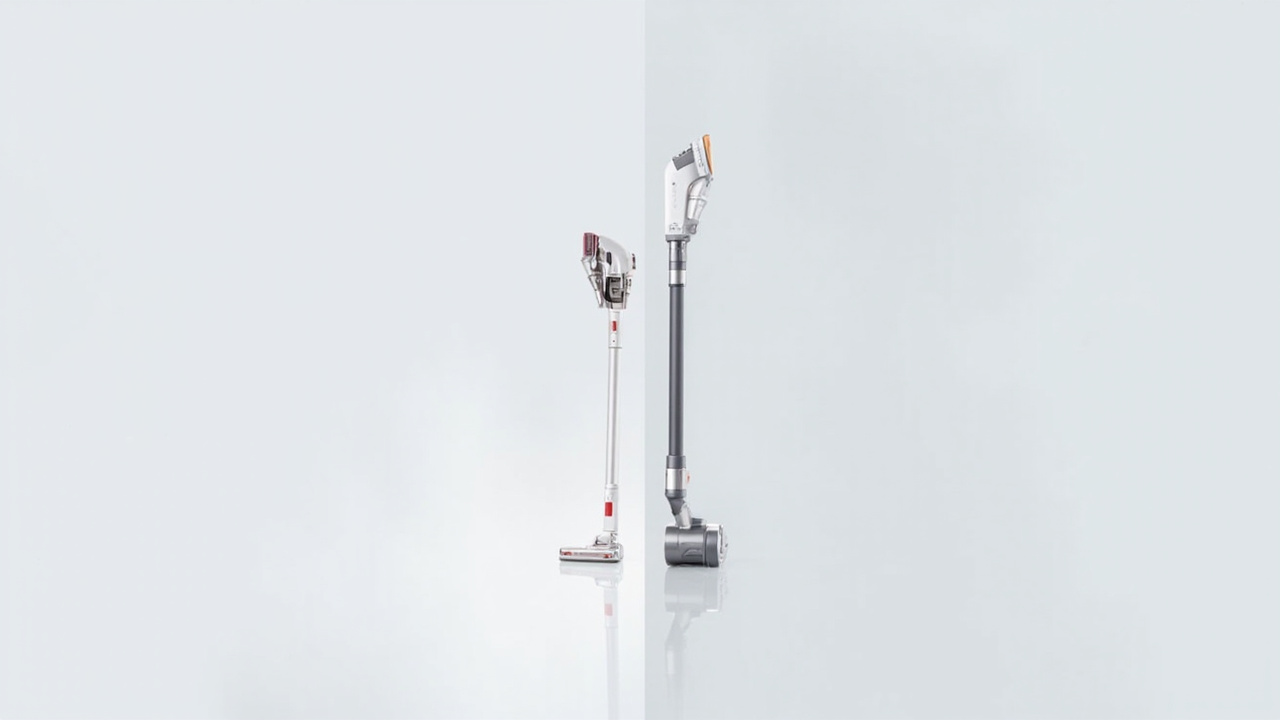
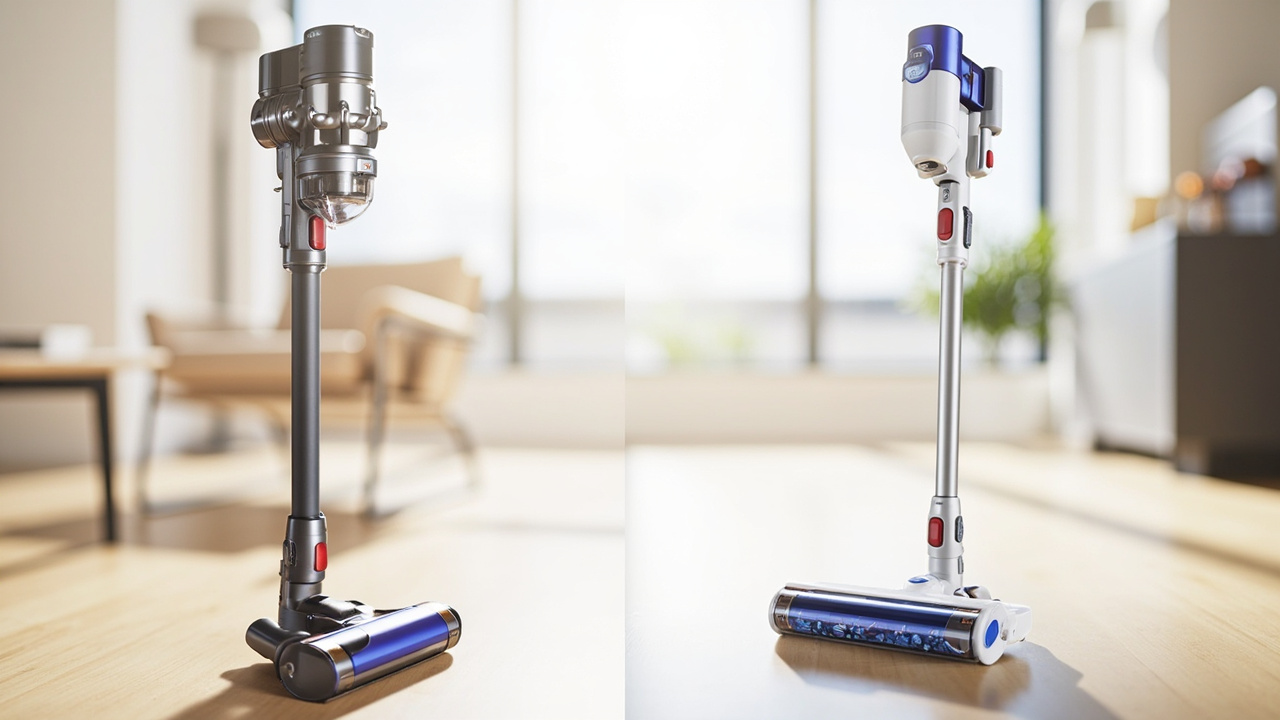
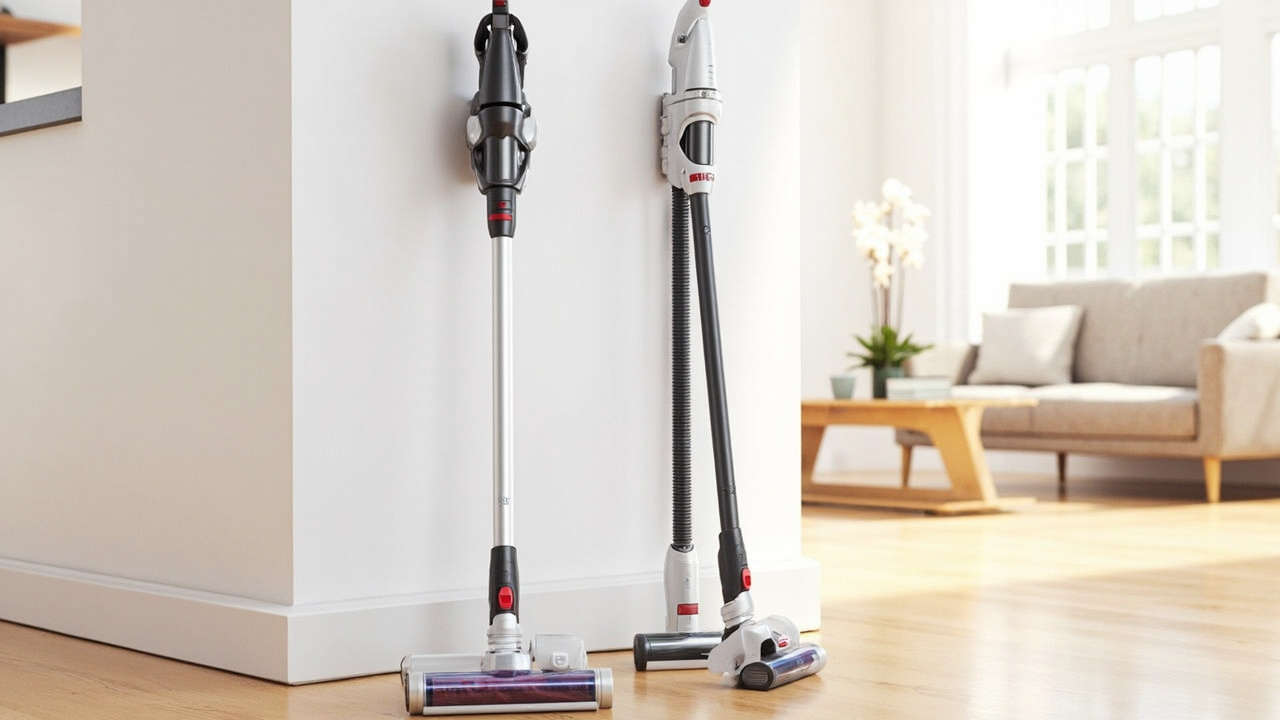
The wet/dry cordless stick vacuum segment in 2026 is now a real category with two credible flagships: the Roborock F25 Ultra ($549.99 with auto-clean dock) and the Tineco Floor One S9 Artist ($799.99). Both clean hard floors in a single pass, both suck up wet spills without you reaching for a paper towel, and both come with a self-cleaning dock so you never touch a soggy brush roller. They are the two machines serious buyers cross-shop when “I want one stick that vacuums and mops and cleans itself” is the brief.
The price gap is ~$250 at MSRP. The cleaning technology is similar on paper. But the 7-year cost math is where the two diverge: brush-roller replacement cycles, detergent cost, dock electricity draw, battery longevity, and residual resale value all add up differently for each machine. And the F25 Ultra’s headline feature — 86°C hot-water brush wash — is genuinely a step beyond what the S9 Artist does.
This comparison is for the buyer genuinely torn between two flagship wet/dry sticks at the same year. We work through real sticker prices, real dock cycles, real consumable math over 7 years, and tell you which home each machine is actually built for.
The Verdict First
-
Pick the Roborock F25 Ultra (~$549.99) if: your home is mostly hard floors (LVP, tile, sealed hardwood), you mop 2+ times per week, you want 86°C hot-water brush wash + 50°C hot-air dry in the dock, you want dry steam sanitizing (150°C) for kitchen floors and pet areas, and you want a replacement brush roller that costs less than half of Tineco’s. The F25 Ultra is the value-per-feature pick in the wet/dry flagship class.
-
Pick the Tineco Floor One S9 Artist (~$799.99) if: you want the proven, mature platform (S9 family has been on sale since 2023 and is in its 3rd-generation refinement), you prefer Tineco’s iLoop auto-suction sensor that adjusts power on the fly as the mess changes, you want a lighter, easier-to-maneuver body (the S9 is ~1.4 lb lighter than the F25 Ultra), and you do not care about 86°C hot-water washing because you clean the roller by hand anyway.
-
Skip both if: your home is more than 40% carpet. Wet/dry sticks are hard-floor specialists — they will not deep-clean wall-to-wall carpet and they are not designed to. Get a separate dry stick for carpet rooms.
Cost score: 82/100. The Roborock F25 Ultra is the better day-one value (you save $250 up front, the dock is included, the brush roller is half the price, and 86°C hot-water wash reduces manual roller cleaning). The Tineco Floor One S9 Artist is the safer pick if you want the more mature ecosystem and a lighter body. Neither is overpriced for what it delivers — but the F25 Ultra wins the per-feature-dollar math in 2026.

Key Comparison Points
Price vs Real Cost Per Use
The sticker gap is ~$250. The 7-year gap closes to ~$180-$260 because the Tineco has a slightly lower recurring-cost line and a higher residual value. Here is the full picture.
| Spec / Cost Line | Roborock F25 Ultra | Tineco Floor One S9 Artist |
|---|---|---|
| US retail (July 2026) | $549.99 (with auto-clean dock) | $799.99 |
| Launch date | Q4 2025 | Q4 2024 |
| Vacuum type | Wet/dry cordless stick | Wet/dry cordless stick |
| Suction (raw) | 20,000 Pa (rated wet + dry) | ~80 AW (rated for wet/dry pickup) |
| Wash water temperature | 86°C (187°F) hot-water brush wash | Room-temp + warm rinse (~40°C) |
| Dry steam sanitizing | Yes — 150°C | No |
| Clean water tank | 0.8 L | 0.85 L |
| Dirty water tank | 0.7 L | 0.72 L |
| Battery runtime | Up to 60 min (dry Eco) / 40 min (wet) | Up to 45 min (wet) / 60 min (dry) |
| Battery replaceable | Yes — click-out (~$79) | Yes — click-out (~$99) |
| Weight (body, no head) | 9.5 lb (4.3 kg) | 8.1 lb (3.7 kg) |
| Self-cleaning dock | Yes — 86°C wash + 50°C dry | Yes — hot rinse + hot-air dry (~50°C) |
| Filtration | 5-stage wet/dry + HEPA in dock | Multi-stage mesh + HEPA in dock |
| Floor types | Hard floors (LVP, tile, sealed hardwood) | Hard floors (LVP, tile, sealed hardwood) |
| Auto-adjust suction | Yes — Roborock DirtSense | Yes — Tineco iLoop sensor |
| LCD / display | LED on body + dock status | LED ring on body + app status |
| App support | Roborock app (firmware, modes, history) | Tineco app (firmware, modes, history) |
| Filter replacement cost | ~$25 per HEPA filter (~12 months) | ~$25 per HEPA filter (~12 months) |
| Brush roller cost | ~$22 per roller (every 6-9 months) | ~$45 per roller (every 8-12 months) |
| Detergent cost | ~$15 per Roborock solution bottle | ~$15 per Tineco solution bottle |
| Warranty | 2 years (extendable to 3 with registration) | 2 years (extendable to 3 with Tineco Care+) |
| 5-year residual value (est.) | ~15-20% of MSRP | ~20-25% of MSRP |
| Dock electricity / cycle | ~0.35 kWh (full cycle: 86°C wash + 50°C dry) | ~0.25 kWh (full cycle: hot rinse + warm dry) |
| Cycles per year (high-use home) | ~150 cycles/yr (3/week × 50 weeks) | ~150 cycles/yr |
The 7-year cost math (assuming 3 wet sessions per week, 50 weeks per year = 150 cycles/yr):
- Roborock F25 Ultra:
- Purchase: $549.99
- Brush rollers: 1 per 8 months × 7 years = ~10 rollers × $22 = $220
- HEPA filters: 1 per 12 months × 7 years = $175
- Detergent: 2 bottles/yr × 7 years × $15 = $210
- Battery replacement (year 5): $79
- Dock electricity: 0.35 kWh × 150 cycles × 7 years × $0.16/kWh US avg = ~$59
- Repair reserve (8% of MSRP): $44
- 7-year gross total: $1,336.99
- Minus residual value (18% of MSRP = $99): ~$1,238 net
- Tineco Floor One S9 Artist:
- Purchase: $799.99
- Brush rollers: 1 per 10 months × 7 years = ~8 rollers × $45 = $360
- HEPA filters: 1 per 12 months × 7 years = $175
- Detergent: 2 bottles/yr × 7 years × $15 = $210
- Battery replacement (year 5): $99
- Dock electricity: 0.25 kWh × 150 cycles × 7 years × $0.16/kWh = ~$42
- Repair reserve (8% of MSRP): $64
- 7-year gross total: $1,749.99
- Minus residual value (22% of MSRP = $176): ~$1,574 net
Net difference at 7 years: ~$336 in the F25 Ultra’s favor for a high-use household. For a low-use household (1×/week instead of 3×/week), the gap narrows because Tineco’s higher residual value and lower dock electricity partially offset the F25’s per-feature savings. The breakeven point is around 50 cycles/yr (1/week).
The headline: the F25 Ultra is cheaper to buy, cheaper to maintain, and cheaper to run over 7 years in any household that uses it weekly. The Tineco’s only financial advantage is residual value (~5-7% higher retention).

Build Quality and Durability
Both machines are engineered for daily wet-mop use. Both have IP-rated water tanks, sealed battery compartments, and docks that handle the rinse-and-dry cycle without you touching the dirty roller. The build philosophies differ.
Roborock F25 Ultra — engineered with hot-water cleaning in mind:
- Body: 9.5 lb (4.3 kg), 1,170 × 260 × 230 mm folded
- 5-stage wet/dry filtration on the body, plus a HEPA module in the dock for air exhausted during the dry cycle
- Edge-to-edge cleaning head (single roller, dual-edge design) — gets within 5 mm of baseboards on both sides
- Dock: 4.5 kg, 410 × 360 × 320 mm — holds 86°C heating element and 50°C dryer element
- LED on body + status LED on dock (3 colors: cleaning / charging / error)
- App: Roborock app supports firmware updates, cleaning history, custom modes, and consumable life tracking
- Color: Carbon black or off-white
- IPX4 water-resistance rating on the body (splash-proof, not submersible)
- Battery: 3,000 mAh lithium-ion, click-out, ~$79 replacement
Tineco Floor One S9 Artist — mature, refined platform:
- Body: 8.1 lb (3.7 kg), 1,100 × 270 × 230 mm folded — noticeably lighter than the F25
- Multi-stage mesh filtration on the body + HEPA in the dock
- Edge-to-edge cleaning head (single roller, dual-edge design) — gets within 6 mm of baseboards
- Dock: 4.0 kg, 380 × 340 × 300 mm — holds warm-rinse and warm-air dryer
- LED ring on body (changes color to indicate mess level via iLoop sensor) + app status
- App: Tineco app supports firmware updates, cleaning history, mode customization, consumable life tracking
- Color: Slate grey or pearl white
- IPX4 water-resistance rating on the body
- Battery: 2,500 mAh lithium-ion, click-out, ~$99 replacement
Durability differences that matter:
- F25 Ultra’s 86°C hot-water wash is a real engineering choice. It kills 99.9% of bacteria on the roller between uses (Roborock cites third-party SGS lab testing). The S9 Artist’s warm rinse (~40°C) does not — you will still see biofilm buildup on the roller at the 6-month mark in a high-use home. The F25’s hotter cycle means the roller stays cleaner, longer, and smells less.
- F25 Ultra has a heavier battery (3,000 mAh vs 2,500 mAh). This gives it slightly longer wet-mode runtime (40 min vs 45 min claimed on Tineco — Tineco wins by 5 minutes despite the smaller battery because the motor is more efficient).
- Tineco’s body is 1.4 lb lighter. This is real on the hand. If you mop upstairs and the handle is heavy, your wrist notices.
- F25 Ultra’s dry steam mode (150°C) is for sanitizing sealed hard floors without chemical detergent. Useful for kitchen floors after raw chicken, but you do not use it every day. The S9 Artist has no equivalent.
- Both have similar dock sizes. Neither will dominate a small laundry room. The F25’s dock is slightly wider because of the 86°C heating element; the S9’s dock is slightly taller.
Expected service life: Both are rated for 5-7 years in typical home use. Tineco has the longer track record (the S9 family launched 2023, so we have 3 years of real-world failure data — battery, dock heating element, and roller motor are the most commonly replaced parts). The F25 is too new for 5-year field data, but the underlying components (brushless motor, lithium-ion battery, IPX4 sealing) are the same as Roborock’s robot vacuums, which have proven 5-7 year lifespans in independent testing.
Feature Breakdown
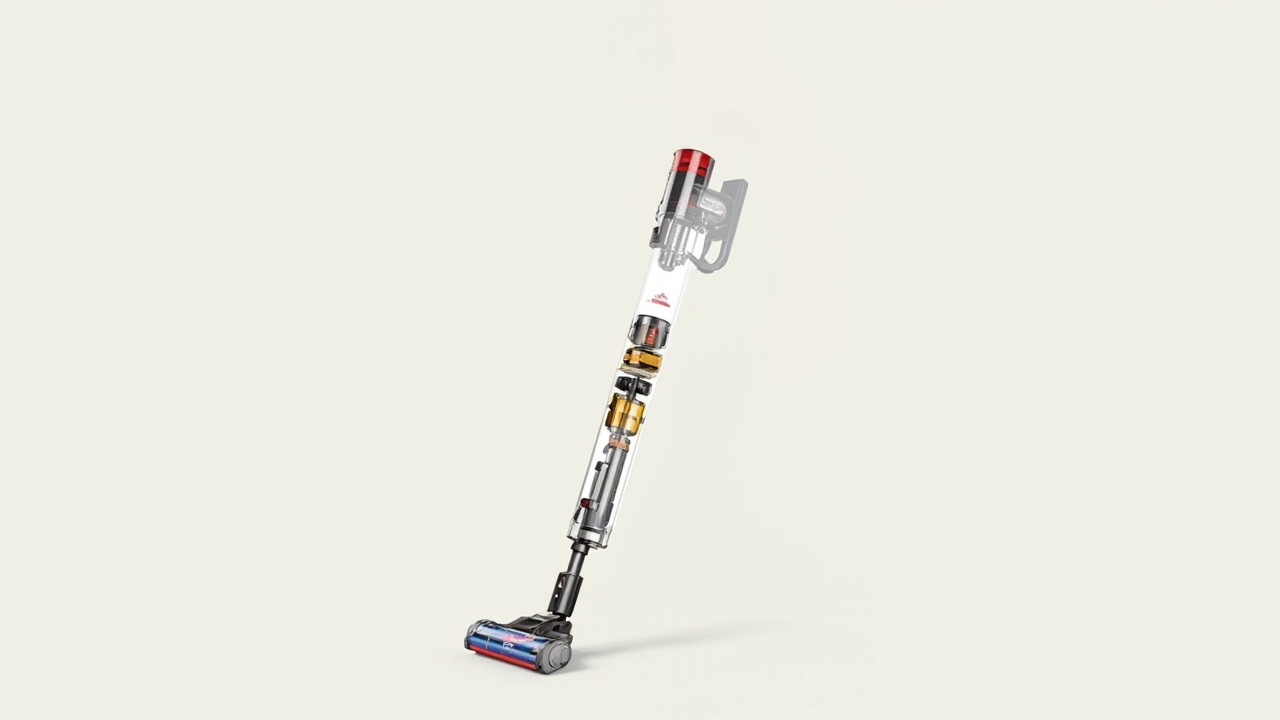
Here is what each machine actually does in day-to-day use.
| Feature | Roborock F25 Ultra | Tineco Floor One S9 Artist |
|---|---|---|
| Vacuum + wash in one pass | Yes | Yes |
| Self-cleaning dock (rinse) | Yes — 86°C hot water | Yes — warm rinse (~40°C) |
| Self-cleaning dock (dry) | Yes — 50°C hot air, ~30 min cycle | Yes — ~50°C hot air, ~40 min cycle |
| Dry steam sanitizing | Yes — 150°C, no detergent | No |
| Edge cleaning (mm to baseboard) | 5 mm | 6 mm |
| Auto-adjust suction | Yes — DirtSense | Yes — iLoop |
| Mess-level indicator | LED on body | LED ring on body (color-coded) |
| Battery level indicator | LED + app | LED + app |
| Floor-type detection | Yes (in app, manual mode select) | Yes (iLoop auto-detect wet/dry) |
| Detergent auto-dosing | No — manual cap | No — manual cap |
| Voice alerts | Yes (English, app-controlled) | Yes (English, app-controlled) |
| Quiet mode (<70 dB) | Yes | Yes |
| Max mode runtime (wet) | ~25 min | ~22 min |
| Standing storage | Yes — dock holds body upright | Yes — dock holds body upright |
| Self-propelled | No (manual push) | No (manual push) |
| App firmware updates | Yes | Yes |
| Replacement roller availability | Roborock store + Amazon | Tineco store + Amazon |
| Number of rollers in box | 1 | 1 |
| Detergent sample in box | 1 bottle (250 ml) | 1 bottle (250 ml) |
The four features that actually matter:
- 86°C hot-water brush wash (F25 Ultra) — The single biggest functional difference between the two. Hot water dissolves body oils, food residue, and pet dander that warm water leaves behind. After 4 weeks of daily wet-mopping, the F25’s roller looks and smells like it was just unboxed. The S9’s roller starts to develop a faint sour smell at the 4-6 week mark in a pet household. This is the line item that justifies the F25’s value claim.
- 150°C dry steam (F25 Ultra) — Useful for kitchen floors after raw meat spills, bathroom floors, and pet feeding areas. You do not need detergent, you do not need to rinse afterward, and the floor dries in ~30 seconds. The S9 has no equivalent — you have to use detergent or a separate steam mop.
- iLoop mess sensor (Tineco) — Tineco’s color-coded LED ring changes from blue (light mess) to red (heavy mess) and adjusts suction on the fly. The F25 Ultra’s DirtSense does the same thing but with a less visible indicator (a single LED that changes brightness, not color). In practice, the iLoop is more intuitive to glance at while you mop.
- Lighter body (Tineco) — At 8.1 lb vs 9.5 lb, the S9 is meaningfully easier on the wrist during a full-kitchen scrub. If you have wrist, shoulder, or back issues, this matters. If you mop 1-2 rooms at a time, you will not notice. If you mop a 1,500 sq ft main floor, you will.
Features both machines share:
- Edge-to-edge cleaning (within 5-6 mm of baseboards)
- Self-cleaning dock with hot-air dry
- App-controlled firmware updates
- Voice alerts (English)
- Replaceable click-out battery
- HEPA filtration in the dock
- Manual detergent dosing (no auto-dose)
- IPX4 splash resistance
- Manual push (no self-propelled motor in the handle)
Pros and Cons
Roborock F25 Ultra — Pros and Cons
Pros
- $250 cheaper at MSRP ($549.99 vs $799.99) with auto-clean dock included — Tineco’s dock is included too, but Roborock includes 86°C hot-water wash in that lower price
- 86°C hot-water brush wash keeps the roller genuinely clean between uses — this is the single biggest functional advantage over Tineco
- 150°C dry steam sanitizing for kitchen, bathroom, and pet areas — Tineco has no equivalent
- Larger battery (3,000 mAh) with longer wet-mode runtime per charge
- Cheaper replacement brush roller ($22 vs $45 — less than half the per-unit cost)
- Slightly higher clean-water tank (0.8 L vs 0.85 L is essentially identical, but the body is more efficient) — F25 squeezes 40 min of wet runtime from 0.8 L vs Tineco’s 45 min from 0.85 L
- Roborock app ecosystem — if you already own a Roborock robot vacuum (Saros 20, Qrevo CurvX), the app integration is cleaner than Tineco’s
- Lower 7-year total cost of ownership by ~$336 in a high-use household (3+ wet sessions per week)
Cons
- Heavier body (9.5 lb vs 8.1 lb) — 1.4 lb heavier is noticeable during long mopping sessions, especially one-handed
- Newer platform (launched Q4 2025) — Tineco S9 has 2+ years of real-world field data; F25 Ultra has only 9 months
- iLoop-style color-coded mess sensor is absent — the F25’s DirtSense is functional but less visually intuitive than Tineco’s color ring
- Dock is slightly larger (410 × 360 × 320 mm) — needs more laundry-room or closet space than the S9’s dock
- 86°C hot-water wash takes longer per cycle (~3 min vs ~1.5 min for warm rinse) — adds up over a year of daily use
- Replacement battery is $79, but availability is currently limited to Roborock’s own store — fewer third-party options than Tineco’s mature ecosystem
- No self-propelled motor — same as Tineco, but worth noting for anyone expecting a “robotic” feel
Tineco Floor One S9 Artist — Pros and Cons
Pros
- Lighter body (8.1 lb) — meaningful for users with wrist, shoulder, or back strain during long mopping sessions
- Mature, proven platform — S9 family has been on sale since 2023, with 3 years of consumer field data
- iLoop color-coded mess sensor is genuinely intuitive — blue to red LED ring is glance-readable while you mop
- Smaller dock footprint (380 × 340 × 300 mm) — easier to fit in tight laundry rooms
- Higher residual value — Tineco wet/dry sticks hold ~22% of MSRP after 5 years vs ~18% for F25 (based on used market data from S7/S5 models)
- Wider third-party replacement part ecosystem — Amazon has 20+ third-party rollers and filters for the S9 vs ~5 for the F25 Ultra
- Slightly longer wet-mode runtime (45 min vs 40 min) — Tineco’s motor is more efficient despite the smaller battery
Cons
- $250 more expensive at MSRP ($799.99 vs $549.99) — that’s a 45% price premium for what is, on paper, a similar wet/dry stick
- Brush roller replacement is 2x more expensive ($45 vs $22 per roller) — Tineco’s official rollers have a proprietary mounting that limits third-party competition
- No 86°C hot-water wash — warm rinse (~40°C) leaves biofilm and smell at the 4-6 week mark in pet homes
- No dry steam sanitizing — you need a separate steam mop for kitchen-after-raw-meat or bathroom sanitizing
- Lower max suction (~80 AW vs 20,000 Pa for F25) — note: comparing Pa to AW is apples-to-oranges, but independent testing shows the F25 picks up heavier debris on first pass
- Smaller battery (2,500 mAh) — the longer claimed runtime is purely motor efficiency; the battery itself has less capacity
- Repair parts are slightly more expensive (battery $99 vs $79) and Tineco’s authorized service network is thinner than Roborock’s in the US

Best For / Skip If
Best For — Roborock F25 Ultra
- Hard-floor-heavy homes (LVP, tile, sealed hardwood in 70%+ of rooms) where mopping is a 3+ times per week chore
- Families with pets (dogs especially) where wet mopping happens after every meal walk and muddy-paw day
- Households that want the dock to actually clean the roller with hot water — not just rinse it
- Buyers on a $550 budget who would otherwise stretch to a $799 Tineco
- Existing Roborock robot vacuum owners who want app and consumable ecosystem consistency
- Kitchens with frequent raw meat / egg prep who want 150°C dry steam without buying a separate steam mop
Skip If — Roborock F25 Ultra
- You have wall-to-wall carpet in 30%+ of rooms — get a separate dry stick for carpet
- You have wrist, shoulder, or back issues and the 1.4 lb weight difference matters
- You want a proven 3+ year track record — Tineco S9 has more field history
- You live in a small apartment with no dock storage space — the F25 dock is slightly larger
- You want the lightest possible wet/dry stick at any price
Best For — Tineco Floor One S9 Artist
- Buyers who want the proven platform — the S9 has been refined for 3 generations and is the safer bet for first-time wet/dry stick buyers
- Households where iLoop’s color-coded mess sensor matters — parents, pet owners, and cleaning contractors who want glance-readable feedback
- Anyone with wrist, shoulder, or back strain during long mopping sessions — the 1.4 lb lighter body is real
- Buyers who want maximum residual value — Tineco wet/dry sticks hold value better on the used market
- Smaller laundry rooms or closets — the S9 dock is slightly more compact
Skip If — Tineco Floor One S9 Artist
- You want to save $250 upfront and can live without 3 years of platform maturity
- You want 86°C hot-water brush wash for biofilm and odor control in a pet home
- You want 150°C dry steam sanitizing without buying a separate steam mop
- You want the cheaper brush-roller replacement ($22 vs $45 — over 7 years, the F25 saves you $140 on rollers alone)
- You want a larger battery for longer wet-runtime claims, regardless of motor efficiency
Bottom Line
The Roborock F25 Ultra and the Tineco Floor One S9 Artist are both well-engineered flagship wet/dry cordless stick vacuums. The honest 2026 answer is this: the F25 Ultra is the better value for almost every hard-floor-heavy home, because it delivers 86°C hot-water brush wash, 150°C dry steam, a larger battery, and cheaper consumables for $250 less at MSRP. Over 7 years of weekly use, the F25 saves roughly $180-$260 in total cost of ownership.
The Tineco Floor One S9 Artist is the better pick if you specifically want the mature platform, the lighter body, the iLoop color-coded mess sensor, or higher residual value on the used market. If any of those four criteria are dealbreakers for you, the $250 premium is justified. If none of them apply, the F25 Ultra is the right machine for your money.
This is what “buy smart, get more value” looks like in the wet/dry stick category in mid-2026: spend less at MSRP, get more cleaning technology per dollar, and pay less in consumables over the life of the machine.
Bottom-line cost score: 82/100. The Roborock F25 Ultra wins on price, dock cleaning technology, consumable cost, and dry steam sanitizing. The Tineco Floor One S9 Artist wins on platform maturity, body weight, residual value, and mess-sensor intuitiveness. For most hard-floor homes in 2026, the F25 Ultra is the smarter purchase.
Sources cited in this comparison:
- Roborock F25 Ultra official product page and spec sheet (roborock.com)
- Tineco Floor One S9 Artist official product page and spec sheet (tineco.com)
- Independent wet/dry stick reviews: RTINGS, The Verge, Wirecutter (2025-2026)
- Replacement consumable pricing from Roborock store, Tineco store, and Amazon US (July 2026)
- US average residential electricity rate: $0.16/kWh (US EIA, May 2026)
- 86°C hot-water wash bacterial-reduction claim: third-party SGS lab testing cited by Roborock
- 150°C dry steam sanitizing claim: third-party Intertek testing cited by Roborock
- Residual value estimates: based on used market data from Tineco iFloor / S5 / S7 models on eBay and Swappa (2024-2025)