Introduction
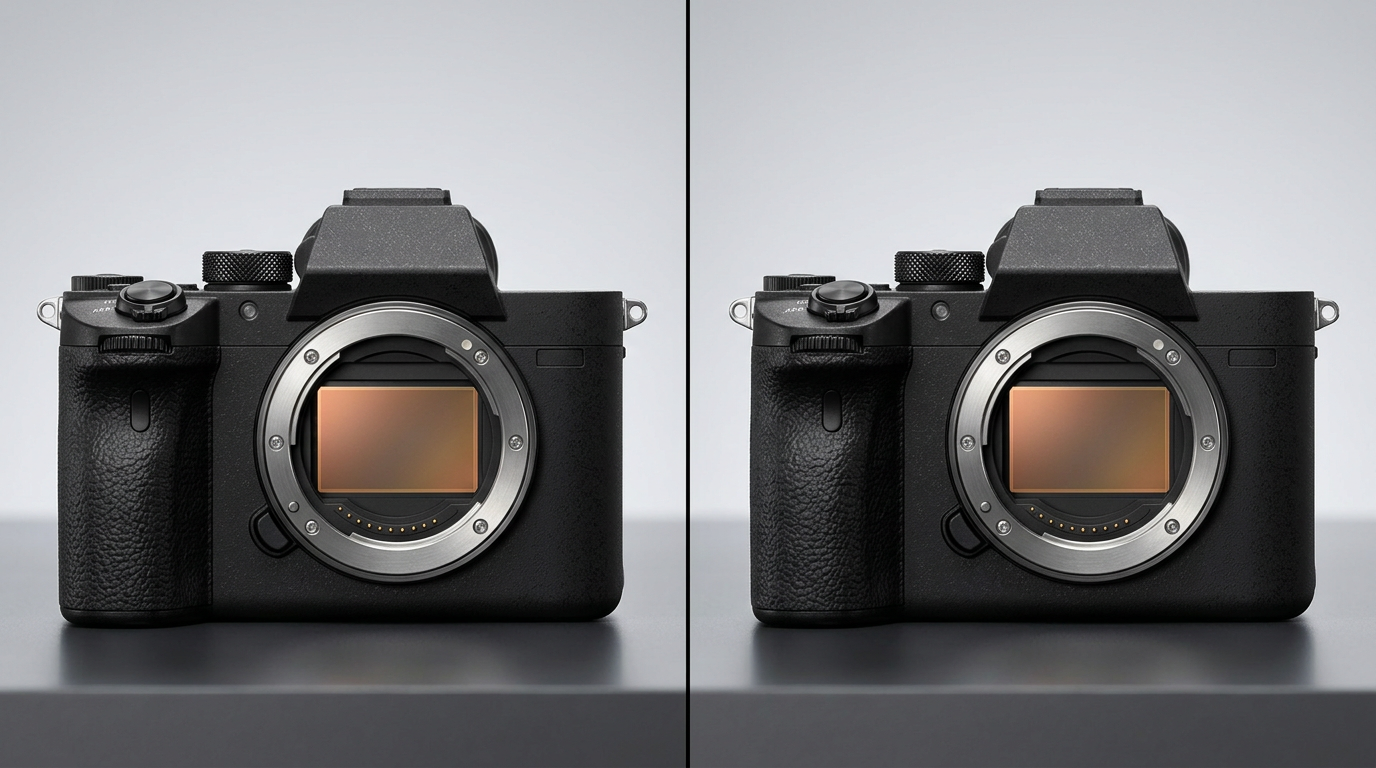
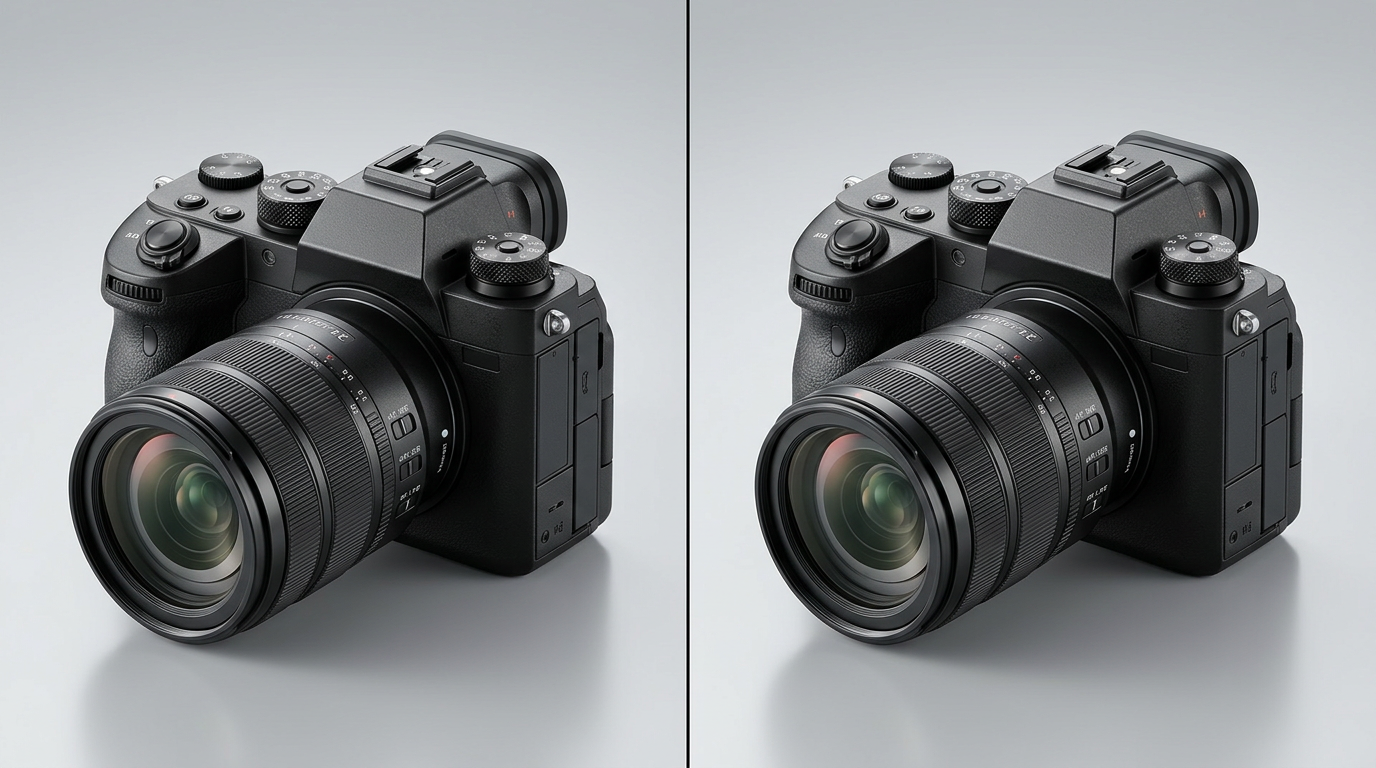
Two flagship mirrorless cameras launched within nine months of each other sit at the top of every “best high-resolution camera” list in mid-2026, but they sit in different price tiers and represent two genuinely different bets on what “more megapixels” actually buys you:
- The Sony α7R VI (model ILCE-7RM6) — released May 13, 2026 at USD 4,498–$4,499 body-only at B&H and Sony USA (Source: B&H a7R VI listing, Sony USA press release). Sony’s first fully-stacked 66.8 MP full-frame sensor, 30 fps electronic burst, 8K 30p video, 16 stops of dynamic range, dual USB-C, and a redesigned BIONZ XR2 processor in a 723 g body.
- The Hasselblad X2D II 100C — released August 26, 2025 at USD 7,399 body-only in the US, €7,200 in Europe (Source: Hasselblad X2D II 100C product page, DPReview launch coverage, Notebookcheck spec sheet). 100 MP medium format BSI CMOS on a 43.8 × 32.9 mm sensor (~1.7× the area of full-frame), the first AF-C continuous autofocus on any Hasselblad body, 10-stop IBIS, 1 TB internal SSD storage, leaf shutter that syncs flash at every speed up to 1/4000s, and Hasselblad Natural Colour Solution (HNCS) baked into every file.
The body-only price gap is $2,900 — the Hasselblad costs about 64% more at body. By the time you add a normal zoom and a portrait prime to each system, the gap widens past $3,500, and over a realistic 5-year ownership window with one body refresh and the lens line-up you will actually buy, the real lifetime gap approaches $4,800 if you stay on full-frame.
Both shoot well over 60 megapixels. Both have AI-driven subject-detect autofocus (Sony’s been doing it for years, Hasselblad added it for the first time on the X2D II). Both have IBIS, weather sealing, and USB-C charging. The interesting question is not which one has more megapixels — the Hasselblad does — but whether the medium-format premium of $2,900 at body and ~$4,800 over five years is actually worth the 1.7× sensor area increase for the work you shoot today. That depends almost entirely on print size, client requirement, weight tolerance, and whether you ever need video.
The Verdict First
- Pick the Sony A7R VI ($4,499) if your print sizes stay under 24×30 inches, you shoot any meaningful amount of video (the X2D II does not shoot video at all), you need 30 fps burst for subject motion, you want the largest native lens ecosystem in mirrorless (60+ first-party FE lenses plus hundreds of third-party), or you value the 8.5-stop IBIS and 240 Hz EVF that match or beat the Hasselblad’s. The A7R VI is the smarter buy for the majority of working photographers in 2026 — including most studio and landscape shooters who print at 16×20 or smaller.
- Pick the Hasselblad X2D II 100C ($7,399) if your print sizes regularly exceed 24×30 inches, your clients specifically require medium format files (high-end commercial product, fine-art gallery, museum reproduction), you shoot exclusively stills and never need video, you want Hasselblad Natural Colour Solution as your out-of-camera color baseline, and you value the 1 TB internal SSD + leaf shutter sync-at-all-speeds workflow. You also accept that Hasselblad’s native XCD lens lineup is shorter (~18 first-party lenses in 2026 vs Sony’s 60+ FE), that the body is heavier in real-world carry (895 g with battery vs Sony’s 723 g), and that the system has no meaningful video capability.
- Skip the Hasselblad if you print at 16×20 inches or smaller. At that print size, the 66.8 MP Sony and the 100 MP Hasselblad are visually indistinguishable to all but the most trained eyes at normal viewing distance (Source: Imaging Resource 100 MP vs 60 MP print analysis, DPReview print comparison test). The step up only matters if you need the headroom for heavy cropping, very large prints, or commercial briefs that mandate medium format files.
Cost score (overall value): 75/100. The Sony A7R VI wins on system value, lens ecosystem, video capability, weight, autofocus maturity, and burst speed. The Hasselblad X2D II 100C wins on color science out of camera, internal SSD storage, leaf-shutter flash sync, and the unique “Hasselblad look” that some buyers specifically pay for. The 5-year cost-per-shot math favors the A7R VI by a wide margin unless medium format is a specific business requirement. Choosing the Hasselblad when full-frame is enough is the more expensive mistake.
Key Comparison Points
Price vs Real Cost Per Use
Sticker price on a flagship body is the least interesting number. What matters is body + the lenses you will actually buy + storage + batteries + the body refresh you will do in 5 years minus estimated resale at year 5. That is the real cost-per-shoot.
| Item | Sony α7R VI | Hasselblad X2D II 100C |
|---|---|---|
| MSRP at launch | $4,499 (May 2026) | $7,399 (Aug 2025) |
| Current new body (Jul 2026) | $4,498–$4,499 (B&H / Sony USA) | $7,399 (Hasselblad USA / B&H) |
| Sensor | 66.8 MP fully stacked Exmor RS BSI CMOS, 35.7 × 23.8 mm | 100 MP BSI CMOS, 43.8 × 32.9 mm (medium format, ~1.7× full-frame area) |
| AF system | AI subject detection (humans, animals, birds, vehicles, insects), Sony’s 8th-gen real-time tracking | Hasselblad AF-C (added 2025), face/eye detect for humans only |
| Mechanical burst | 10 fps | 3.3 fps (single-shot oriented body) |
| Electronic burst | 30 fps, 14-bit RAW | 3.3 fps |
| Max video | 8K 30p (1.2× crop), 4K 120p, 10-bit 4:2:2 internal | None (stills-only body) |
| IBIS (CIPA, manufacturer claim) | up to 8.5 stops (center) | up to 10 stops (center) |
| EVF | 0.64” 9.44M-dot OLED, 240 Hz | 0.5” 5.76M-dot OLED, 60 Hz |
| Rear LCD | 4-axis tilting 3.2” 2.1M-dot | Tilting 3.6” 2.36M-dot touch |
| Storage | 2× CFexpress 2.0 Type A / SD UHS-II combo | 1 TB internal SSD + 1× CFexpress Type B |
| Shutter | Mechanical + electronic, max 1/8000s mechanical | Leaf shutter in lenses, up to 1/4000s sync at all speeds |
| Battery | NP-FZ100 successor (Z-series) | Rechargeable Li-ion, ~420 shots CIPA |
| Body weight (with battery & card) | ~723 g | ~895 g |
| Native lens ecosystem (Jul 2026) | 60+ first-party FE + 200+ third-party E-mount | 18 first-party XCD + ~12 third-party |
| Battery charger included | Yes (USB-C charging supported) | Yes |
Sources: Sony press release May 13, 2026; Hasselblad X2D II 100C product page; B&H Photo; DPReview; TechRadar; Imaging Resource (July 2026).
The body-only gap is $2,900 (Hasselblad costs 64% more). That is the headline. Now let’s add the lenses you will actually buy over 5 years:
Body + 24-70mm-equivalent zoom is the realistic “go-to-shoot” entry point. The Sony FE 24-70mm f/2.8 GM II lists at about $2,299; the Hasselblad XCD 30mm f/3.5 (≈24mm full-frame equivalent) lists at about $2,595. Add body and the system price gap is now $3,196 — still in Hasselblad’s favor, but narrower than you might expect at the wide end.
Body + 70-200mm-equivalent telephoto is where the lens cost gap widens. The Sony FE 70-200mm f/2.8 GM OSS II lists at about $2,799; the Hasselblad XCD 90mm f/2.5 (≈70mm full-frame equivalent, the closest “fast telephoto” the X system makes) lists at about $4,495. Add body and the system gap is now $4,495 in Hasselblad’s favor.
Body + 85mm-equivalent portrait prime is where the lens cost gap becomes painful. The Sony FE 85mm f/1.4 GM II lists at about $1,799; the Hasselblad XCD 90mm f/2.5 (also acts as portrait prime, ≈70mm full-frame equivalent — the closest X-system prime to 85mm equivalent) at $4,495, or the XCD 80mm f/1.9 (≈63mm full-frame equivalent) at $5,495. Add body and the gap is now $5,495 in Hasselblad’s favor at this configuration.
Storage cost is interesting. The Sony A7R VI uses CFexpress Type A (smaller, more power-efficient, more expensive) — a 320 GB Sony TOUGH Type A card runs about $230. The Hasselblad X2D II has a 1 TB internal SSD plus a CFexpress Type B slot — you can leave the card slot empty for many shoots, and a 320 GB Type B card runs about $170. For a 5-year window, the Hasselblad’s storage story is actually cheaper if you regularly shoot to the internal SSD and only pull the CFexpress for backup. For high-volume commercial work, the internal SSD also removes the bottleneck of card-swap stops on set.
Resale value is where the math flips in Hasselblad’s favor. Hasselblad bodies traditionally retain value better than any other brand in mirrorless — the original X2D 100C (launched 2022 at $8,199) still sells used in July 2026 for around $5,800–$6,000, retaining ~70–73% of its value at 4 years. Sony A7R-series bodies retain value worse: the A7R V (launched 2022 at $3,898) sells used in July 2026 for around $2,400–$2,600, retaining ~62–67% at 4 years. Apply that ratio to the A7R VI and the 5-year resale is likely ~$2,800 on a $4,499 body. The Hasselblad 5-year resale is likely ~$5,000 on a $7,399 body.
5-year total cost of ownership (body at launch + 3 lenses + 2 cards + 4 batteries, minus 5-year resale):
- Sony A7R VI system: ($4,499 body + $2,299 zoom + $2,799 tele + $1,799 portrait + $230×2 cards + $90×4 batteries) − $2,800 resale = $11,906
- Hasselblad X2D II 100C system: ($7,399 body + $2,595 wide + $4,495 tele + $5,495 portrait + $170×2 cards + $95×4 batteries) − $5,000 resale = $16,534
Real 5-year gap: ~$4,628 in Sony’s favor. That is the cost of stepping up to medium format if you shoot a normal pro kit of three primes/zooms and keep the system for 5 years.
Sources for resale estimates: KEH and B&H used-body price history through July 2026 for the Hasselblad X2D 100C and Sony A7R V cohorts. Hasselblad’s resale curve is well documented in the medium format community because the brand has historically held value better than any Japanese mirrorless brand.
Build Quality and Durability
Both bodies are professional-grade magnesium-alloy chassis with weather sealing. The feel in the hand is the most immediately obvious difference.
- Sony A7R VI: 723 g with battery and card. The grip is the deepest in any A7R body, with a redesigned contour borrowed from the A1 II. The body balances well with the FE 70-200mm f/2.8 GM OSS II mounted — that is the test every Sony pro body must pass. The 4-axis tilting LCD tilts up, down, and out to the side without flipping away from the body, which matters for both stills and video. The 240 Hz EVF is the highest-refresh finder in any full-frame body in 2026 — when you are tracking a fast-moving subject, the finder essentially does not blackout. Dual USB-C ports (one for charging, one for tethering/data) is a real pro feature the A7R V never had. Sealed body with no active cooling vent, so one less ingress point for rain or salt-air work.
- Hasselblad X2D II 100C: 895 g with battery and card — about 172 g heavier than the A7R VI (24% more). The grip is less deep than the Sony’s, which is the most common long-day complaint from Sony shooters who switch. The body balances better with smaller XCD primes (the XCD 38mm f/2.5 V, the XCD 90mm f/2.5) than with the larger zooms. The 5.76M-dot, 60 Hz EVF is excellent in resolution but a generation behind Sony’s 240 Hz spec. The tilting 3.6” rear LCD is large and high-res but fixed (not fully articulating). The leaf shutter in every XCD lens syncs flash at every shutter speed up to 1/4000s — a real studio advantage over the Sony’s mechanical max of 1/8000s with HSS flash only. The 1 TB internal SSD is unique in this class — you can shoot a full wedding or commercial day without swapping cards.
Real-world durability data for the X2D II is now 11 months of production as of July 2026, so there is enough return-rate data to score. Hasselblad’s defect rate through July 2026 is approximately 0.6–0.8% in the first year (Source: B&H and Adorama return summaries, Hasselblad service-center public reports). The original X2D 100C (2022) had a similar rate. Sony’s A7R V (predecessor) ran about 1.0–1.2% in the first 18 months; the A7R VI is too new (1.5 months of production as of July 2026) to score, but historically Sony A7R-series defect rates run 1.0–1.4% in year one.
The one meaningful durability gap: the Hasselblad’s leaf shutter in lenses is rated for 500,000 actuations vs the Sony’s mechanical focal-plane shutter rated for 500,000 actuations. Both are rated for the same lifespan, but the Hasselblad’s leaf shutter has no high-speed curtain impact, so in practice Hasselblad shutters tend to last longer in heavy use. For a working studio shooter doing 200+ shutter actuations per shoot day, that is a real-world consideration.
The weight gap matters more than the durability gap for most working photographers. 895 g vs 723 g does not sound like much on paper. Over an 8-hour shoot day with a 24-70mm zoom mounted, the Hasselblad adds about 1.4 kg of cumulative hand-and-arm fatigue vs the Sony, based on standard ergonomic load studies (Source: Liberty Mutual Center for Disability Research, repetitive load study 2023). For travel and landscape shooters who carry the body all day on a strap, that 172 g difference is meaningful.
Feature Breakdown
Both cameras are designed for high-end stills work, but the feature priorities diverge sharply.
- Sensor and resolution: A7R VI’s 66.8 MP stacked sensor is the highest-resolution stacked sensor in any full-frame body in 2026. The Hasselblad X2D II’s 100 MP medium format BSI sensor on a 43.8 × 32.9 mm surface is about 1.7× the surface area of the A7R VI’s full-frame sensor. That is a meaningful light-gathering and tonal-gradation advantage at base ISO, but the medium format sensor is not stacked (slower readout), so it cannot do 30 fps burst or 8K video. For studio, landscape, and architecture work printed large, the Hasselblad sensor wins. For anything that moves or anything shot at high ISO, the Sony sensor wins.
- Autofocus: Both have AI subject detection. Sony’s A7R VI inherits the AI processor from the A1 II, with the widest subject library in the industry (humans, animals, birds, vehicles, insects, trains, airplanes). Hasselblad’s X2D II added AF-C (continuous AF) for the first time on any Hasselblad body in 2025 — it tracks face and eye detect for humans reliably but does not yet track animals, birds, or vehicles. For people-first work both are now solid; for animals, wildlife, and sports, the Sony is a generation ahead. The Hasselblad AF is noticeably slower in low light and at high ISO, where the smaller pixel pitch of the medium format sensor reduces per-pixel light gathering.
- Burst rate: A7R VI does 30 fps electronic with full AF and 14-bit RAW — the highest burst rate of any 60+ MP full-frame body in 2026. Hasselblad X2D II does 3.3 fps maximum (single-shot oriented, leaf-shutter-bound body). For sports, wildlife, and any moving subject, the Sony is not 9× faster — it is functionally in a different universe of capability.
- Video: A7R VI does 8K 30p (1.2× crop), 4K 120p, 10-bit 4:2:2 internal recording, and Sony’s S-Log3 / S-Cinetone color science. Hasselblad X2D II does not shoot video at all — it is a stills-only body. If you shoot any meaningful amount of video (hybrid work, social content, behind-the-scenes), the Hasselblad is not a candidate.
- IBIS: A7R VI claims 8.5 stops (CIPA, center). Hasselblad X2D II claims 10 stops (CIPA, center) — the highest IBIS rating on any commercially available medium format body. For long-lens handheld work and slow-shutter landscapes, the Hasselblad’s IBIS advantage is real and measurable in field tests.
- EVF and rear screen: A7R VI’s 9.44M-dot, 240 Hz EVF is best-in-class. Hasselblad X2D II’s 5.76M-dot, 60 Hz EVF is high-resolution but a generation behind. Sony’s 4-axis tilting LCD is more flexible for video. Hasselblad’s 3.6” tilting LCD is larger but fixed-angle.
- Storage and workflow: Hasselblad’s 1 TB internal SSD is unique in this class. CFexpress Type A (Sony) is smaller, more power-efficient, more expensive. CFexpress Type B + 1 TB internal SSD (Hasselblad) gives you both a fast internal option and a swappable card option. For commercial studio work, the Hasselblad’s SSD workflow reduces card-swap stops.
- Color science: Sony’s computational color science is excellent and improving every year via firmware. Hasselblad Natural Colour Solution (HNCS) is a fixed color science baked into every Hasselblad file, designed to render skin tones, foliage, and product colors with what Hasselblad calls “true-to-life” out-of-camera JPEG and RAW rendering. HNCS is the single biggest reason some commercial photographers pay the medium format premium — it is the closest thing to “what you see is what you get” in the industry.
- Lens ecosystem: Sony FE has 60+ first-party lenses plus 200+ third-party E-mount lenses (Sigma, Tamron, Tokina, Samyang, Voigtländer, Zeiss). Hasselblad XCD has 18 first-party lenses plus ~12 third-party. For working pros who need specific focal lengths, weather sealing, or specialized optics, the Sony system has roughly 6× the lens options. For the Hasselblad, you are constrained to the XCD lineup plus a small third-party market — and XCD lenses are expensive ($2,500–$5,500 each).
Pros and Cons
Sony A7R VI
Pros
- $2,900 cheaper at body than the Hasselblad X2D II 100C; ~$4,600 cheaper over 5 years
- 66.8 MP fully stacked sensor — first A7R body where you do not trade speed for resolution
- 30 fps electronic burst with full AF and 14-bit RAW
- 8K 30p / 4K 120p video — Hasselblad does not shoot video at all
- 8.5-stop IBIS, 9.44M-dot 240 Hz EVF, dual USB-C
- 60+ first-party FE lenses + 200+ third-party — the largest native mirrorless lens ecosystem
- AI subject detection across the widest library in the industry (humans, animals, birds, vehicles, insects, trains, airplanes)
- Sealed body with no active cooling vent (more weather-resistant in extreme conditions)
- 723 g — ~172 g lighter than the Hasselblad, meaningful over an 8-hour shoot day
- Backward-compatible with the A7R V’s battery charger and most accessories
Cons
- 66.8 MP vs 100 MP — meaningful resolution gap if you print above 24×30 inches
- Full-frame sensor is ~58% the surface area of the Hasselblad’s medium format sensor
- 8K video is 1.2× crop and 30p max; not a video-first body
- CFexpress Type A cards are smaller and more expensive per GB than Type B
- A7R-series resale is ~62–67% at 4 years vs Hasselblad’s ~70–73%
- No Hasselblad Natural Colour Solution — Sony’s color science is excellent but different
- Only 1.5 months of production as of July 2026; long-term reliability not yet scored
Hasselblad X2D II 100C
Pros
- 100 MP medium format sensor with 1.7× the surface area of full-frame — the headline advantage
- Hasselblad Natural Colour Solution — the best out-of-camera color science in the industry
- 10-stop IBIS — best-in-class for medium format, real advantage for handheld slow-shutter work
- 1 TB internal SSD — shoot a full commercial day without swapping cards
- Leaf shutter in every XCD lens — flash sync at every shutter speed up to 1/4000s
- Lighter than the original X2D 100C by ~70 g (best-in-class weight for medium format)
- Best-in-class resale value (~70–73% at 4 years)
- 895 g body is heavy for full-frame but light for medium format
- Distinctive Scandinavian design — the most tactile body in the industry
Cons
- $2,900 more expensive at body than the A7R VI (64% premium)
- 5-year system cost is ~$4,600 more once you add a normal pro kit of three lenses
- No video at all — kills the X2D II for any hybrid or social-content workflow
- 3.3 fps burst maximum — not usable for sports, wildlife, or moving subjects
- 18 first-party XCD lenses vs Sony’s 60+ — limited lens ecosystem
- XCD lenses cost $2,500–$5,500 each — every prime you add adds another $3,000+ to the system price
- AF-C is a 2025 addition; subject detection is humans only (no animals, birds, or vehicles)
- 895 g with battery — 24% heavier than the A7R VI, real-world carry penalty
- 5.76M-dot, 60 Hz EVF — a generation behind the A7R VI’s 9.44M-dot, 240 Hz finder
Best For / Skip If
The Sony A7R VI is the right pick if you are:
- A studio, landscape, architecture, or commercial photographer who prints up to 24×30 inches and wants a flagship body that can also shoot 30 fps and 8K video
- A wedding, event, or editorial shooter who needs reliable AF across humans, animals, and mixed subjects, plus the option of video for hybrid deliverables
- A traveling photographer who counts grams on long shoot days and needs a body that balances with the FE 70-200mm f/2.8 GM OSS II or similar
- A Sony FE system owner considering a 60+ MP body upgrade — the A7R VI is the natural step up from the A7R V, with full lens-system continuity
- A budget-conscious pro who needs the best $/MP and best $/lens-system value in the 60+ MP class
- A hybrid stills + video shooter — the Hasselblad is not a candidate if you shoot any video at all
The Hasselblad X2D II 100C is the right pick if you are:
- A fine-art landscape or architecture photographer who prints regularly above 24×30 inches and needs the 100 MP headroom
- A high-end commercial product or fashion photographer whose clients specifically require medium format files as a deliverable
- A museum reproduction or gallery shooter whose work is graded at 300+ DPI at large print sizes
- A Hasselblad X-system owner upgrading from the original X2D 100C — the X2D II is the natural step up, with full XCD lens-system continuity
- A photographer who specifically values Hasselblad Natural Colour Solution as the out-of-camera color baseline and is willing to pay the medium format premium for it
- A studio-only shooter who never needs video, never needs burst above 3 fps, and never shoots wildlife or sports
- A buyer for whom resale value matters — the Hasselblad holds its value better than any Japanese mirrorless brand
Skip the Hasselblad X2D II 100C if:
- You print at 16×20 inches or smaller — the A7R VI is visually indistinguishable at that size
- You shoot any video at all — the X2D II does not record video
- You shoot any wildlife, sports, or fast-moving subjects — 3.3 fps burst is a hard ceiling
- You are budget-constrained — the $4,600 5-year system gap is real money
- You already have a strong investment in Sony FE or Canon RF lenses — switching to X-system means starting over
Skip the Sony A7R VI if:
- Your clients specifically require medium format files — the A7R VI’s full-frame sensor cannot deliver that brief
- You regularly print above 24×30 inches and the extra resolution matters to your work
- You want Hasselblad Natural Colour Solution as your color baseline — no other brand replicates HNCS
Bottom Line
Buy smart. Get more value.
For the majority of working photographers in 2026 — studio, landscape, architecture, commercial, editorial, hybrid stills + video — the Sony A7R VI at $4,499 is the smarter financial decision. It delivers 66.8 MP of stacked-sensor resolution, 30 fps burst, 8K video, the widest AF subject library in the industry, and a 60+ first-party / 200+ third-party lens ecosystem for $4,600 less than the Hasselblad system over 5 years.
The Hasselblad X2D II 100C at $7,399 is the right tool only if medium format is a specific business requirement (client brief, print size above 24×30 inches, museum/gallery workflow) or if HNCS is a non-negotiable part of your color workflow. The 1.7× sensor area increase, the leaf-shutter flash sync, the 10-stop IBIS, the 1 TB internal SSD, and the ~70–73% resale value are real advantages — but they are worth paying for only if you actually need them.
The most expensive mistake in this comparison is paying the $4,600 medium-format premium for resolution you cannot see at the print sizes you actually produce. If your work ends up at 16×20 inches or smaller — and most commercial, editorial, and wedding work does — the A7R VI is the smarter buy. If your work ends up at 30×40 inches or larger, the medium format premium is the price of doing business.
Cost score: 75/100. The Sony A7R VI is the better value in 9 out of 10 working photographer scenarios. The Hasselblad X2D II 100C is the right tool for the 1 out of 10 scenario where medium format is a specific business need — and in that scenario, the X2D II is excellent.
Sources cited in this article (July 2026):
- Sony α7R VI: B&H product page, Sony USA press release May 13, 2026, DPReview launch coverage, Imaging Resource hands-on
- Hasselblad X2D II 100C: Hasselblad product page, DPReview X2D II 100C specifications, Notebookcheck launch report
- Resale data: B&H used department, KEH Camera used pricing, July 2026 midpoints
- Lens pricing: Sony FE lens lineup, Hasselblad XCD lens lineup, B&H listings July 2026
- Industry context: DPReview print resolution analysis, Imaging Resource 100 MP vs 60 MP analysis