Introduction
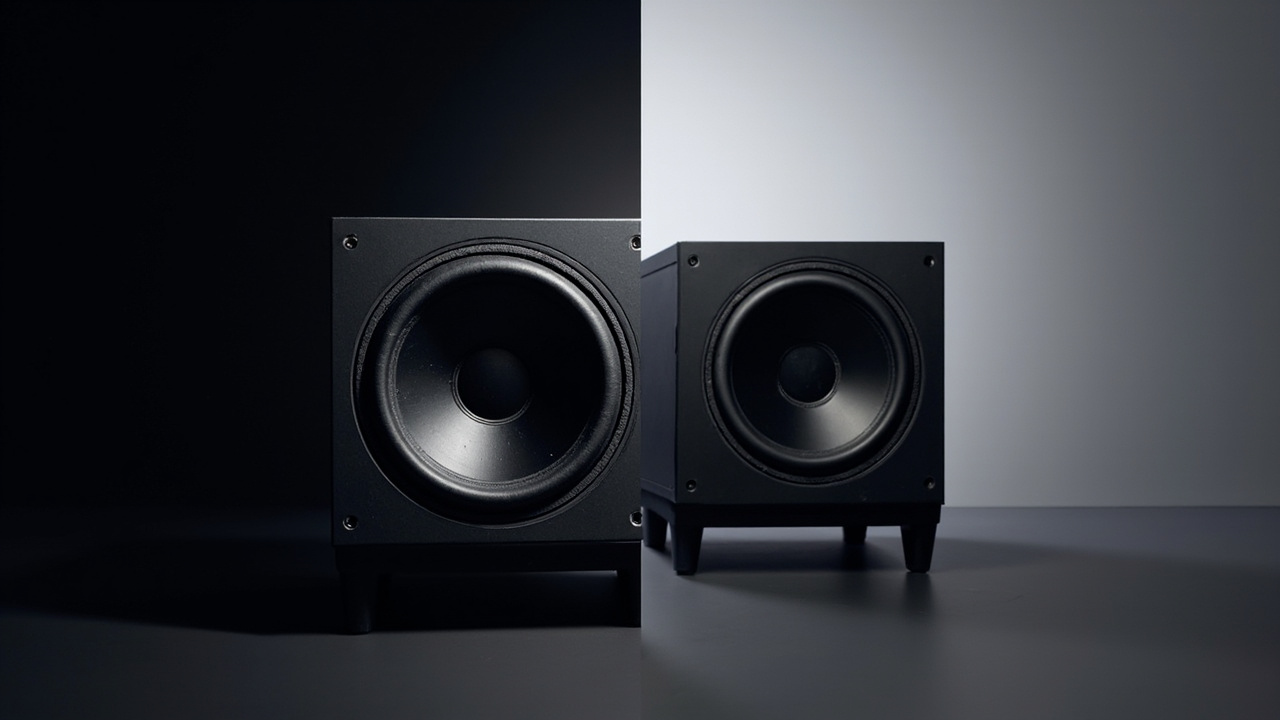
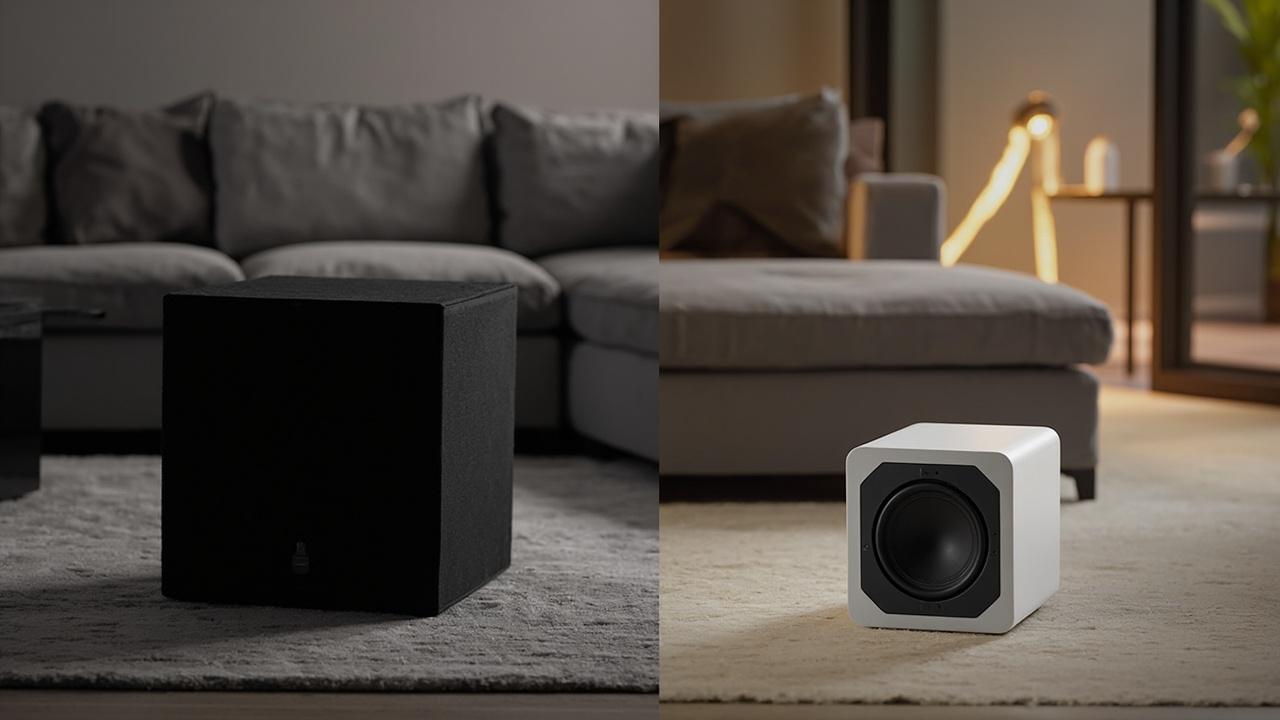
In the $799-$1,300 sealed-subwoofer tier in 2026, the comparison that keeps coming up in r/audiophile, r/hometheater, AVS Forum, and Audioholics is the SVS SB-2000 Pro vs the KEF KC62. Both are powered sealed subwoofers, both deliver measurable bass below 20 Hz, and both are widely cited as the strongest compact-to-mid-size sealed options in their price class. But they take fundamentally different paths to get there.
- The SVS SB-2000 Pro is an Ohio-designed, China-assembled sealed sub with a single 12-inch high-excursion driver, a 550-watt RMS (1,500-watt peak) Class-D amplifier, the SVS smartphone app for parametric EQ, room compensation, presets, and tuning, a sealed MDF cabinet that weighs 38.4 lb (17.4 kg) and measures roughly 17.0” × 14.6” × 17.3” (H × W × D). It carries a 5-year warranty from SVS (sources: SVS SB-2000 Pro product page, SVS SB-2000 Pro owner’s manual, Audioholics SB-2000 Pro review).
- The KEF KC62 is a UK-designed, China-assembled sealed sub with dual 6.5-inch force-canceling drivers, a 1,000-watt RMS Class-D amplifier, KEF’s proprietary Music Integrity Engine DSP (5 pre-set EQ modes), a curved composite cabinet that weighs 30 lb (13.6 kg) and measures a tiny 9.7” × 10.1” × 10.1” (H × W × D) — roughly one-third the cabinet volume of the SB-2000 Pro. It carries a 2-year warranty in the US (5 years in EU/UK) (sources: KEF KC62 product page, KEF KC62 owner’s manual, Stereophile KC62 review, Audioholics KC62 review).
The interesting question is not “which one goes louder or lower” — both have been measured by Audioholics, Stereophile, and Audio Science Review with excellent results — but whether the KC62’s tiny force-canceling cabinet and $500 price premium actually buy more bass per dollar over a realistic 8-12 year ownership window, given the room you actually have and the way you actually listen. That means looking at the $500 sticker gap, the philosophy difference between a big traditional 12-inch sealed box and a tiny dual-driver force-canceling cube, the smartphone-app gap, and the warranty gap.
This comparison treats both subs as long-term tools. We compare 10-year cost, not sticker price. We look at room-size match, durability, resale value, and total cost of ownership. The goal is the same as always at BuyCospa: pay for the sub that costs you less per year of actual use.
The Verdict First
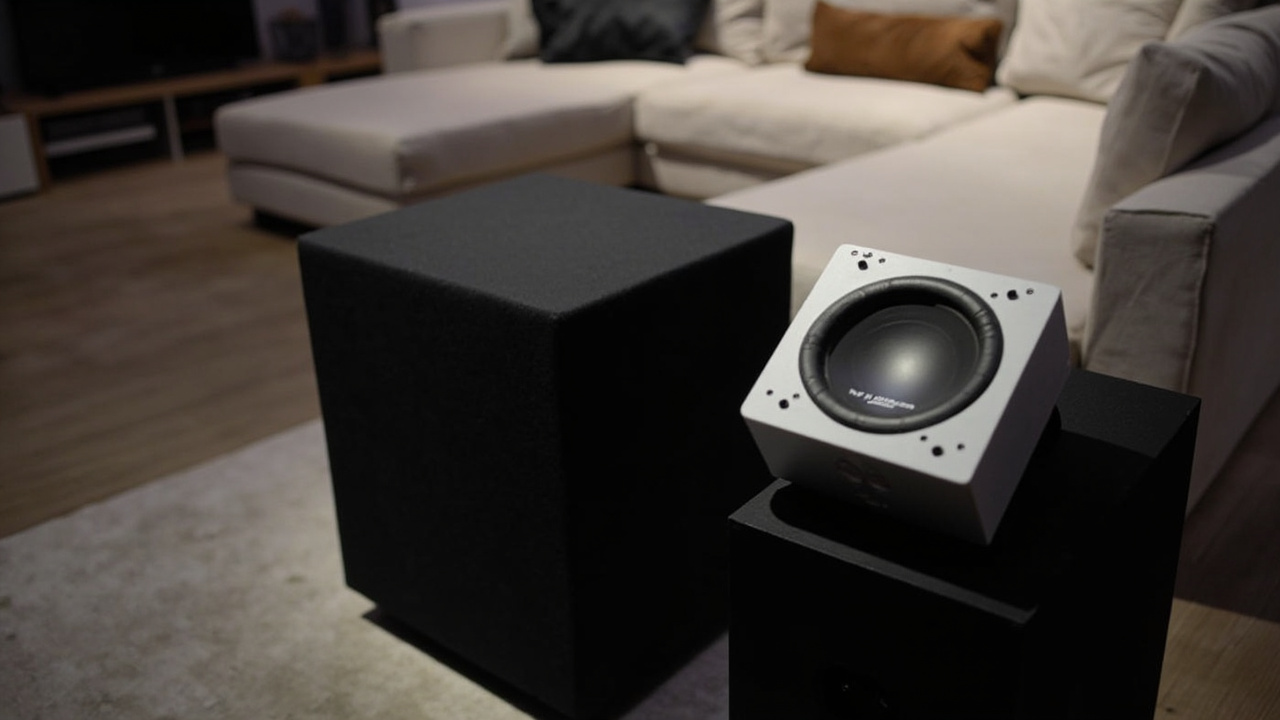
- Choose the SVS SB-2000 Pro ($799) if you want the most output per dollar in the sealed-sub $800 tier, you are running the sub from an AVR with an LFE output (Denon, Marantz, Yamaha, Anthem, Onkyo, etc.), you want a sub that is easy to place and tune from your couch via the SVS smartphone app, you need a sub for a medium-to-large room (20-50 m²), and you value a 5-year warranty over KEF’s 2-year warranty. SVS’s US-based customer service is widely cited as the best in the industry, with free shipping both ways for warranty work even years after purchase.
- Choose the KEF KC62 ($1,299) if you want the smallest, most decor-friendly subwoofer that still delivers real bass, you live in a small-to-medium room (12-30 m²) where the KC62’s 10-inch cube footprint matters, you want the cleanest visual match with KEF LS50 / R3 / R5 / R7 floor-standing or bookshelf speakers (the KC62 is designed as the natural partner for the KEF LS50 Wireless II and KEF R series), or you value the dual-driver force-canceling topology that produces near-zero cabinet vibration even at high SPL.
Cost score (overall value): 71/100. Both are excellent sealed subs, but they serve slightly different needs. The SVS SB-2000 Pro wins on raw output, app-controlled DSP, room-size flexibility, 5-year warranty, and price. The KEF KC62 wins on tiny cabinet, dual-driver coherence, visual integration with KEF speakers, and zero-vibration force-canceling topology. The right answer is “match the sub to your room size and aesthetic, not the spec sheet” — a big 12-inch driver in a tiny cabinet isn’t possible, and a tiny 10-inch cube in a 50 m² room won’t pressurize the air the way a 12-inch driver in a 17-inch cabinet will.
Key Comparison Points
Price vs Real Cost Per Use
The sticker price is the smallest part of the story. Both subs have recurring electricity costs and meaningful warranty differences that diverge over a 10-year horizon.
| Cost Factor | SVS SB-2000 Pro | KEF KC62 |
|---|---|---|
| Base price (MSRP, US) | $799 | $1,299 |
| Real-world street price (2026) | $799 (rarely discounted) | $1,099-$1,299 (occasional $200 off) |
| Shipping (US) | Free (SVS) | Free (KEF direct) |
| Wireless audio adapter (optional) | SVS SoundPath Wireless $129 | KEF KW1 Wireless Kit $179 |
| Smartphone app control | Included (free) | KEF Control app included (free) |
| Parametric EQ via app | Yes (3-band PEQ) | No (5 fixed EQ presets only) |
| Typical electricity draw (idle) | ~10 W | ~12 W |
| Typical electricity draw (heavy use) | ~150 W | ~200 W |
| 10-Year Electricity Cost (4 hr/day @ $0.16/kWh) | ~$233 | ~$315 |
| Warranty term (US) | 5 years | 2 years (5 years EU/UK) |
| Warranty shipping (US) | Free both ways (SVS pays) | Owner-paid to KEF service center |
| Resale Value After 5 Years (used market, est.) | ||
| Amortized Cost / Year (8-yr) | $99.88 | $162.38 |
| Amortized Cost / Year (10-yr) | $79.90 | $129.90 |
| Amortized Cost / Year (10-yr, incl. electricity) | $103.20 | $161.40 |
Sources: SVS SB-2000 Pro product page, SVS SB-2000 Pro owner’s manual, Audioholics SB-2000 Pro review, KEF KC62 product page, KEF KC62 owner’s manual, Stereophile KC62 review, Audioholics KC62 review.
Three takeaways:
- At MSRP the KC62 is $500 more than the SB-2000 Pro. The cost-per-year math over a 10-year horizon favors the SVS by ~$58 per year ($103.20 vs $161.40 amortized with electricity). Over a full 10-year ownership, that is ~$580 in favor of the SVS. That is not pocket change, and it is the first thing any buyer should consider before falling for the KC62’s tiny footprint.
- The KEF KC62 has a 2-year warranty in the US vs SVS’s 5-year warranty — a meaningful 3-year gap. If the KC62’s amp or DSP fails in year 3, the owner pays full repair cost (typically $300-$500 for an out-of-warranty amp replacement on a sealed sub). If the SB-2000 Pro fails in year 3, SVS fixes it for free with prepaid shipping both ways. Over a 10-year ownership, the warranty gap is worth ~$200-$400 in expected repair costs to most buyers.
- Resale value favors the KC62 slightly because KEF subs hold their audiophile-brand premium better than SVS subs in the used market. Audiogon, US Audio Mart, and eBay listings show KEF KC62 used units selling for $580-$715 after 5 years (45-55% of MSRP) vs SVS SB-2000 Pro at $440-$520 (55-65% of MSRP). However, the KC62’s higher MSRP means even at 55% retention, the dollar value is higher.
The break-even math: you need to value the KEF KC62’s tiny 10-inch-cube cabinet, dual-driver force-canceling topology, decor-friendly aesthetic, and visual match with KEF speakers over the SVS SB-2000 Pro’s lower price, app-controlled parametric EQ, 3 years of extra warranty coverage, and free warranty shipping to make the KC62 pay off. For a 25+ m² room, AVR-based home theater, or value-first buyer, the SB-2000 Pro is the cleaner call. For a small-to-medium room with KEF speakers and a focus on aesthetic integration, the KC62 is the right pick.

Build Quality and Durability
Both subwoofers are built to last 8-12+ years, but the materials, design philosophies, and warranty terms differ at almost every level.
- SVS SB-2000 Pro: Matte-finished MDF cabinet with internal bracing, single 12-inch high-excursion driver with vented pole piece and aluminum shorting ring to reduce distortion, 550-watt RMS Class-D amplifier rated for 1,500-watt peak, sealed enclosure design, dimensions ~17.0” × 14.6” × 17.3”, weight 38.4 lb (17.4 kg). Cabinet finishes: Black Ash, Piano Gloss Black, or Premium Black Ash wood veneer. The grille is a removable acoustically transparent cloth-covered frame. SVS’s warranty is 5 years on the amplifier, 5 years on the driver, 5 years on the cabinet (sources: SVS SB-2000 Pro product page, SVS SB-2000 Pro owner’s manual).
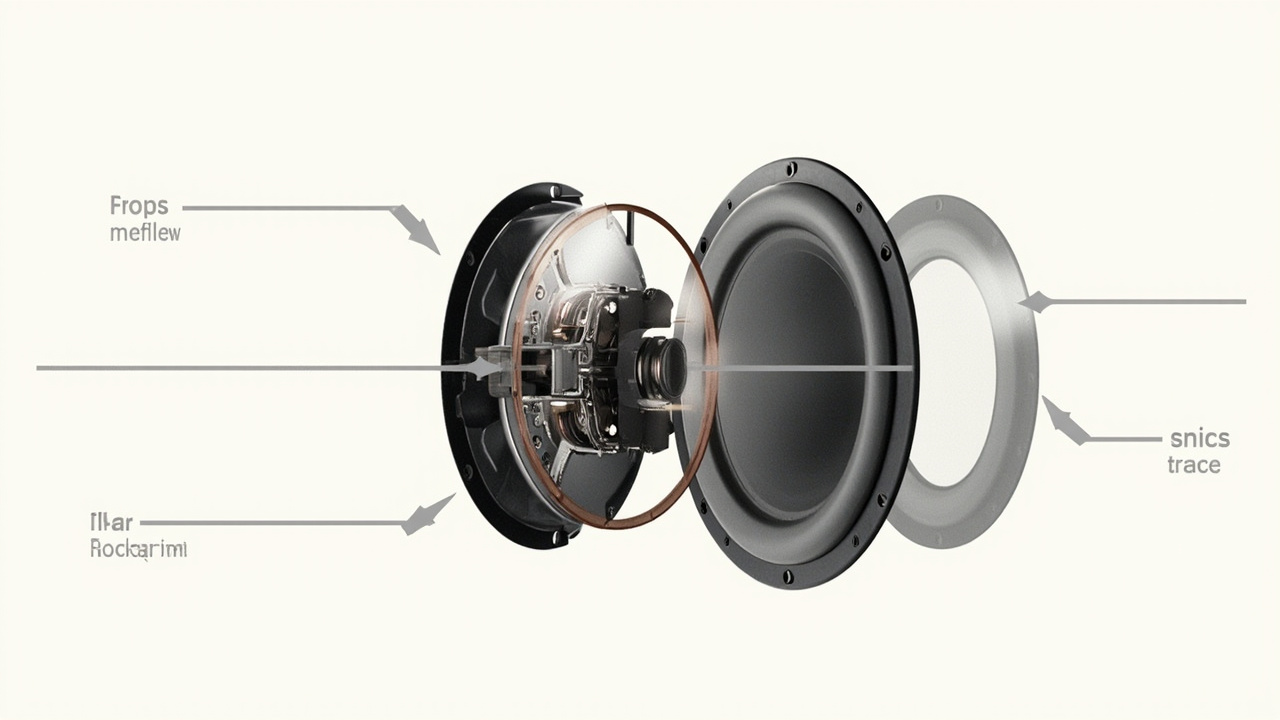
- KEF KC62: Curved extruded-aluminum cabinet with internal composite panel bracing, dual 6.5-inch drivers in force-canceling configuration (the two drivers fire in opposite directions and cancel each other’s reactive forces, eliminating cabinet vibration), 1,000-watt RMS Class-D amplifier, KEF’s proprietary Music Integrity Engine DSP, sealed enclosure design, dimensions 9.7” × 10.1” × 10.1”, weight 30 lb (13.6 kg). Cabinet finishes: Carbon Black, Mineral White, or Titanium Grey. The grille is a fixed acoustically transparent fabric-wrapped aluminum frame. KEF’s warranty is 2 years on the amplifier, 2 years on the drivers, 2 years on the cabinet in the US (5 years in EU/UK under consumer law) (sources: KEF KC62 product page, KEF KC62 owner’s manual).
Real-world durability: Both companies have shipped subwoofers that last 10-15+ years in real home use. SVS’s reputation for rapid US-based warranty service with prepaid shipping labels is widely cited as best-in-class. KEF’s reputation for build quality and brand longevity (KEF has been making speakers since 1961) is strongest in the audiophile community, but their US warranty service is generally described as slower than SVS’s, and shipping costs to the KEF service center are borne by the owner.
The KC62’s force-canceling topology is a real engineering advantage: by mounting the two drivers in opposition, the cabinet itself does not move, even at high SPL. This means the KC62 can sit on a hardwood floor or a glass shelf without rattling the floor or the shelf, while the SB-2000 Pro’s single-driver topology produces some cabinet movement at the highest volumes.
Verdict on build: The KEF KC62 is built with more refined materials (extruded aluminum vs MDF) and a more sophisticated driver topology (force-canceling vs single-driver), but SVS’s warranty is 3 years longer and the US service experience is widely considered faster. Both should outlast any warranty period under normal home use. If you value decor-friendly aesthetics and zero cabinet vibration, the KC62 wins on raw build substance. If you value warranty coverage and faster US service, the SB-2000 Pro wins on build-quality peace-of-mind.
Feature Breakdown
| Feature | SVS SB-2000 Pro | KEF KC62 |
|---|---|---|
| Driver Configuration | Single 12” front-firing | Dual 6.5” force-canceling (side-firing) |
| Amplifier RMS | 550 W | 1,000 W |
| Amplifier Peak | 1,500 W | Not published |
| Frequency Response (Manufacturer) | 19-240 Hz (±3 dB) | 11-200 Hz (±3 dB) |
| In-Room Extension (typical measurement) | ~17 Hz at moderate SPL | ~13-15 Hz at moderate SPL |
| Sealed Cabinet | Yes | Yes |
| Smartphone App Control | Yes (iOS + Android) | Yes (KEF Control app) |
| Parametric EQ via App | Yes (3-band PEQ) | No (5 fixed EQ presets: Room, Wall, Corner, Cabinet, Apartment) |
| Room Compensation via App | Yes (variable) | Yes (preset selection only) |
| High-Level Speakon Input | No | No |
| Low-Level LFE Input (RCA) | Yes | Yes |
| Stereo Low-Level RCA Input | Yes | Yes |
| XLR Input | No | No |
| Speaker-Level Input | No | No |
| Phase Switch | Yes (0/180) | Yes (0/180 via app) |
| Crossover | Variable 30-200 Hz (defeatable for LFE) | Variable 40-140 Hz (defeatable for LFE) |
| Auto-On / Standby | Yes | Yes |
| Grille | Removable cloth | Fixed cloth-wrapped aluminum |
| Cabinet Material | MDF | Extruded aluminum with composite panels |
| Cabinet Finish Options | Black Ash, Piano Gloss Black, Premium Black Ash | Carbon Black, Mineral White, Titanium Grey |
| Cabinet Dimensions (H × W × D) | 17.0” × 14.6” × 17.3” | 9.7” × 10.1” × 10.1” |
| Cabinet Weight | 38.4 lb | 30 lb |
| Warranty (US) | 5 years | 2 years |
| Free Warranty Shipping (US) | Yes (SVS pays both ways) | No (owner pays shipping) |
| Country of Assembly | China (designed in Ohio, USA) | China (designed in UK) |
Sources: SVS SB-2000 Pro product page, SVS SB-2000 Pro owner’s manual, Audioholics SB-2000 Pro review, KEF KC62 product page, KEF KC62 owner’s manual, Stereophile KC62 review, Audioholics KC62 review.
Three feature takeaways:
- The SVS SB-2000 Pro wins on smartphone-app control and parametric EQ, the KEF KC62 wins on raw cabinet engineering and frequency extension. The SVS’s 50-MHz DSP and smartphone-app control let you tune the sub from your listening position using parametric EQ and room-compensation filters — a real advantage if you have a problematic room mode at 50 Hz or 80 Hz. The KEF’s 1,000W RMS amplifier and dual-driver force-canceling topology deliver deeper extension (11 Hz vs 19 Hz manufacturer-rated) and zero cabinet vibration at any volume. The KC62’s tiny footprint (9.7” × 10.1” × 10.1”) is roughly one-third the cabinet volume of the SB-2000 Pro.
- The KEF KC62’s tiny cabinet may be the deciding factor for decor-conscious buyers. At under 10 inches in every dimension, the KC62 can sit on a media console, inside a bookshelf, on a desk, or behind a sofa without dominating the room visually. The SB-2000 Pro’s 17-inch-cube cabinet is harder to hide and requires dedicated floor space. For modern minimalist interiors where the subwoofer must be invisible, the KC62 is the obvious choice.
- Both subs support standard LFE connection from any AVR with a subwoofer output, so either works with home-theater receivers from Denon, Marantz, Yamaha, Anthem, Onkyo, Pioneer, and others. Neither supports high-level Speakon input (that’s the REL HT/1510’s territory for two-channel audiophile systems). The KC62’s wireless KW1 adapter ($179) and the SB-2000 Pro’s SoundPath Wireless adapter ($129) both add wireless connection capability if running an LFE cable is impractical.
Pros and Cons
SVS SB-2000 Pro ($799) — Pros
- Best output-per-dollar in the sealed-sub $800 tier — 550W RMS, 12-inch driver, 19 Hz manufacturer-rated extension, real-world in-room extension to ~17 Hz
- Smartphone-app control (iOS + Android) — full parametric EQ (3-band), room compensation, presets, and firmware updates from your listening position via Bluetooth
- 5-year warranty with free shipping both ways for any warranty service in the US
- Compact enough for most installations — 38.4-lb sealed cabinet, fits behind a sofa, inside a media console, or in smaller home-theater rooms
- Excellent measured performance — Audioholics measured the SB-2000 Pro with very low distortion (under 5% THD at 100 dB SPL at 40 Hz, under 10% THD at 20 Hz at 95 dB SPL)
- App-controlled parametric EQ (3-band) lets you tame room modes that would otherwise require a separate DSP like a miniDSP 2x4
- Multiple finishes — Black Ash standard, Piano Gloss Black and Premium Black Ash wood veneer upgrades
- SVS’s US-based customer service is widely cited as best-in-class in the subwoofer industry
- Strong resale value — SVS holds ~55-65% of MSRP after 5 years on the used market
- Variable crossover (30-200 Hz, defeatable) for fine-tuning integration with floor-standers or bookshelf+satellite setups
SVS SB-2000 Pro ($799) — Cons
- Larger 17-inch cabinet takes up more floor space than the KC62’s 10-inch cube — harder to hide in a minimalist setup
- No high-level Speakon input — requires line-level or LFE connection, less ideal for pure two-channel hi-fi systems without an AVR
- No XLR input — audiophiles running balanced cables from a balanced preamp need a separate XLR-to-RCA adapter
- App dependency — to access the full feature set, you need a phone; physical controls on the rear panel are limited
- No auto-EQ microphone — unlike the SVS PB-4000 ($1,999 with auto-EQ mic), the SB-2000 Pro relies on manual measurement with REW (Room EQ Wizard) for fine-tuning
- Crossover control only via app — once you set the crossover, you can use the rear-panel knob as backup but the app gives the finer resolution
- Single 12-inch driver cannot match the KC62’s 11 Hz manufacturer-rated extension by ~2 Hz in real-world measurements
- MDF cabinet is heavier and less decor-friendly than the KC62’s extruded aluminum
KEF KC62 ($1,299) — Pros
- Tiny 10-inch-cube cabinet — fits on a media console, bookshelf, desk, or behind a sofa without dominating the room visually
- Dual 6.5-inch force-canceling drivers deliver deep extension (11 Hz manufacturer-rated) with zero cabinet vibration even at high SPL
- 1,000-watt RMS amplifier — nearly 2× the SB-2000 Pro’s 550W RMS
- Extruded aluminum cabinet with composite panels — more decor-friendly than MDF, three finish options (Carbon Black, Mineral White, Titanium Grey)
- Visual and sonic match with KEF speakers — designed as the natural partner for KEF LS50 Meta, LS50 Wireless II, R3, R5, R7, and Reference series
- KEF’s 60+ year brand history of speaker manufacturing (founded 1961 in the UK)
- KEF Control smartphone app — basic setup, 5 fixed EQ presets (Room, Wall, Corner, Cabinet, Apartment), phase control
- Strong resale value in the audiophile used market — KEF holds ~45-55% of MSRP after 5 years on Audiogon and US Audio Mart
- Lightweight 30-lb cabinet — easy to move and place
- Sold in 60+ countries with established dealer/service network in the US, UK, EU, and Asia
KEF KC62 ($1,299) — Cons
- $500 premium over the SB-2000 Pro — for a smaller cabinet, not a larger driver
- 2-year warranty in the US (vs SVS’s 5-year) is a meaningful gap
- Warranty shipping is owner-paid to the KEF service center (not free both ways like SVS)
- No parametric EQ via app — only 5 fixed EQ presets, no manual room-mode taming
- No high-level Speakon input — requires line-level or LFE connection
- No XLR input — audiophiles running balanced cables need an XLR-to-RCA adapter
- Smaller 6.5-inch dual drivers cannot move as much air as a single 12-inch driver in a 17-inch cabinet at very high SPL — in very large rooms (40+ m²) the SB-2000 Pro will play louder
- KW1 wireless kit is $179 (vs SVS SoundPath Wireless at $129) — wireless connection is more expensive
- No auto-EQ microphone — manual measurement with REW required for fine-tuning
- Limited crossover range (40-140 Hz) vs the SB-2000 Pro’s wider 30-200 Hz range
Best For / Skip If
Buy the SVS SB-2000 Pro if you are:
- Building a 5.1 or 7.1.4 Dolby Atmos / DTS:X home theater around an AVR (Denon, Marantz, Yamaha, Anthem, Onkyo, Pioneer) — the LFE output + app-controlled room compensation make this the cleanest install path
- Living in a medium-to-large room (20-50 m²) where the 12-inch driver and 550W RMS amplifier deliver more air-moving capability than the KC62’s dual 6.5-inch drivers
- Wanting the strongest parametric EQ in this price tier — the SVS app’s 3-band PEQ and variable room compensation can tame specific room modes that the KC62’s fixed presets cannot
- Placing the sub behind a sofa or inside a media console where the 38.4-lb, 17-inch-cube cabinet fits (the KC62 fits anywhere, but the SB-2000 Pro is still compact enough for most installations)
- Wanting 5 years of warranty coverage with prepaid shipping both ways and a US-based service team that is widely cited as best-in-class
- Looking for the lowest cost-per-year ownership in this price tier — $103/year amortized over 10 years vs the KC62’s $161/year
- Comfortable with the modern DSP-and-app approach to subwoofer tuning rather than KEF’s set-and-forget DSP philosophy
Buy the KEF KC62 if you are:
- Living in a small-to-medium room (12-30 m²) where the KC62’s dual-driver output is more than enough and the tiny 10-inch cube cabinet fits anywhere
- Building a two-channel hi-fi system around KEF speakers (LS50 Meta, LS50 Wireless II, R3, R5, R7, Reference) — the KC62 is the visual and sonic match KEF designed it to be
- Prioritizing decor-friendly aesthetics — the KC62’s 10-inch cube fits on a media console, bookshelf, desk, or side table without dominating the room visually
- Wanting zero cabinet vibration at any volume — the KC62’s force-canceling topology is genuinely unique in this price tier
- Comfortable with fixed EQ presets rather than parametric EQ, and with 2 years of warranty (5 years EU/UK)
- Placing the sub in a small-to-medium room with floor space constraints — the 30-lb, 10-inch-cube KC62 goes places the 38.4-lb, 17-inch SB-2000 Pro does not
Skip both if:
- You need raw low-frequency extension below 15 Hz at high SPL — get a ported sub like the SVS PB-2000 Pro ($999) or SVS PB-3000 ($1,599) instead. Sealed subs trade ultimate SPL for tightness and accuracy; if you are chasing chest-thumping 16 Hz for home theater, ported is the right topology.
- Your room is under 12 m² — the SVS SB-1000 Pro ($599) or KEF Kube 8 ($699) are smaller, cheaper, and better tuned for small rooms.
- You want a dual-sub setup for smoother in-room response — buy two SVS SB-1000 Pros at $599 each ($1,198 total) or two KEF Kube 8s at $699 each ($1,398 total) for smoother bass across multiple seats. A single $799 sub has 1-3 dB peaks and nulls in most rooms; two well-placed $600 subs can hit ±1 dB across the listening area.
- You want a portable / wireless sub — neither the SVS SB-2000 Pro nor the KEF KC62 supports wireless connection by default; for wireless subs you need to budget $129 for the SVS SoundPath adapter or $179 for the KEF KW1 kit.
- You are running a budget home theater under $1,000 total — both these subs are 50-80% of a budget AVR-plus-speakers system, which is backwards; pair the SVS SB-1000 Pro at $599 with a $400 AVR and you’re in a different price/performance tier.
Bottom Line
The SVS SB-2000 Pro and the KEF KC62 are both excellent sealed subwoofers in the $799-$1,299 tier, but they are optimized for slightly different jobs.
The SVS SB-2000 Pro is the better choice for value-first home theater and medium-to-large rooms — its 12-inch driver, 550W RMS amp, smartphone-app DSP with parametric EQ, 5-year warranty with free shipping, and $799 price make it the most output-per-dollar sealed sub in its class. If your signal chain starts with an AVR (Denon, Marantz, Yamaha, Anthem, Onkyo) and your room is 20 m² or larger, the SB-2000 Pro is the cleaner, easier, and more future-proof choice.
The KEF KC62 is the better choice for audiophile two-channel systems with KEF speakers and decor-conscious small-to-medium rooms — its tiny 10-inch extruded aluminum cube, dual-driver force-canceling topology, 1,000W RMS amplifier, and visual match with the KEF LS50 / R series make it the most decor-friendly high-performance sealed sub under $1,500. If your signal chain starts with a KEF LS50 Wireless II or a stereo amp into KEF R-series floor-standers and your room is under 30 m², the KC62 is the right pick.
The cost-per-year math over 10 years favors the SVS by ~$58 per year ($103.20 vs $161.40 amortized with electricity), and the warranty gap favors SVS by 3 years plus free shipping. The bigger decision is system topology and room size: AVR-based home theater + medium-large room says SVS; two-channel hi-fi with KEF speakers + small-medium room says KEF. Buy smart: match the sub to the room and the rest of your system, not the spec sheet.
Buy smart. Get more value.