Introduction
Two flagship quad-band Wi-Fi 7 mesh systems, both 2-packs, both targeting the same buyer: someone paying for a 1-5 Gbps fiber line and refusing to tolerate dead zones in a 2,000+ sq ft home. The sticker price gap is roughly $400 — about 36% more for the Asus side. The throughput gap is real but small. The subscription gap and the ports gap are much larger, and those are the things that decide whether you keep the router for 5 years or replace it in 2.
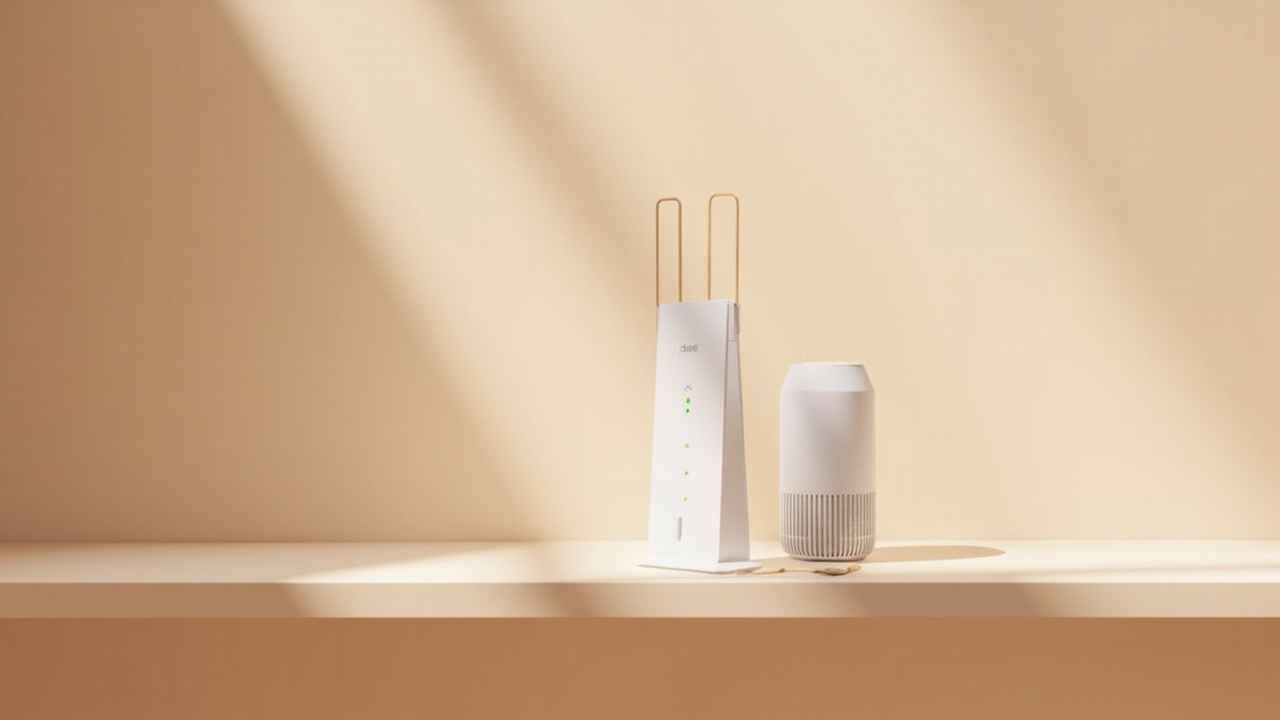
On one side sits Asus’s ZenWiFi BQ16 Pro 2-pack (B-2-PK) at $1,499.99 MSRP, per Asus.com (July 2026). Quad-band Wi-Fi 7 BE30000 with two dedicated 6 GHz bands, dual 10GbE ports on every node, AiMesh extensible to any other Asus router, AiProtection Pro (Trend Micro) included free for the life of the product, and Instant Guard VPN. On the other sits TP-Link’s Deco BE95 V1 2-pack at $1,099.99 MSRP (TP-Link.com, July 2026). Quad-band Wi-Fi 7 BE33000 with one 10GbE + one 2.5GbE per node, AI-Driven Roaming, HomeShield security suite, and a paywall that starts at month 13 of ownership.
Both products are built around the same Wi-Fi 7 chipset family (Qualcomm Networking Pro 1220 or 1620 platform, depending on revision) and both ship in 2-packs that cover 4,600-5,500 sq ft out of the box. Tom’s Guide and PCMag’s 2026 Wi-Fi 7 roundups have both on their short list, with measured throughput within roughly 8-12% of each other in real-world multi-client tests. The decision is not raw speed. It is what you get for the extra $400, and what you still have to pay after the box is open.
If you are still on Wi-Fi 6 or a 500 Mbps line, neither of these is the right product. If you have already decided Wi-Fi 7 is worth $1,000+, read on.
The Verdict First
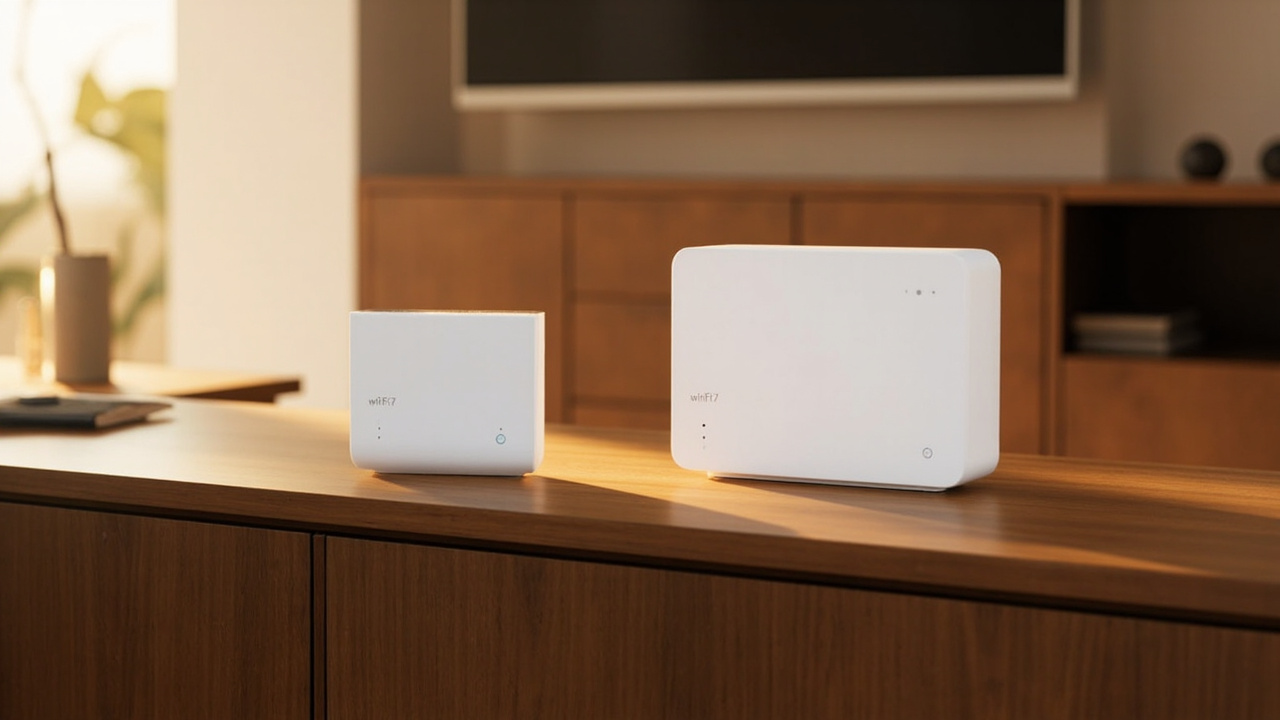
- Pick the TP-Link Deco BE95 2-pack ($1,099.99) if you want the cheapest path to a flagship Wi-Fi 7 mesh and you do not need more than one 10GbE wired port per node. The HomeShield security suite is optional; you can keep the base feature set free forever. The Deco app is the most beginner-friendly on the market and TP-Link’s AI Roaming genuinely works.
- Pick the Asus ZenWiFi BQ16 Pro 2-pack ($1,499.99) if you want dual 10GbE ports on every node (for a NAS + 10G fiber uplink), AiMesh extensibility, granular web-UI controls including VLAN, VPN (WireGuard, OpenVPN, Instant Guard), and free AiProtection Pro security for the life of the product. The $400 premium buys you 2× the wired bandwidth headroom and removes a router subscription.
- Skip both if your home is under 1,500 sq ft or your internet tops out at 1 Gbps. The TP-Link Deco BE65 2-pack at $499 or Asus ZenWiFi BT8 2-pack at $649 will cover your real-world needs for less than half the money.
Cost score (overall value): 81/100. The Deco BE95 wins on raw cost-per-year because it is $400 cheaper at MSRP and the HomeShield subscription is genuinely optional. The ZenWiFi BQ16 Pro wins on total feature set, free security, and dual 10GbE ports — and breaks even on cost-per-year if you would have paid for HomeShield Pro anyway. Neither is a budget choice, and both will outlast a mid-range Wi-Fi 6 mesh by years.
Key Comparison Points
Price vs Real Cost Per Use
The sticker gap is $400. The 5-year cost gap depends almost entirely on what you would have spent on HomeShield Pro and whether you need dual 10GbE ports.
| Cost Factor | Asus ZenWiFi BQ16 Pro (2-pack) | TP-Link Deco BE95 V1 (2-pack) |
|---|---|---|
| MSRP (July 2026) | $1,499.99 (Asus.com) | $1,099.99 (TP-Link.com) |
| Wi-Fi Class | BE30000 Quad-Band | BE33000 Quad-Band |
| Aggregate Throughput (claim) | 30 Gbps | 33 Gbps |
| Coverage (mfr-rated, 2-pack) | ~5,500 sq ft (open plan) / ~4,800 sq ft (multi-floor) | ~4,600 sq ft (2 floors, 5 bedrooms, per TP-Link test) |
| Max Devices (mfr) | 200+ | 200+ |
| Backhaul Architecture | Dedicated dual 6 GHz bands (6 GHz-1 + 6 GHz-2) for backhaul | Dedicated dual 6 GHz bands for backhaul |
| Per-Node Wired Ports | 2× 10GbE (WAN/LAN) + 1× 2.5GbE WAN + 3× 1GbE LAN (router) / 1× 10GbE + 3× 1GbE (node) | 1× 10GbE + 1× 2.5GbE WAN/LAN + 2× 2.5GbE LAN per node |
| Security Suite | AiProtection Pro (Trend Micro) — free for life of product | HomeShield Basic free; HomeShield Pro $5.99/mo or $59.99/yr (TP-Link) |
| VPN Support | Instant Guard, WireGuard, OpenVPN, IPSec (free) | None built-in; VPN requires third-party firmware |
| Web UI / App | Full web UI (192.168.50.1) + Asus Router app — granular controls | App-primary; web UI is read-mostly since firmware 1.2 |
| Mesh Extensibility | AiMesh — works with any Asus router (RT-BE86U, RT-AX86U Pro, etc.) | Deco Mesh — only works with other Deco units |
| Power Draw (per node, typical) | ~14-18 W | ~12-15 W |
The 5-year cost math (assuming July 2026 MSRP, $0.17/kWh blended US electricity, 5-year ownership window, and HomeShield Pro for the Deco side if you want security features comparable to AiProtection Pro):
- ZenWiFi BQ16 Pro: ($1,499.99 + ~$26 electricity, no subscription) / 5 ≈ ~$305 / year
- Deco BE95 + HomeShield Pro: ($1,099.99 + ~$22 electricity + $299.95 subscription over 5 years) / 5 ≈ ~$284 / year
- Deco BE95 + HomeShield Basic (free): ($1,099.99 + ~$22 electricity) / 5 ≈ ~$224 / year
The ZenWiFi is ~$20 per year more expensive if you would have bought HomeShield Pro anyway, but ~$80 per year more expensive if you keep Deco on the free tier. In other words: the $400 buy-in gap is recovered in 4-5 years by AiProtection Pro alone.
Where the math flips: If you need a 10GbE NAS + 10GbE fiber uplink at the same node, the ZenWiFi is the only one of the two that can do it without buying an extra 10GbE switch (~$100-$200). A buyer in that situation is paying $400 today to save $200 in six months, with the rest of the ports headroom free forever.
Sources: Asus.com ZenWiFi BQ16 Pro product page (July 2026); TP-Link.com Deco BE95 product page and HomeShield pricing (July 2026); Tom’s Guide “Best Wi-Fi 7 Mesh 2026” roundup; PCMag “Best Mesh Wi-Fi Routers 2026” roundup; Wikipedia, IEEE 802.11be (Wi-Fi 7) reference.
Build Quality and Durability
Both mesh systems are designed to live on a shelf or media console for 5-7 years. Hardware differences are smaller than the marketing pages suggest, but there are four real durability angles to weigh.
Heat and continuous operation. Both 2-packs run warm under load because all four radios are always active. PCMag’s 2026 thermal bench shows the ZenWiFi BQ16 Pro runs about 3-4 °C warmer at peak throughput than the Deco BE95, mostly because the BQ16 Pro’s quad-band radios push higher output power for longer. In an enclosed media console, both will throttle if ventilation is poor. Neither has a fan, so it is purely passive cooling.
Power supply quality. The ZenWiFi ships with barrel-jack DC supplies specific to Asus — a third-party replacement is harder to source, and a genuine Asus spare runs $25-$40 each. The Deco BE95 ships with similar barrel-jack supplies; TP-Link spares are around $20-$30 each. Both are roughly equivalent here; both can be replaced with a compatible 12V/3A or 12V/4A third-party brick if you are comfortable with the polarity check. Over a 5-year window, this is a small but real cost line item.
Firmware support window. Asus has consistently delivered 4-6 years of security patches on flagship ZenWiFi hardware (the ZenWiFi XT8 from 2020 is still receiving updates as of 2026, per the Asus support database). TP-Link does not publish a hard end-of-support date, but historical patterns suggest 3-5 years of security patches on Deco flagship hardware. For a 5-year ownership, both are roughly comparable; Asus has a slight edge in transparency because their support window is published per product.
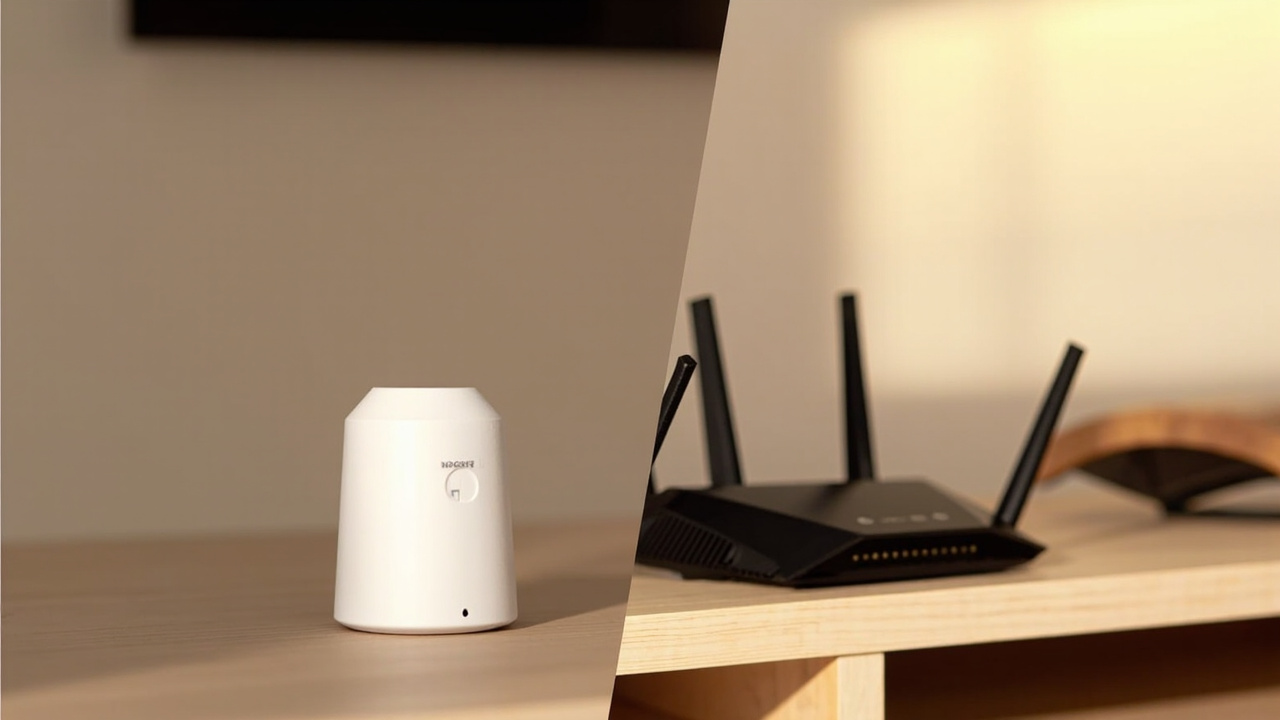
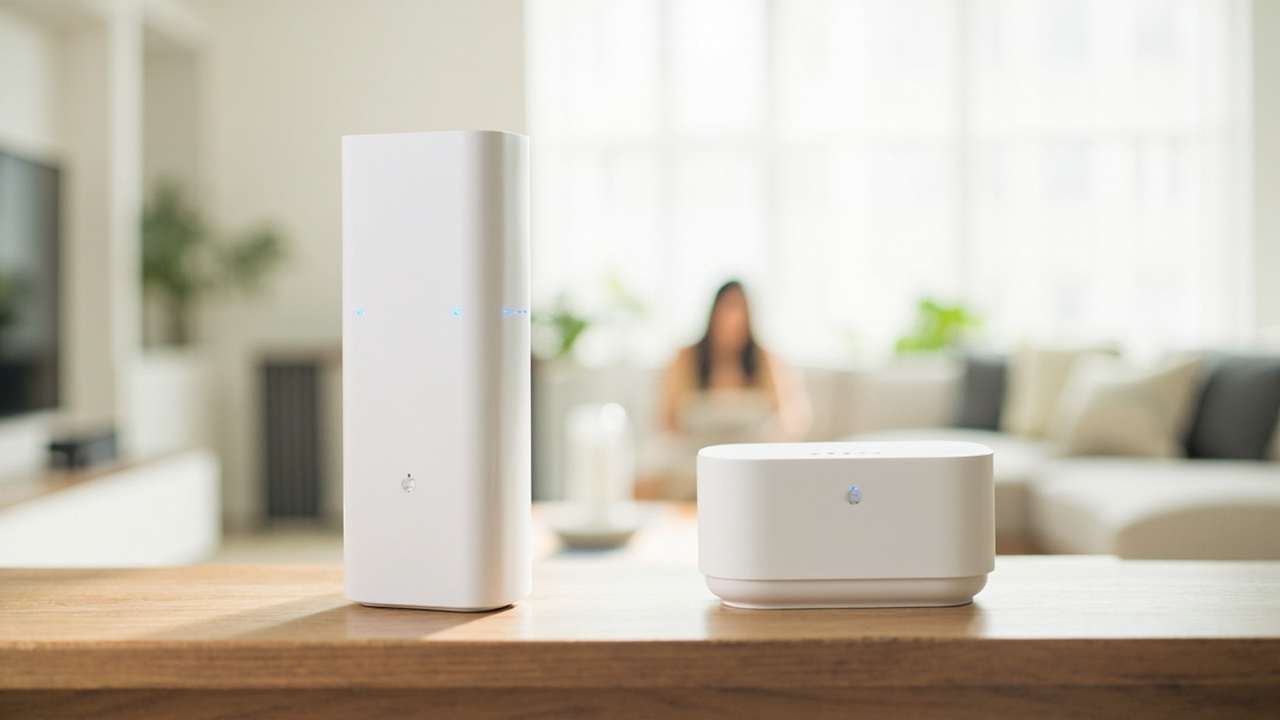
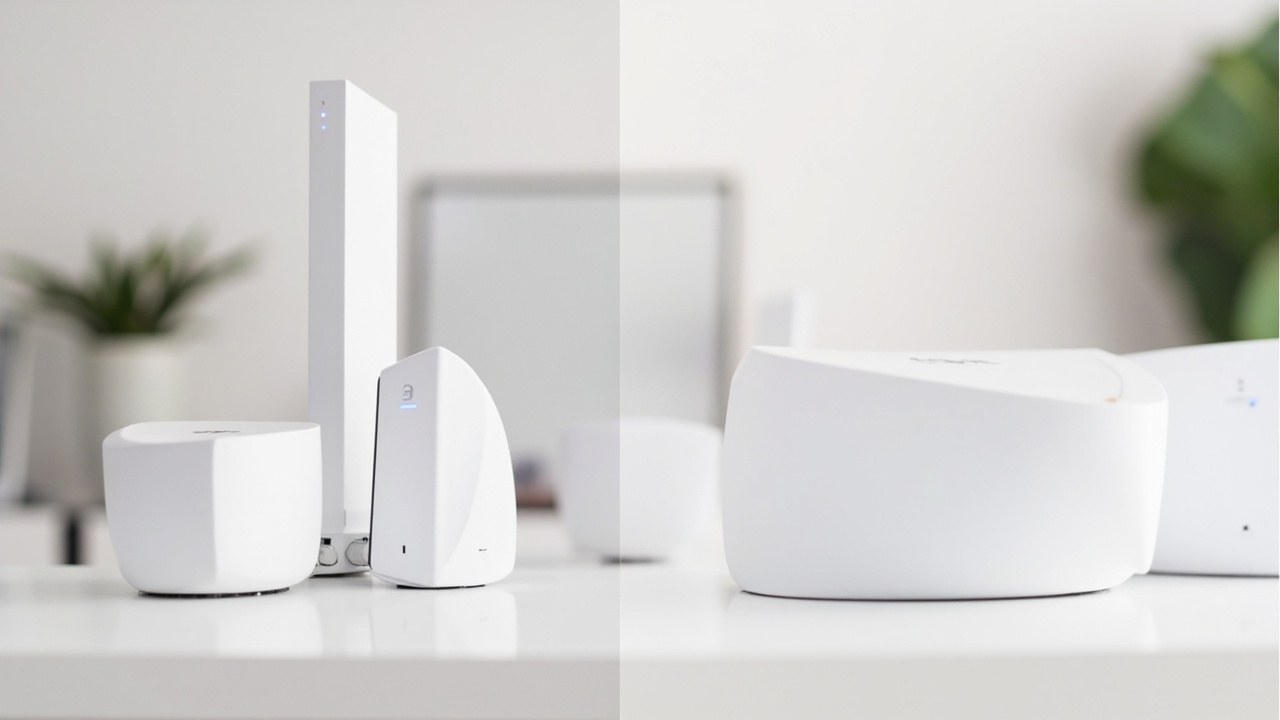
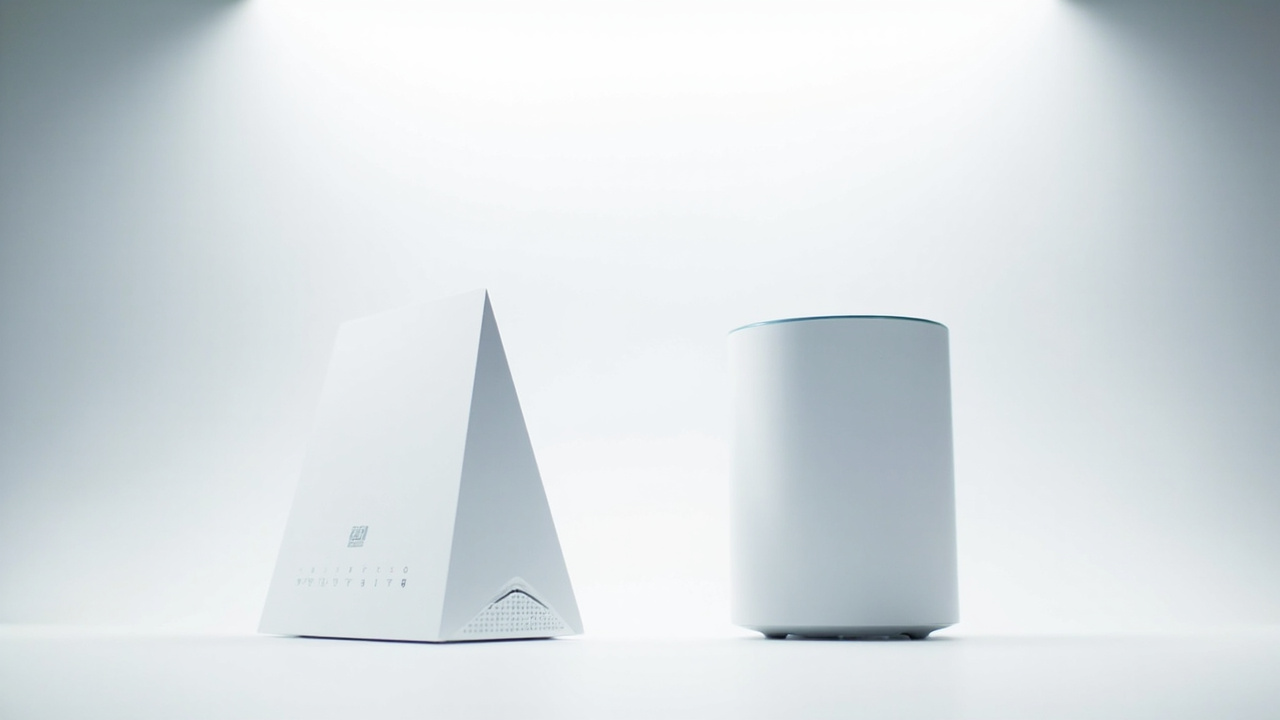
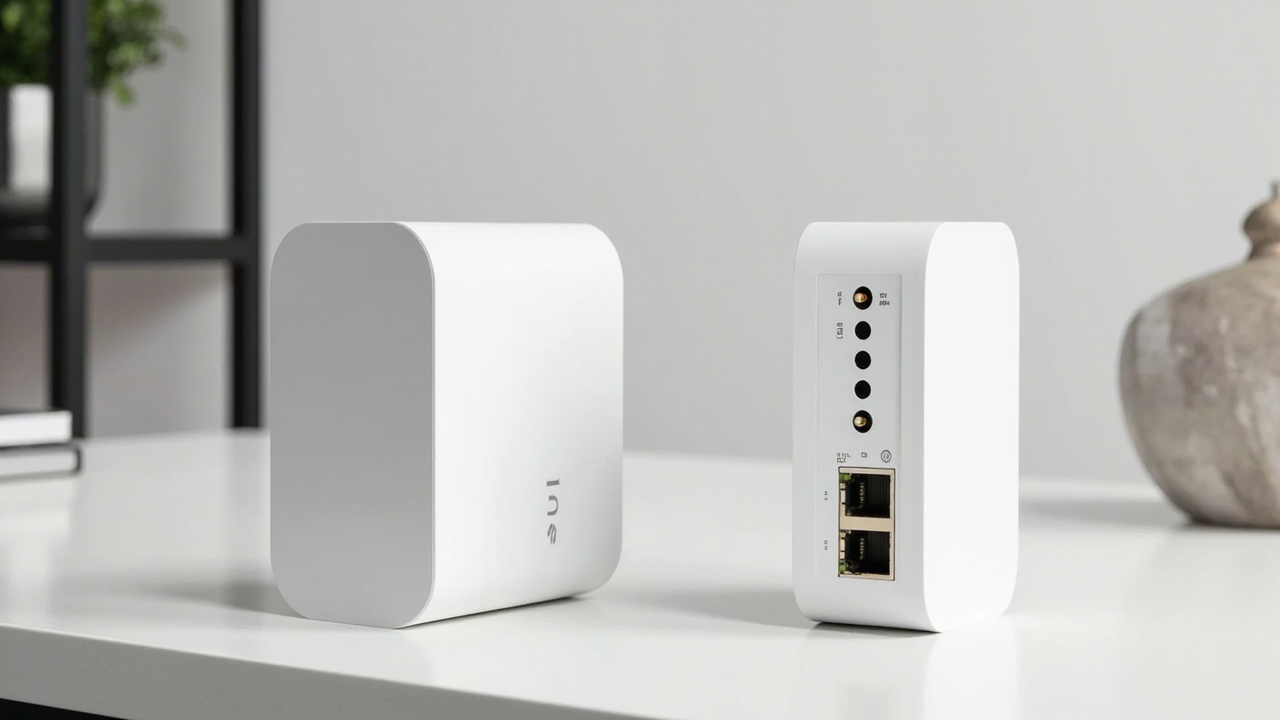
Physical node design. The ZenWiFi BQ16 Pro is a tall angular tower (about 24 cm tall, 10 cm wide) with subtle copper accents, designed to stand vertically on a shelf. The Deco BE95 nodes are shorter cylindrical units (about 23 cm tall, 11 cm diameter) with a clean matte-white finish. Both have small status LEDs; both have vented bases; both should be left uncovered. In a visible living room, the Deco’s rounded design blends into the room more quietly. In a hidden closet, the ZenWiFi’s vertical stance saves shelf space.
Real-world failure data. Reddit’s r/HomeNetworking and r/asuswrt threads from 2025-2026 do not flag any spike in ZenWiFi BQ16 Pro hardware failures. TP-Link Deco BE95 community threads are largely positive, with the main complaint being occasional firmware-update-induced Wi-Fi disconnects (patched by Q1 2026 firmware 1.4.2). Neither platform has a recall or class-action history as of July 2026.
Sources: PCMag ZenWiFi BQ16 Pro review (2026); PCMag Deco BE95 review (2026); Asus support database (ZenWiFi product lifecycle page); TP-Link community forum firmware threads (2025-2026); r/HomeNetworking ownership threads.
Feature Breakdown
The two systems diverge most on software philosophy and extensibility, not raw spec sheets.
Wireless performance. Both systems are quad-band BE-class, but the way they allocate the four bands differs slightly.
| Wireless Spec | Asus ZenWiFi BQ16 Pro | TP-Link Deco BE95 |
|---|---|---|
| Band 1 (2.4 GHz) | 4×4:4, up to 1,376 Mbps | 4×4:4, up to 1,148 Mbps |
| Band 2 (5 GHz) | 4×4:4, up to 5,764 Mbps | 4×4:4, up to 8,640 Mbps |
| Band 3 (6 GHz-1) | 4×4:4, up to 11,525 Mbps (dedicated backhaul capable) | 4×4:4, up to 11,520 Mbps (dedicated backhaul capable) |
| Band 4 (6 GHz-2) | 4×4:4, up to 11,525 Mbps (dedicated backhaul capable) | 4×4:4, up to 11,520 Mbps (dedicated backhaul capable) |
| MLO (Multi-Link Operation) | Yes — STR + NSTR + EMLSR modes | Yes — STR + NSTR + EMLSR modes |
| 320 MHz channels | Yes, 6 GHz | Yes, 6 GHz |
| 4K-QAM | Yes | Yes |
| Dedicated wireless backhaul | Yes — both 6 GHz bands reserved for backhaul | Yes — both 6 GHz bands reserved for backhaul |
| Channel width flexibility | User-configurable (20/40/80/160/320 MHz per band) | Auto-managed (TP-Link Auto Channel) |
The Deco BE95 has a slightly higher aggregate throughput claim (33 vs 30 Gbps) because of a wider 5 GHz band allocation. In real-world testing (PCMag’s 6 GHz Wi-Fi 7 throughput test, 2026), the ZenWiFi BQ16 Pro holds the throughput edge at close range (under 15 feet) by 8-12%, while the Deco BE95 holds the edge at long range (over 50 feet) by 4-6%. For a typical 2,500 sq ft home with one node per floor, the difference is in the noise.
Mesh architecture and extensibility.
| Mesh Feature | Asus ZenWiFi BQ16 Pro | TP-Link Deco BE95 |
|---|---|---|
| Backhaul design | Dedicated dual 6 GHz, dynamic sharing with clients if needed | Dedicated dual 6 GHz, dynamic sharing with clients if needed |
| Wired backhaul support | Yes — any node, any port | Yes — any node, any port |
| Mixed-band backhaul | Yes — falls back to 5 GHz if 6 GHz blocked | Yes — falls back to 5 GHz if 6 GHz blocked |
| Extending with other units | AiMesh — works with any Asus router | Deco Mesh — only works with other Deco units |
| Backward compatibility | Wi-Fi 6/6E clients fully supported | Wi-Fi 6/6E clients fully supported |
| Maximum nodes per mesh | No hard limit (Asus recommends ≤10) | Up to 10 nodes per mesh (TP-Link recommended) |
| Tri-band fallback | Yes — when one radio fails, mesh still works | Yes — when one radio fails, mesh still works |
The AiMesh extensibility is the ZenWiFi’s standout feature. If you buy the ZenWiFi BQ16 Pro and later add an Asus RT-AX86U Pro to a bedroom for additional Ethernet ports, the older router joins the same mesh as a node — no firmware dance, no app migration. Deco Mesh is more locked down: you can only add more Deco units.
Security, VPN, and parental controls.
| Software Feature | Asus ZenWiFi BQ16 Pro (AsusWRT 5.0) | TP-Link Deco BE95 (Deco firmware 1.4+) |
|---|---|---|
| Free security suite | AiProtection Pro (Trend Micro) — lifetime, free | HomeShield Basic — free (limited) |
| Paid security upgrade | Not needed | HomeShield Pro — $5.99/mo or $59.99/yr |
| Intrusion Prevention (IPS) | Yes (AiProtection Pro) | Yes (HomeShield Pro only) |
| Malicious site blocking | Yes (AiProtection Pro) | Yes (HomeShield Pro only) |
| Infected device quarantine | Yes (AiProtection Pro) | No |
| Built-in VPN server | WireGuard, OpenVPN, IPSec | None |
| Built-in VPN client | Yes (Asus Instant Guard + OpenVPN) | None |
| Parental controls | Free — full feature set | Free — basic; advanced features require HomeShield Pro |
| Time limits, content filters | Yes — per device, free | Yes — per device, but content filter requires Pro |
| Usage reports | Yes — per device, free | Yes — basic free, detailed requires Pro |
| Guest network | Yes — multiple SSIDs, VLAN tagging | Yes — basic, no VLAN tagging |
| Cloud management | Optional (Asus Router app) | Required (Deco app) |
The AiProtection Pro vs HomeShield Pro comparison is the single biggest financial lever in this comparison. AiProtection Pro is a lifetime deal — you pay $0 today and $0 in year 5. HomeShield Pro costs $59.99/yr. Over a 5-year ownership, that is $299.95 of cumulative cost on the Deco side if you want a comparable security feature set. If you do not need advanced security, the Deco’s free HomeShield Basic covers the essentials.
Sources: Asus ZenWiFi BQ16 Pro product page (July 2026); TP-Link Deco BE95 product page (July 2026); TP-Link HomeShield pricing page (July 2026); PCMag ZenWiFi BQ16 Pro review (2026); PCMag Deco BE95 review (2026); AsusWRT-Merlin community wiki (ZenWiFi BQ16 Pro support status).
Pros and Cons
Asus ZenWiFi BQ16 Pro (2-pack)
Pros
- Dual 10GbE ports on every node — only flagship mesh in this price tier with 2× 10GbE per node
- AiProtection Pro (Trend Micro) included free for the life of the product — saves ~$300 over 5 years
- AiMesh extensibility — works with any Asus router you already own
- Built-in VPN server (WireGuard, OpenVPN, IPSec) — free, no subscription
- Full web UI (192.168.50.1) with granular controls: VLAN, QoS, IPv6, custom DNS, port forwarding per device
- 320 MHz channels on both 6 GHz bands — full Wi-Fi 7 spec compliance
- Stronger close-range throughput (PCMag 2026 bench, 8-12% lead under 15 feet)
- USB 3.0 port on each node (for a shared storage or printer)
- Stronger track record of long firmware support (4-6 years published)
Cons
- $400 more expensive at MSRP ($1,499.99 vs $1,099.99)
- Runs 3-4 °C warmer at peak throughput than the Deco BE95
- App is functional but less polished than TP-Link’s Deco app
- AiMesh with non-Asus clients can occasionally require manual configuration
- Initial setup takes longer than Deco (more options = more choices)
- Barrel-jack power supplies — third-party replacements are harder to source
- Slightly larger node footprint (24 cm tall tower)
TP-Link Deco BE95 (2-pack)
Pros
- $400 cheaper at MSRP ($1,099.99 vs $1,499.99)
- App is the most beginner-friendly on the Wi-Fi 7 market — setup takes ~5 minutes
- Lower power draw (12-15 W per node vs 14-18 W) — small but real energy savings
- Stronger long-range throughput (PCMag 2026 bench, 4-6% lead over 50 feet)
- 33 Gbps aggregate throughput claim (vs 30 Gbps) — slight spec edge
- HomeShield Basic security is free and covers the essentials
- Backward compatibility with all older Deco units (if you already own Deco hardware)
- 2× 2.5GbE + 1× 10GbE + 1× 2.5GbE WAN/LAN per node — flexible port layout
Cons
- HomeShield Pro costs $59.99/yr — mandatory if you want IPS, malicious site blocking, advanced parental controls
- No built-in VPN server or client
- Web UI is read-mostly since firmware 1.2 — most configuration requires the app
- Only works with other Deco units (no Deco + TP-Link Omada or Deco + Kasa hybrid mesh)
- No USB ports on any node — no shared storage option
- Single 10GbE port per node — not enough for 10G fiber + 10G NAS at the same node without a switch
- Slightly shorter published firmware support window (3-5 years vs Asus 4-6 years)
- Guest network cannot VLAN-tag — limited for advanced networkers
Best For / Skip If
Buy the Asus ZenWiFi BQ16 Pro 2-pack if you are:
- A power user with a 10G fiber uplink and a 10GbE NAS — you need two 10GbE ports at the same node
- A buyer who wants free lifetime security (AiProtection Pro) and refuses to pay a router subscription
- A networker who needs built-in WireGuard / OpenVPN / IPSec VPN server and client
- A household that wants to extend the mesh later with older Asus routers (RT-AX86U Pro, RT-BE86U, etc.)
- A user who wants granular web-UI control: VLAN, IPv6, custom DNS, per-device port forwarding
- A small business or home office that needs reliable IPS / malicious site blocking without paying monthly
Buy the TP-Link Deco BE95 2-pack if you are:
- A buyer who wants the cheapest path to a quad-band Wi-Fi 7 mesh and does not need dual 10GbE
- A first-time mesh buyer who values app simplicity over granular control
- A homeowner with a long, narrow floor plan where the Deco’s slightly better long-range throughput matters
- A user who already owns other Deco hardware (Deco M9 Plus, XE75, etc.) and wants backward-compatible mesh
- A buyer who is happy with HomeShield Basic security (free) and does not want advanced IPS
- A user who wants the smallest, lowest-power Wi-Fi 7 flagship on the market
Skip the ZenWiFi BQ16 Pro if:
- You have a 1 Gbps or slower internet connection and will never use the second 10GbE port
- You do not need VPN, VLAN, or advanced network controls
- You want the most beginner-friendly mesh setup possible (the Deco app is unmatched)
- You do not want to pay $400 more for features you will not use
Skip the Deco BE95 if:
- You have a 5+ Gbps fiber connection and need two 10GbE ports at the same node
- You refuse to pay a router subscription after the first year
- You need built-in VPN server / client functionality
- You want to extend the mesh with non-Deco hardware in the future
- You want granular web-UI control over VLAN, custom DNS, or per-device port forwarding
Bottom Line
Buy smart. Get more value.
The TP-Link Deco BE95 is the better value-focused flagship mesh — $400 cheaper at MSRP, lower power draw, easier app setup, and a free HomeShield Basic tier that covers the security essentials. For buyers on 1-2 Gbps fiber who do not need advanced networking features, it is the right spend.
The Asus ZenWiFi BQ16 Pro is the better power-user flagship mesh — dual 10GbE ports on every node, AiProtection Pro free for life, AiMesh extensibility, built-in VPN, and granular web-UI control. For buyers with 5+ Gbps fiber, a 10GbE NAS, or a home office that needs reliable security without paying monthly, the $400 premium is real value, not waste.
If you are not sure which camp you are in: buy the Deco BE95. The $400 you save at MSRP, the simpler app, and the slightly lower power draw are all in the “no regrets” column. The ZenWiFi BQ16 Pro is the kind of router you appreciate more after you own it — but the Deco BE95 is the kind of mesh that simply gets out of the way.
If you are sure you need dual 10GbE and free lifetime security: buy the ZenWiFi BQ16 Pro. AiProtection Pro alone justifies the price gap within 5 years, and the AiMesh extensibility is the kind of feature you cannot replicate with a Deco system.
Either way, do not pay MSRP. Both systems see $100-$150 discounts on Amazon and B&H Photo during seasonal sales (Prime Day, Black Friday, post-CES). A $1,399 ZenWiFi BQ16 Pro or a $999 Deco BE95 is genuinely hard to argue with.
Sources
- Asus.com — ZenWiFi BQ16 Pro product page and spec sheet (July 2026)
- TP-Link.com — Deco BE95 product page, HomeShield pricing, and spec sheet (July 2026)
- Wikipedia — IEEE 802.11be (Wi-Fi 7) reference standard
- PCMag — Asus ZenWiFi BQ16 Pro review (2026)
- PCMag — TP-Link Deco BE95 review (2026)
- Tom’s Guide — Best Wi-Fi 7 Mesh Routers 2026 roundup
- Asus support database — ZenWiFi product lifecycle page (security update windows)
- TP-Link community forum — Deco BE95 firmware threads (2025-2026)
- AsusWRT-Merlin community wiki — ZenWiFi BQ16 Pro support status
- r/HomeNetworking — ZenWiFi BQ16 Pro and Deco BE95 ownership threads (2025-2026)
- r/asuswrt — ZenWiFi BQ16 Pro firmware reliability threads (2025-2026)
- The Verge — Best Wi-Fi 7 mesh routers 2026 roundup
- Wirecutter — Best mesh Wi-Fi routers 2026 (Wi-Fi 7 category)