Introduction
In April 2026, DJI launched the Osmo Pocket 4 — a 1-inch-sensor, 4K/240fps pocket gimbal camera with 107 GB of built-in storage — and then didn’t sell it in the United States because of the ongoing US–China DJI dispute (PetaPixel, April 16 2026, CNET). At the same time, the Sony ZV-E10 II body sits on Sony’s US store at $1,199.99 (Sony Electronics US) — and it’s a real, freely-shipped, 26 MP APS-C mirrorless body that real creators have been buying since July 2024.
The two cameras look like they’re answering different questions, but they’re not. Both target the solo creator who wants better-than-phone video without renting a cinema rig. Both shoot 4K with creator-friendly autofocus and stabilization. Both ship under the Sony / DJI creator-camera banner. The DJI is the “all-in-one turn-it-on-and-shoot” play; the Sony is the “swap lenses, learn color science, grow into a real camera” play.
The price gap is the headline: the DJI Osmo Pocket 4 Standard Combo lists at €499 / £445 / AUD $769 (the Creator Combo is €639 / US-equivalent ~$799 when grey-imported) (DJI UK store, DJI EU store, DJI AU store). The Sony ZV-E10 II body is $1,199.99 at Sony US — and realistically $1,399.99 with the 16-50 mm kit lens, the way most creators buy it.
That’s a $400 to $600 difference on day one. Is the Sony worth it? It depends entirely on what you plan to shoot for the next 5 years.

The Verdict First
- Choose the DJI Osmo Pocket 4 ($799 Creator Combo) if your video is one-person, talking-to-camera, walk-and-talk, run-and-gun vlogs — the gimbal is built in, the menu is a 2-inch touchscreen, and you can have usable 4K/120fps in your pocket within 60 seconds of unboxing. Skip it if you’re in the US and don’t want to grey-import: the official DJI US store still does not list it, and warranty service is uncertain (PetaPixel, April 16 2026).
- Choose the Sony ZV-E10 II ($1,199.99 body / ~$1,399.99 with kit lens) if you want interchangeable lenses, real APS-C bokeh, the entire Sony E-mount ecosystem, and unrestricted US availability. The catch is overheating at sustained 4K/60p: the body regularly shuts down inside 30–45 minutes in warm conditions (Videomaker review).
- Skip both if you shoot anything resembling run-and-gun outdoor action (skiing, surfing, mountain biking) — neither is a GoPro Hero 13 Black (~$399) substitute, and a real action cam is cheaper and tougher for that job.
The BuyCospa value lens: for the typical talking-head and travel vlogger, the DJI Pocket 4 Creator Combo delivers ~80% of the Sony’s usable output for ~55% of the price, and the 4K/240fps slow-motion is something the Sony ZV-E10 II physically cannot match. For hybrid creators who still want to shoot photos and learn the craft, the Sony is a better long-term investment.
Key Comparison Points
Price vs Real Cost Per Use
| Cost Factor | DJI Osmo Pocket 4 (Creator Combo) | Sony ZV-E10 II (body / kit) |
|---|---|---|
| Body / Combo MSRP (USD) | ~$799 (Creator Combo, grey-import) | $1,199.99 (body, Sony US) |
| Typical Real-World Buy | €639 / £445 / ~$799 imported | $1,199.99 body / $1,399.99 with 16–50 mm |
| Lens System | Built-in (1-inch, 2× lossless zoom, 0.75× wide adapter included in Creator Combo) | Sony E-mount, lens sold separately above body |
| Internal Storage | 107 GB built-in, ~800 MB/s (Zeebrain review) | None — requires SDXC card (~$30–80) |
| Battery (claimed continuous 4K) | ~116 min (4K/60fps) / ~166 min (1080p) per DJI | ~195 min (LCD, 4K/30p) per CIPA (Sony ZV-E10 II spec page) |
| Battery Swappable? | No (built-in, charge via USB-C PD) | Yes, NP-FZ100 — used across Sony A7/A6xxx line |
| Realistic 5-yr Use (3 vlogs/week @ 30 min) | ~390 hrs | ~390 hrs |
| Amortized Cost / Year (5-yr) | $159.80 | $239.98 (body) / $279.98 (kit) |
| Effective Cost / hr shot (5-yr) | $2.05 | $3.08 (body) / $3.59 (kit) |
A few takeaways worth keeping in mind:
- The DJI saves you $400–$600 on day one. That alone funds a half-decade of accessories, a second battery, an extra SD card, or a decent shotgun mic.
- The DJI includes its lens and 107 GB of storage in the box. The Sony with the kit lens still needs an SD card, and if you want a “real” Sony E-mount zoom (10–18 mm, 16–70 mm, 18–135 mm) for vlogging, that adds another $400–$1,000 on top.
- Sony’s swappable NP-FZ100 is a real long-term advantage. DJI’s built-in battery will degrade over 3–5 years; Sony users can swap a $40 battery in 5 seconds. That alone can extend the Sony’s usable life by 2–3 years.
If you shoot regularly (3+ vlogs a week, weekly travel videos, a YouTube cadence), the DJI Pocket 4 Creator Combo costs you ~$1.00 less per hour shot than the Sony ZV-E10 II kit. Over 5 years and ~390 hours of footage, that’s ~$390 in real money — without counting the lens you’ll inevitably want to add to the Sony anyway.
Build Quality and Durability
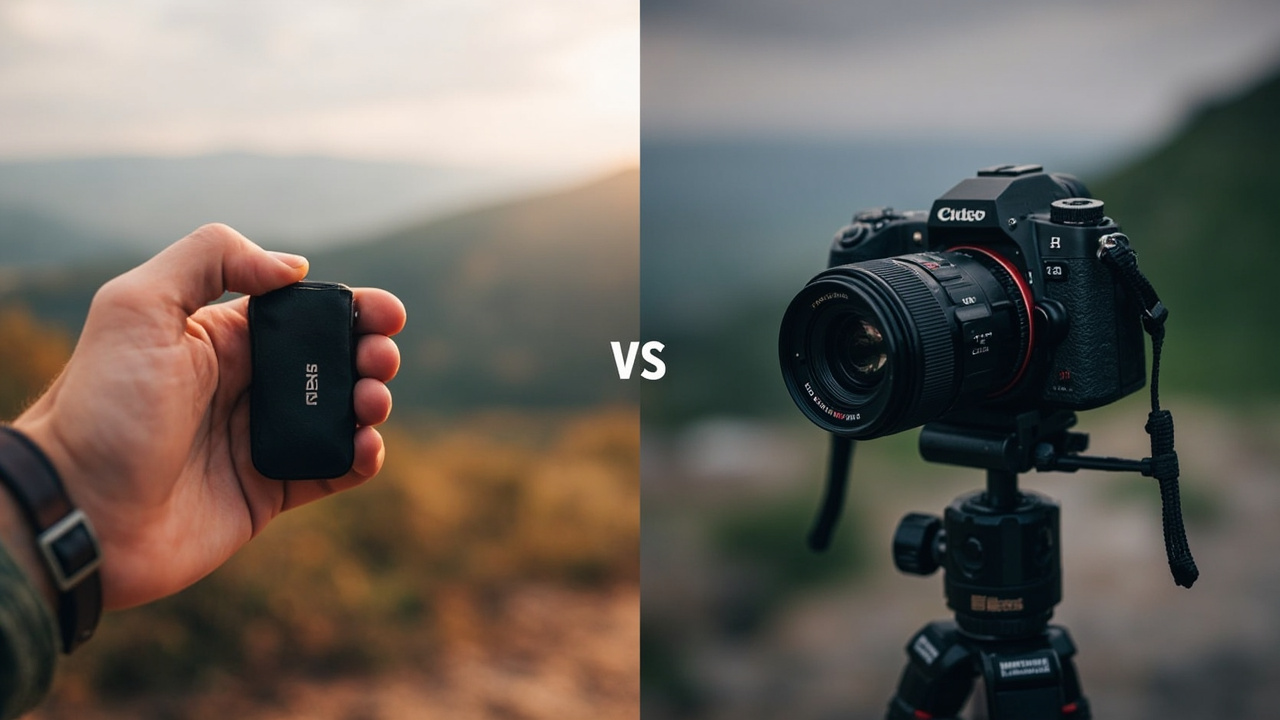
These two cameras don’t even belong on the same shelf, physically.
DJI Osmo Pocket 4 — successor to the cult Pocket 3, with a design that’s barely changed on the outside:
- ~179 g body (without battery handle); the gimbal head adds another ~80 g
- Plastic-and-polycarbonate frame, magnesium gimbal yoke
- Rotatable 2-inch touchscreen (the original Pocket-series signature)
- Not waterproof, not ruggedized — SlashGear’s reviewer admits they “tossed the Pocket 3 around almost as much as an action camera” and the Pocket 4 is comparable (SlashGear, June 24 2026)
- USB-C 3.1 charging and data
- Includes a clip-style gimbal protector (Creator Combo) — much less protective than the hard-shell case that shipped with the Pocket 3
Sony ZV-E10 II — the small interchangeable-lens body that took Sony’s still-photo DNA and stripped out the viewfinder:
- ~375 g body only (no lens)
- Plastic top, magnesium front, plastic bottom
- 3-inch fully articulating vari-angle touchscreen (flip-out for selfie work)
- No viewfinder — Sony’s deliberate creator trade-off
- No weather sealing; not ruggedized
- No mechanical shutter — fully electronic, which matters for still photography with fast-moving subjects
- Hot shoe for a real shotgun mic or XLR top handle
For pure vlog portability, the DJI wins on size and weight (179 g vs 375 g + 115 g kit lens = ~490 g). For physical longevity and “I-can-attach-anything” expandability, the Sony wins on hot-shoe, mic input, and the entire E-mount lens catalog (over 70 native Sony + third-party lenses).
The overheating issue is the single biggest durability-of-output risk on the Sony. In a controlled 22°C room, 4K/60p 10-bit 4:2:2 hits the thermal limit in roughly 30–45 minutes (Videomaker). For creators who shoot B-roll-heavy or live-event coverage, that’s a real workflow problem. The DJI has no equivalent issue — the larger body and lower-resolution sensor run cool even at 4K/120fps.
Feature Breakdown
| Feature | DJI Osmo Pocket 4 | Sony ZV-E10 II |
|---|---|---|
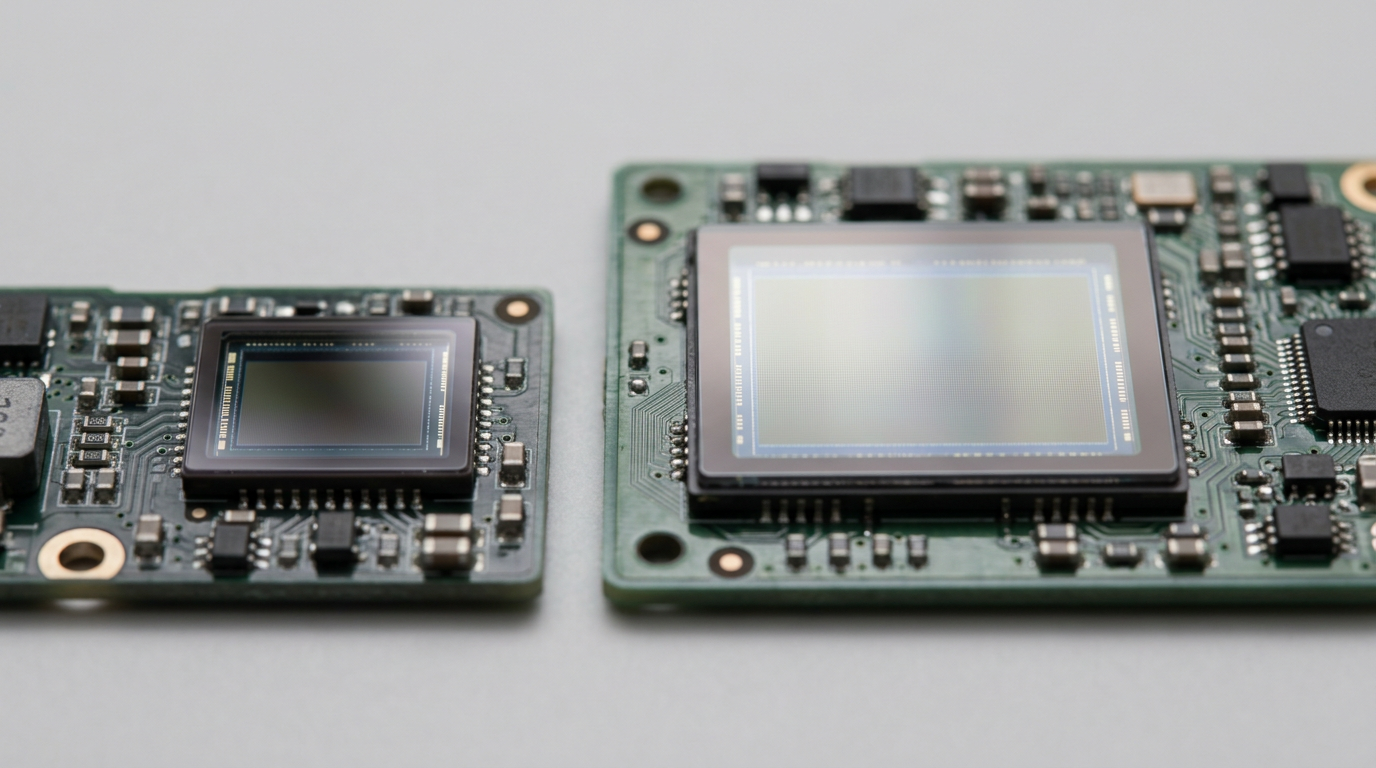
| Sensor | 1-inch CMOS, ~37 MP stills (SlashGear) | APS-C BSI-CMOS, 26 MP |
| Lens | Fixed f/1.8-ish (DJI has not published exact equiv.), 2× lossless zoom, 0.75× wide adapter in Creator Combo | Interchangeable Sony E-mount |
| Video Max | 4K / 240 fps, 10-bit D-Log, 14 stops dynamic range | 4K / 60 fps (1.1× crop), 4K / 30 fps oversampled; 10-bit 4:2:2 |
| Slow Motion | 4K 120 / 240 fps | 1080p / 120 fps (no 4K slow-mo) |
| Stabilization | 3-axis mechanical gimbal | Electronic + active SteadyShot (no IBIS) |
| Autofocus | Hybrid contrast + phase, ActiveTrack 7.0 subject tracking | Sony 759-point phase-detect, Real-time Eye AF (humans/animals/birds) |
| Audio | Built-in stereo mics; DJI Mic 3 wireless transmitter included in Creator Combo | Built-in stereo mic; 3.5 mm mic input + hot shoe for top mic |
| Screen | 2-inch rotatable touchscreen | 3-inch fully articulating vari-angle |
| Connectivity | USB-C 3.1, Wi-Fi 6, Bluetooth 5.2 | USB-C, micro-HDMI, Wi-Fi, Bluetooth 4.2 |
| Webcam / Live Stream | Yes (USB-C UVC) | Yes (USB-C UVC) |
| App Ecosystem | DJI Mimo | Sony Creators’ App (new) / Imaging Edge Mobile |
| Still Photography | 37 MP, RAW (DNG) | 26 MP, RAW (ARW), no mechanical shutter |
| Color Profiles | D-Log M, HLG, Normal | S-Log3, S-Cinetone, HLG, custom LUTs |
| Codec / Bitrate | H.265 / H.264, up to ~130 Mbps (4K/30) | XAVC HS, XAVC S-I, up to 600 Mbps (XAVC S-I 4K) |
| Recording Limits | None documented for heat | ~30–45 min at 4K/60p before thermal shutdown |
| US Availability (July 2026) | No official DJI US sale (PetaPixel) | Full, official US sale at Sony |
| LUT / Color Pipeline | Built-in D-Log M; Mimo app can apply LUTs in-camera | S-Log3 / S-Cinetone; LUT upload via Creators’ App |
| Mounting | 1/4-20 thread on battery grip | 1/4-20 tripod socket |
Two patterns jump out:
- The DJI is hardware-led: 3-axis gimbal, larger sensor than any vlog-cam competitor, 4K/240fps slow-motion the Sony physically cannot shoot, 107 GB of internal storage so you can leave the SD card at home. The trade-off is a fixed lens and no swappable battery.
- The Sony is ecosystem-led: E-mount opens the door to ~70 lenses; the S-Log3 / S-Cinetone color pipeline is real, with LUT support and grade-friendly footage in post. The trade-off is no mechanical stabilization, 4K/60p thermal limits, and no internal storage.
For a solo vlogger, the DJI’s gimbal is a non-replacement feature. Sony’s electronic SteadyShot crops aggressively (roughly 1.3× in Active mode) and never matches a real mechanical gimbal for walking-talking shots. For a hybrid creator who shoots stills, product photos, interviews, and B-roll, the Sony’s lens system and color pipeline are a non-replacement feature too.
Real-World Workflow: Who Actually Uses These
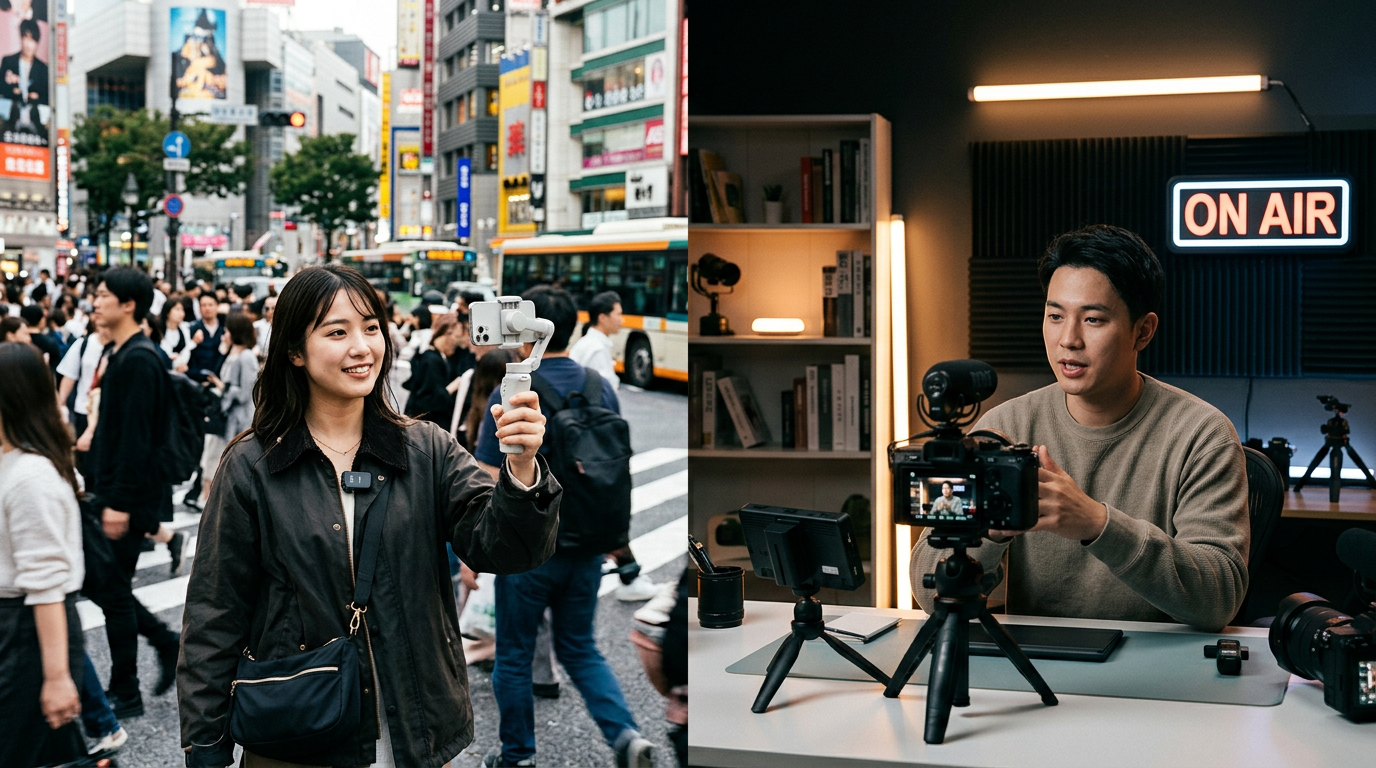
The DJI Pocket 4 is a run-and-gun tool. The screen, the gimbal, the menu — all of it is built around “I’m holding this, I’m walking, I’m shooting now.” The Creator Combo’s wireless mic transmitter, fill light, and wide-angle adapter fit in a single zip-open pouch, and the whole kit weighs under 500 g. The most-cited use cases on Reddit and YouTube creator forums:
- Daily vlogs and travel vlogs
- On-location product reviews
- “B-roll for a YouTube short, just me walking” footage
- Wedding highlight reels (second camera)
- Behind-the-scenes / event coverage
The Sony ZV-E10 II is a learning camera. The menu is dense, the body is small but not pocketable with a lens on, and the value proposition is “I’m building a real Sony E-mount kit.” Most-cited use cases:
- YouTube channels shooting at a desk (no walking)
- Product photography + YouTube on the side
- Beginner-to-intermediate videographers learning color grading
- Hybrid photo + video for small businesses (real estate, restaurants, e-commerce)
There’s a meaningful 3-year ceiling on the DJI: once you outgrow talking-head vlogs, you outgrow the Pocket 4. The Sony has no equivalent ceiling because the lens system can grow with you for the next decade.
Pros and Cons
DJI Osmo Pocket 4 (Creator Combo)
Pros
- $799 Creator Combo, $499 Standard Combo — $400–$600 cheaper than the Sony ZV-E10 II on day one
- 1-inch sensor, 4K/240fps, 10-bit D-Log M — image quality that no pocket cam has matched before
- 3-axis mechanical gimbal built in — no rig, no extra weight, no crop
- 107 GB of internal storage at 800 MB/s transfer; you can leave the SD card at home
- DJI Mic 3 wireless transmitter + wide-angle adapter + fill light + mini tripod all in the Creator Combo box
- Compact: 179 g body, fits in a jeans pocket
- ActiveTrack 7.0 subject tracking works reliably for solo walking vlogs
- No overheating issues at 4K/120fps
Cons
- Not officially sold in the United States as of July 2026 — only via grey import or international shipping (PetaPixel, CNET)
- Fixed lens — no creative bokeh flexibility, no optical zoom
- Built-in battery — can’t swap; degrades over 3–5 years
- No weather sealing — not safe in rain or heavy dust
- App lock-in — DJI Mimo is required for firmware updates, live view, and full editing
- Activation required at first power-on (DJI account)
- No mechanical shutter for stills (relevant if you shoot product photography)
Sony ZV-E10 II
Pros
- $1,199.99 body / $1,399.99 with kit lens at Sony US — full US warranty and support
- APS-C sensor with real bokeh — interchange Sony E-mount for any focal length
- S-Log3 and S-Cinetone — pro color pipeline with LUT support, real grading headroom
- NP-FZ100 swappable battery — the same battery used across the A7/A6xxx line; cheap and easy to find
- 3-inch fully articulating vari-angle screen — best-in-class for selfie work
- 759-point phase-detect AF with Real-time Eye AF — Sony’s autofocus is the class benchmark
- Strong stills camera if you want hybrid use (26 MP APS-C, RAW)
- No overheating at 4K/30p (the CIPA spec) — only at 4K/60p in warm conditions
Cons
- $400–$600 more expensive than the DJI Creator Combo
- No IBIS; only electronic SteadyShot (1.3× crop in Active mode) — walking shots still need a gimbal
- No internal storage — must buy an SD card
- 4K/60p thermal shutdown in ~30–45 min at 22°C+ ambient (Videomaker)
- No viewfinder — bright outdoor shooting can be hard on the LCD
- Bulkier with a lens attached — not pocket-friendly
- Lenses are an ongoing cost — Sony E-mount primes like the 11 mm f/1.8 or 15 mm f/1.4 G add $400–$1,000 each
- 4K/120p is not available — capped at 1080p/120 for slow motion
Best For / Skip If
Choose the DJI Osmo Pocket 4 (Creator Combo) if you are:
- A travel vlogger who needs a single bag with camera, mic, and lights ready to go
- A podcaster moving to YouTube — talking-head vlog is the Pocket 4’s strongest use case
- Someone who shoots 4K slow-motion regularly (sports, water, cooking) — no Sony at this price shoots 4K/120, let alone 4K/240
- Outside the US, or a US-based buyer willing to grey-import for the $400–$600 savings
- A second camera / B-cam operator for a larger production who needs a stealthy gimbal cam
Choose the Sony ZV-E10 II if you are:
- A hybrid creator who needs to shoot both video and product / portrait stills
- In the US and unwilling to grey-import
- An intermediate creator who wants to learn color grading on S-Log3 footage and grow into a lens system
- Someone with a desk-based YouTube channel — no overheating issues at 4K/30p
- A photographer with existing Sony E-mount lenses — the ZV-E10 II is a cheap video body to add to your kit
Skip both if you are:
- An action / sports videographer — buy a GoPro Hero 13 Black (
$399) or DJI Osmo Action 5 Pro ($349) instead - A cinematographer who needs 4K/120p in a full-frame sensor — the Sony FX30 ($1,799) or Canon R5 C are the actual tools
- A smartphone-only creator — modern iPhones and Pixels deliver excellent 4K/60p; the Pocket 4 is for when phone footage isn’t enough
- Looking for stills + occasional video — the Sony A6700 ($1,399) is the proper hybrid stills-video body
Bottom Line
The “DJI Osmo Pocket 4 vs Sony ZV-E10 II” question is really “are you buying a tool or are you buying a hobby?”
- The DJI Osmo Pocket 4 Creator Combo is a tool: gimbal in, mic in, lights in, 4K/240fps in a $799 box. For solo creators who need to ship videos every week, it delivers more usable output per dollar than anything else on the shelf. The US availability problem is a real, deal-breaking issue for American buyers.
- The Sony ZV-E10 II is a hobby and a long-term investment: full US availability, an interchangeable lens system, a real color pipeline, and a swappable battery. The price premium buys you 5–10 years of growth.
The BuyCospa value formula — Price ÷ (Uses × Satisfaction × Durability) — splits cleanly. If you shoot weekly and care about output per dollar, the DJI wins. If you shoot occasionally and care about lifespan and growth, the Sony wins.
Buy smart. Get more value. The DJI Osmo Pocket 4 Creator Combo is the rare pocket camera that genuinely earns its asking price for the run-and-gun creator — and for US-based buyers, the $400–$600 premium for the Sony is the price of skipping the DJI ban workaround. Pick the one you’ll actually use; both are honest products.