Introduction
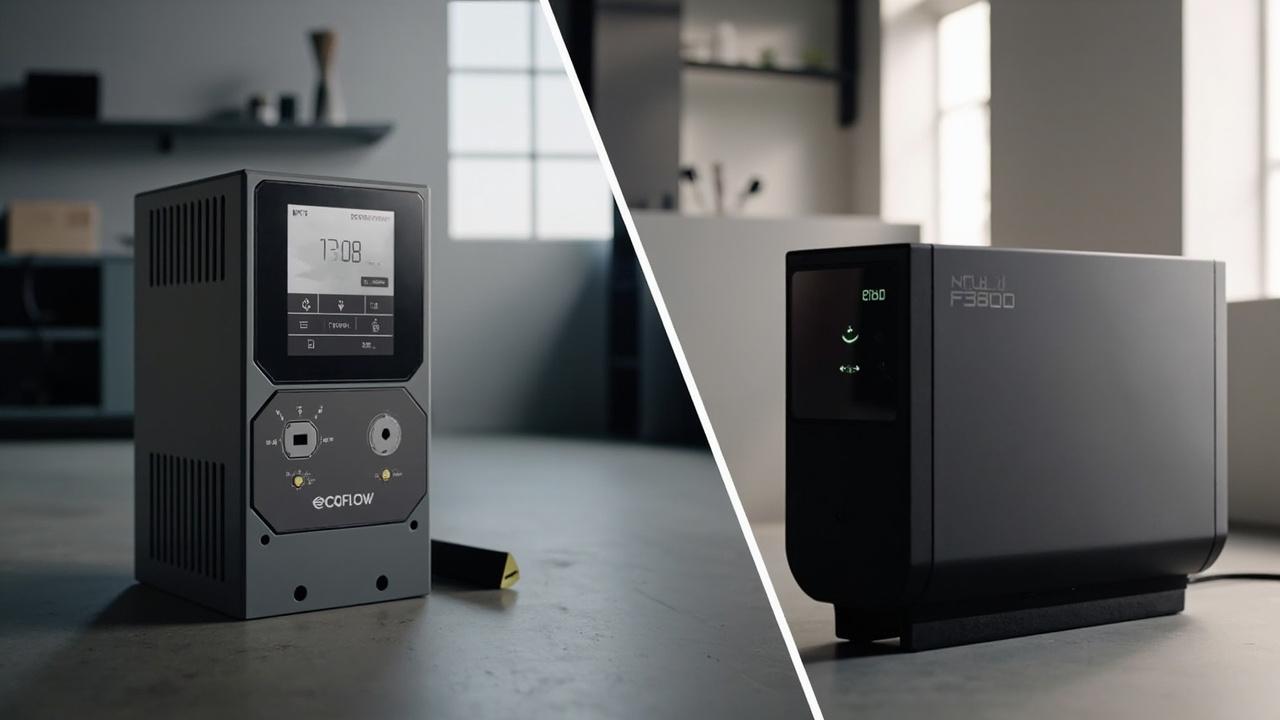
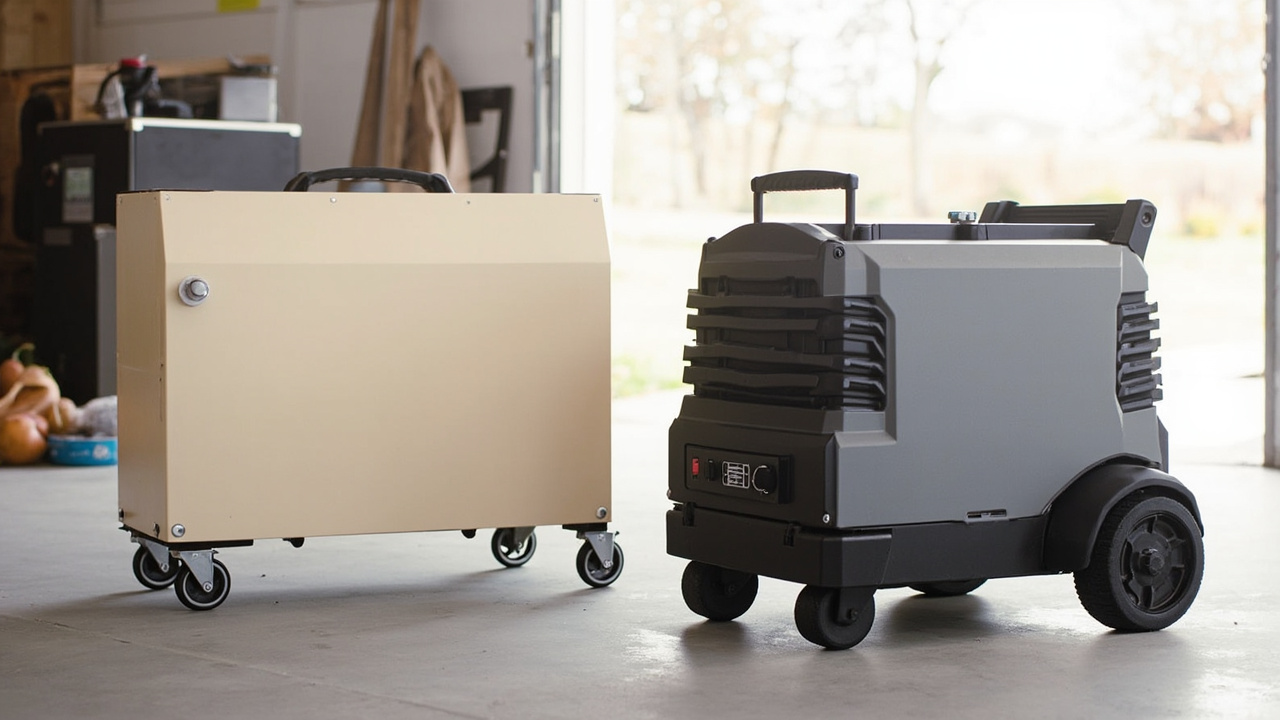
In 2026, the 2–4 kWh LiFePO4 portable power station tier is the new sweet spot for the average homeowner. Two machines sit at the top of that tier for buyers who do not need a $3,000+ whole-home system: the DJI Power 2000 ($1,299, 2,048Wh, 22 kg) and the Anker SOLIX F3800 ($1,799 promo, 3,840Wh, 60 kg). Both run LiFePO4 cells, both have 120V AC output, both can recharge from solar, and both sit in a similar price band. They are obviously not the same machine.
The honest difference is what each company bet on:
- DJI bet on portability and ecosystem. 22 kg is a one-person carry. SDC ports fast-charge DJI drone batteries. The trade-off is smaller base capacity and lower continuous AC output.
- Anker bet on single-unit headroom and expansion. 6,000W continuous from a single box is enough to run a 1.5-ton mini-split or a 5,000 BTU window AC without a soft starter. The trade-off is 60 kg and “wheeled, not carried” portability.
The marketing copy makes them look like neighbors in a product chart. They are not. The 5-year cost picture depends on how often you actually need to move the unit, how many watts you need to push at once, and whether you expand.
The right answer is not “the bigger one.” It is “the one whose trade-offs match the way you actually use it.”
The Verdict First
-
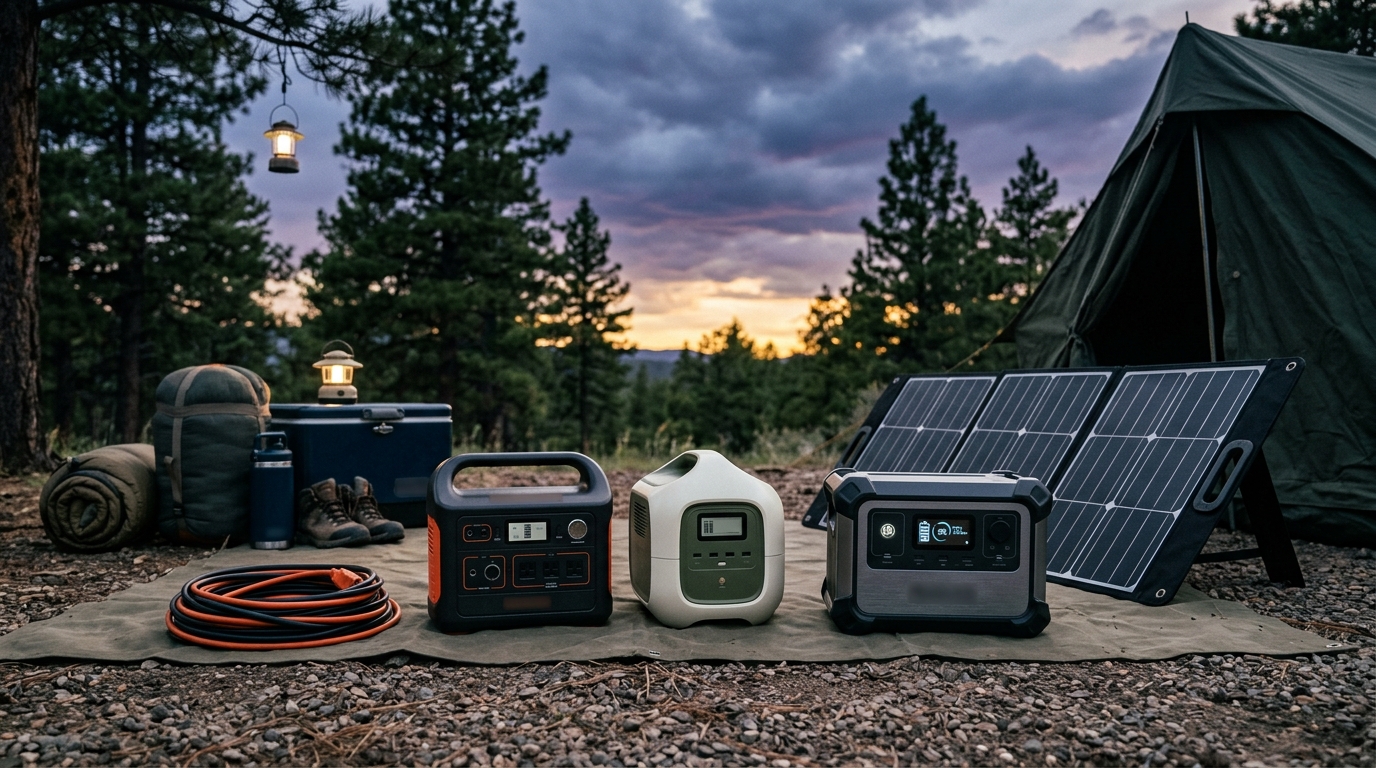
Pick the DJI Power 2000 (~$1,299) if: you want a truly portable 2 kWh unit under 25 kg that one person can carry to a campsite, tailgate, or job site; you already own DJI drones and want the SDC fast-charge ports; you mostly need short runtime (under 1 kWh per use) for phones, laptops, fridges for a few hours, or a small CPAP; and you do not plan to wire it into a home transfer switch. You will save ~$500 upfront and most of that gap holds over 5 years if you do not expand.
-
Pick the Anker SOLIX F3800 (~$1,799) if: you want real partial-home backup (refrigerator + internet + lights + a window AC for 8–24 hours); you need 6,000W continuous from a single unit to run a 1.5-ton mini-split, a 5,000 BTU window AC, or other inductive loads without a soft starter; you might want to expand to 7.7 kWh or beyond with BP3800 expansion batteries; or you want Anker’s 5-year warranty versus DJI’s 3-year. The higher sticker pays for itself if you actually need the headroom.
Cost score: 75/100. The DJI is the better value for portable short-runtime use. The Anker is the better value for single-unit partial-home backup and heavier inductive loads. The wrong pick is the more expensive one bought for a use case that does not need the extra capacity.
Key Comparison Points
Price vs Real Cost Per Use
Sticker prices are ~$1,299 vs ~$1,799, a $500 gap. The 5-year cost picture depends on how often you cycle, whether you expand, and whether you ever need to push 4,000W+ through one outlet.
| Cost Line | DJI Power 2000 | Anker SOLIX F3800 |
|---|---|---|
| Typical US street price (mid-2026) | $1,299 – $1,499 | $1,799 (promo) – $2,399 |
| MSRP | $1,499 | $3,999 |
| Base capacity | 2,048 Wh | 3,840 Wh |
| Battery chemistry | LiFePO4 (LFP) | LiFePO4 (LFP) |
| Cycle life (to 80% capacity) | ~4,000 cycles (DJI claim) | ~3,000–6,000 cycles (Anker claim 6,000) |
| AC continuous output (single unit) | 3,000W | 6,000W |
| AC peak / surge | not separately listed | 9,000W surge |
| 120/240V split-phase | No (120V only) | Yes (with two units paired) |
| Solar input (max) | 1,800W (via adapter) | 2,400W (across 2 ports) |
| Solar input voltage range | 12–30V per port (lower-voltage MPPT) | 11–60V per port |
| Expandable to (max system capacity) | 22,528 Wh (10 expansion batteries) | 26,880 Wh (with 6 expansion batteries) |
| AC recharge input (max) | ~1,800W | 1,800W |
| 0–80% AC recharge | ~55 min | ~58 min |
| 0–100% AC recharge | ~75 min | ~2 hr |
| Warranty (US retail) | 3 years | 5 years |
| Weight | ~22 kg (48.5 lb) | ~60 kg (132 lb) |
| Wheels / handle | Carry handle only | Built-in telescoping handle + rear wheels |
| Operating temp range (discharge) | -10°C to 45°C | -20°C to 40°C |
| Noise (under 1 kW load) | 29 dB (notebookcheck, 2025) | ~38 dB |
| App control | DJI Home app | Anker SOLIX app |
Source for prices: DJI official store (dji.com), Anker SOLIX official store (anker.com), as of July 2026. Cycle-life and warranty claims are manufacturer-published.
Cost per stored kWh per cycle (5-year view, single unit, no expansion):
Assumptions:
- Base unit amortized over 5 years
- Battery degradation to ~80% by year 5
- 1 cycle/week (52 cycles/year) for typical home-backup use
| Item | DJI Power 2000 | Anker SOLIX F3800 |
|---|---|---|
| Usable energy per cycle, year 1 | ~1,638 Wh (80% DoD) | ~3,072 Wh (80% DoD) |
| Usable energy per cycle, year 5 | ~1,310 Wh | ~2,458 Wh |
| 5-year total energy delivered | ~383 kWh | ~718 kWh |
| Cost per kWh stored (5-yr) | $1,299 / 383 kWh ≈ $3.39 / kWh | $1,799 / 718 kWh ≈ $2.50 / kWh |
| Cost per kWh stored (per-cycle, year 1) | ~$0.031 / kWh | ~$0.0096 / kWh |
The per-kWh stored cost is meaningfully different. The Anker stores more kWh per dollar over 5 years because its base capacity is nearly 2× the DJI at only ~38% more cost. The DJI’s strength is that you spent $500 less upfront and got a unit you can actually carry.
The expansion cost gap:
| Optional Add-on | DJI Power 2000 | Anker SOLIX F3800 |
|---|---|---|
| 1 extra expansion battery (~2 kWh) | DJI Power Expansion Battery 2000, ~$1,099 | Anker BP3800 expansion battery, ~$1,599–$1,799 |
| Per added kWh (battery only) | ~$550 / kWh | ~$400–$450 / kWh |
| 2 kWh delivered over 5 years (1 cycle/wk) | ~766 kWh at $1,099 = $1.43 / kWh | n/a (single 3.84 kWh unit) |
| 5-year total (base + 1 extra battery) | ~$2,398 | ~$3,398–$3,598 |
| 5-year total (base only) | ~$1,299 | ~$1,799 |
Bottom line on cost: If you stay at one unit, the Anker stores more kWh per dollar. If you need 2 kWh or less, the DJI saves you $500 upfront. The moment you need a transfer switch, 240V split-phase, or to run a window AC, the Anker’s extra $500 buys you the inverter headroom that makes it work.
Build Quality and Durability
DJI Power 2000: Plastic composite chassis with a single integrated carry handle, matte gray finish. At 22 kg (48.5 lb) it is genuinely one-person portable — you can load it into a trunk, carry it to a campsite, or hand it up to a tailgate by the handle. The unit has flame-retardant housing and an operating altitude spec of 5,000 m, which suggests it is designed for the same use environments as DJI drones. Cooling is whisper-quiet at low-to-medium load (29 dB under 1 kW), partly because DJI tuned the fans for the same acoustic envelope as the Mavic and Inspire charging bases (notebookcheck, 2025).
The trade-off: no wheels, no telescoping handle, and a smaller thermal envelope. At sustained 3,000W output the fans ramp up audibly. There is no published IP rating for water or dust.
Anker SOLIX F3800: Anodized aluminum frame with corner bumpers, built-in telescoping handle and rear wheels, open-faced outlet array for fast cable access. Heavier (60 kg / 132 lb) but feels like a tank on the garage floor. Cooling fans are audible at peak load (~45 dB at full output, ~38 dB at typical partial-home load). Operating range is -20°C to 40°C, which is a real advantage in cold-climate garages and northern US winters — the DJI’s -10°C floor will refuse to discharge in some unheated garages.
The trade-off: 60 kg is a two-person lift without the wheels on stairs or uneven ground. It is “portable” in the RV/vehicle sense, not in the camping sense.
Long-term durability considerations:
| Concern | DJI Power 2000 | Anker SOLIX F3800 |
|---|---|---|
| Casing material | Plastic composite (high-impact ABS) | Aluminum frame + plastic panels |
| Cooling fans | Variable-speed, ~29 dB at 1 kW, ~50 dB peak | Variable-speed, ~38 dB at partial load, ~45 dB peak |
| Operating temp range (discharge) | -10°C to 45°C | -20°C to 40°C |
| Modularity / serviceability | Whole-unit service; expansion batteries dock on top | Whole-unit service; expansion batteries dock on top |
| Field-failure reputation (Reddit r/portablepowerstations, 2025–2026) | Few long-term failure reports (product launched late 2025); some early SDC-port firmware quirks fixed in 2026 updates | Inverter fan noise and rare cell-balancing complaints |
| Realistic lifespan (home use, ≤52 cycles/yr) | 7–10 years | 7–10 years |
The honest durability read: Both machines use LiFePO4 cells from the same major suppliers (CATL and EVE are common in this tier). The real binding constraint is warranty term: DJI offers 3 years, Anker offers 5 years on the US retail SKU. The 2-year extra warranty on the more expensive unit is a $500 / 5-year ≈ $100/year insurance policy on the Anker’s extra capacity, ports, and aluminum chassis.
Feature Breakdown
| Feature | DJI Power 2000 | Anker SOLIX F3800 |
|---|---|---|
| AC outlets | 4 (3 wall + 1 RV TT-30) | 6 (4 wall + 1 30A + 1 RV) |
| USB-C ports | 4 (2× 140W PD 3.1 + 2× 65W) | 2 (100W each) |
| USB-A ports | 4 (24W, QC 2.0/3.0) | 2 (12W each) |
| DC5521 / Car port | 1 car port | 1 car port + 1 Anderson |
| SDC / proprietary ports | 2 (DJI drone fast-charge) | None |
| Solar input (max) | 1,800W (via adapter) | 2,400W across 2 ports |
| EV charging input | No | No first-party EV charger |
| Smart Home Panel / transfer switch | No | No first-party transfer switch |
| Wi-Fi + Bluetooth | Yes | Yes |
| App control | DJI Home app | Anker SOLIX app |
| UPS switchover time | 10 ms | <10 ms |
| 0–80% AC recharge | ~55 min | ~58 min |
| 0–100% AC recharge | ~75 min | ~2 hr |
The feature trade-off is sharp: The DJI has double the USB-C ports, double the USB-A ports, and the unique SDC fast-charge ports for DJI drone batteries. If you own a Mavic 3, Mavic 4, or Inspire 3, the SDC port turns a 90-minute drone-battery charge into a 30-minute drone-battery charge off the Power 2000. There is no equivalent on the Anker.
The Anker has more AC outlets (6 vs 4), a higher-wattage continuous output (6,000W vs 3,000W), and the higher solar input ceiling (2,400W vs 1,800W). If you need to run a 1.5-ton mini-split, the Anker is the one that can do it from a single unit; the DJI will trip at ~3,000W continuous.
Pros and Cons
DJI Power 2000
Pros:
- $500 cheaper at typical street price ($1,299 vs $1,799)
- 22 kg — genuinely portable, one-person carry to a campsite, tailgate, or job site
- 29 dB at 1 kW — quietest in this tier, suitable for indoor use and CPAP at night
- SDC fast-charge ports for DJI drone batteries (Mavic 3/4, Inspire 3) — 30 min to charge a TB51 vs 90 min on a standard charger
- More USB-C and USB-A ports (4 + 4 vs 2 + 2) for laptop/phone/tablet heavy use
- Lower MPPT voltage range (12–30V) — easier pairing with portable flexible panels
Cons:
- Only 2,048Wh base capacity — half of the Anker
- 3,000W continuous AC output — cannot run a 1.5-ton mini-split, full-size window AC, or most resistive >3,000W loads (clothes dryer, electric kettle, microwave + toaster simultaneously)
- 3-year warranty vs Anker’s 5-year
- No 120/240V split-phase even with two units
- No first-party transfer switch for whole-home backup
- No wheels — at 22 kg this is a feature, not a bug, but it does limit placement flexibility as the system grows
Anker SOLIX F3800
Pros:
- 3,840Wh base capacity — nearly 2× the DJI at only ~38% more cost
- 6,000W continuous AC output from a single unit — runs a 1.5-ton mini-split, 5,000 BTU window AC, or clothes dryer without a soft starter
- 9,000W surge for compressor startup
- 5-year warranty vs DJI’s 3-year
- Built-in wheels + telescoping handle for garage / basement / RV placement
- 2,400W max solar input vs DJI’s 1,800W — better for off-grid solar sizing
- -20°C operating floor vs DJI’s -10°C — usable in unheated northern garages
- 120/240V split-phase with two units paired — for well pumps, dryers, RVs
Cons:
- $500 more at typical street price
- 60 kg — two-person lift, not a one-person carry
- Quieter than most competitors, but louder than DJI (38 dB vs 29 dB at partial load)
- No SDC / drone-battery fast-charge — DJI drone owners lose the unique fast-charge port
- Fewer USB-C and USB-A ports (2 + 2 vs 4 + 4)
- App is functional but not as polished as DJI Home (Anker SOLIX app has had intermittent Wi-Fi reconnect complaints on Reddit r/portablepowerstations)
Best For / Skip If
Best For — DJI Power 2000
- DJI drone owners (Mavic 3, Mavic 4, Inspire 3) who want the SDC fast-charge ecosystem
- Campers, RVers, and overlanders who need a one-person-carry 2 kWh unit
- Apartment dwellers without a garage who need a quiet (<30 dB) indoor unit for CPAP, internet, and laptops during brownouts
- Job-site and contractor users who need to move the unit to a different site weekly
- Tight-budget buyers who want a $1,299 entry into LiFePO4 home backup
Best For — Anker SOLIX F3800
- Homeowners in outage-prone suburbs (Florida, Texas, Carolinas) who want partial-home backup from a single unit
- Buyers who need to run a window AC, mini-split, or other inductive load >3,000W from a portable battery
- Garage-installed backup for a fridge, internet, sump pump, and a few lights through a 4–24 hour outage
- Buyers who may expand to 7.7 kWh or 11.5 kWh with BP3800 expansion batteries
- Cold-climate buyers who need a -20°C operating floor
Skip If
- Skip the DJI Power 2000 if you need to run a 1.5-ton mini-split, full-size window AC, or any inductive load >3,000W continuous — it will trip. Also skip if you want a 5-year warranty or 120/240V split-phase.
- Skip the Anker SOLIX F3800 if you need a one-person-carry unit (60 kg is two-person lift on stairs), you own DJI drones and want the SDC fast-charge port, or you only need 2 kWh or less and would rather save $500.
Bottom Line
The DJI Power 2000 and the Anker SOLIX F3800 are not really competing for the same buyer in 2026, even though they sit one price tier apart:
- Pick the DJI if the deciding factor is portability, drone ecosystem, and quiet operation under 1 kW. You will save $500 upfront and get a unit you can actually carry.
- Pick the Anker if the deciding factor is single-unit AC headroom, 3.84 kWh base capacity, expansion room, or 5-year warranty. You will pay $500 more for an inverter and battery that can handle a real partial-home backup role without needing a soft starter.
The 5-year cost-per-kWh-stored math favors the Anker by ~$0.89 / kWh if you actually cycle both at 1 cycle/week. The 5-year upfront-and-portability math favors the DJI by $500 if you do not expand and you actually use the 22 kg weight advantage more than twice a month.
This is a classic “buy for the way you use it, not the bigger spec sheet” comparison. Buy smart. Get more value.