Introduction
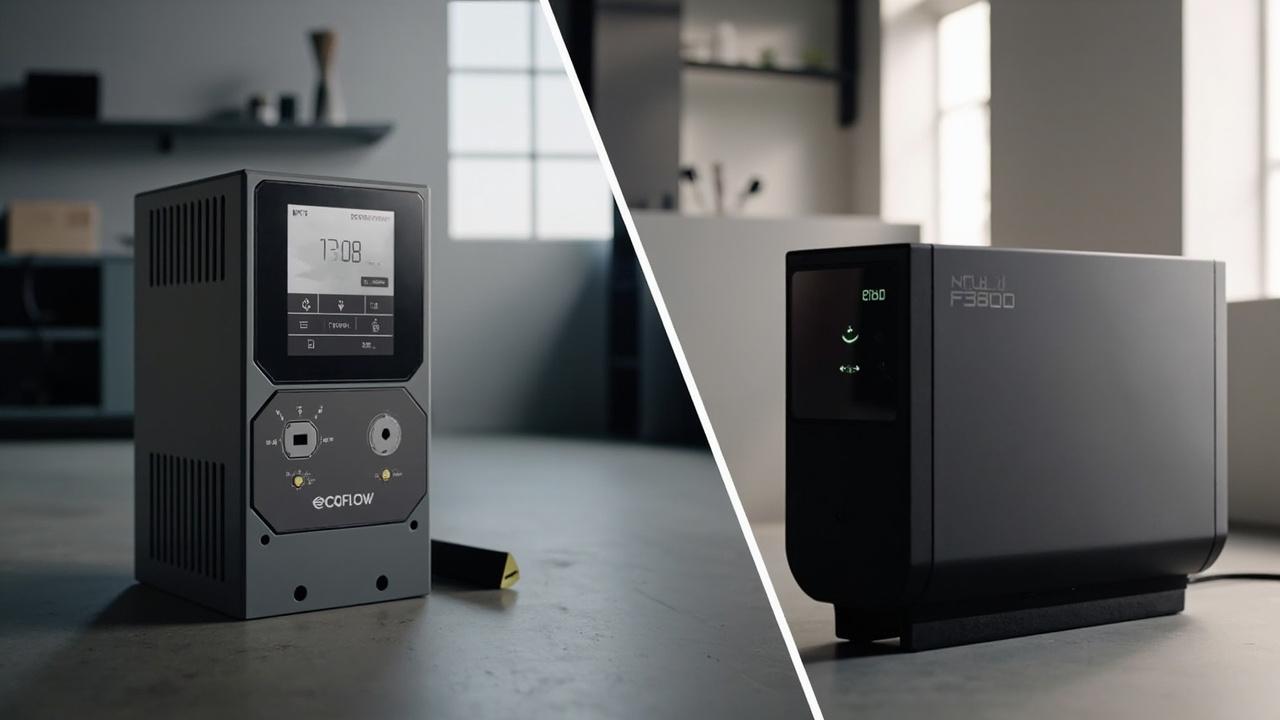
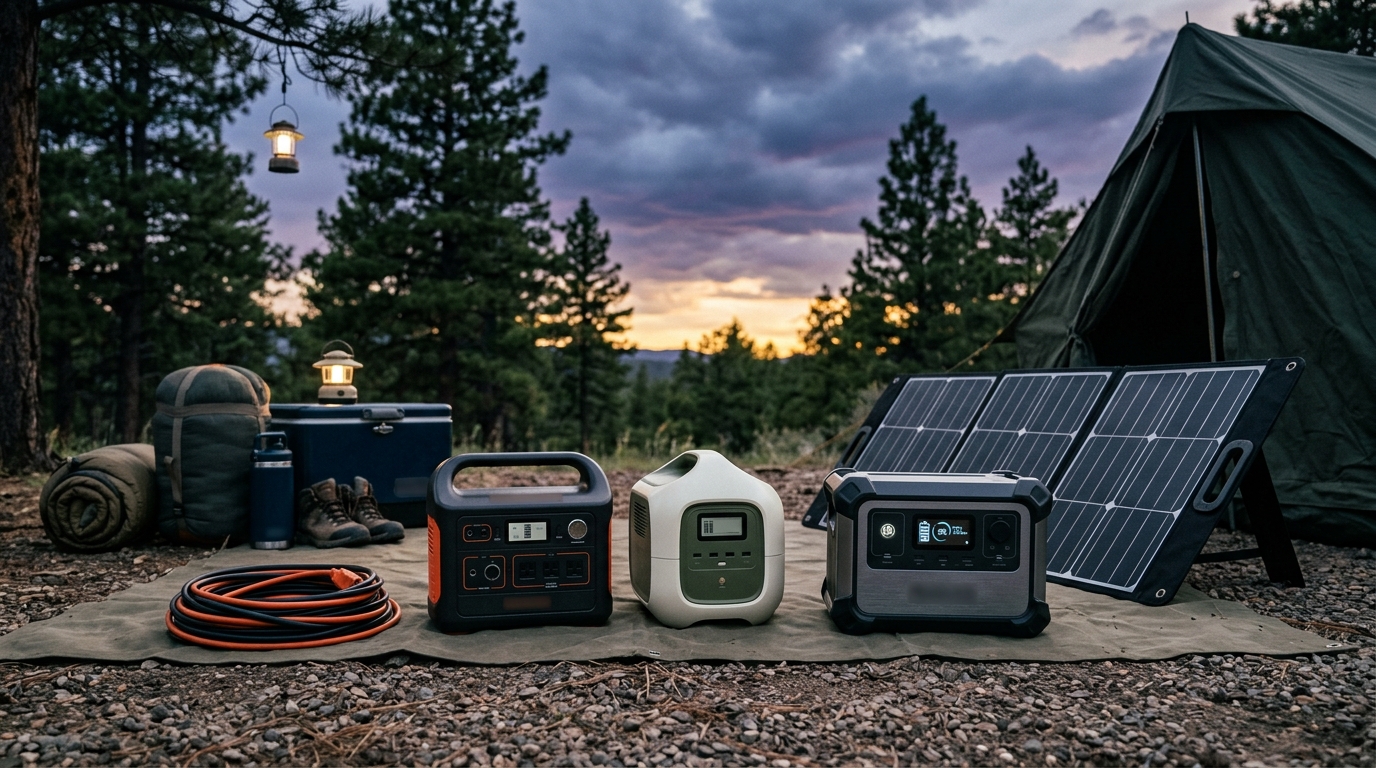
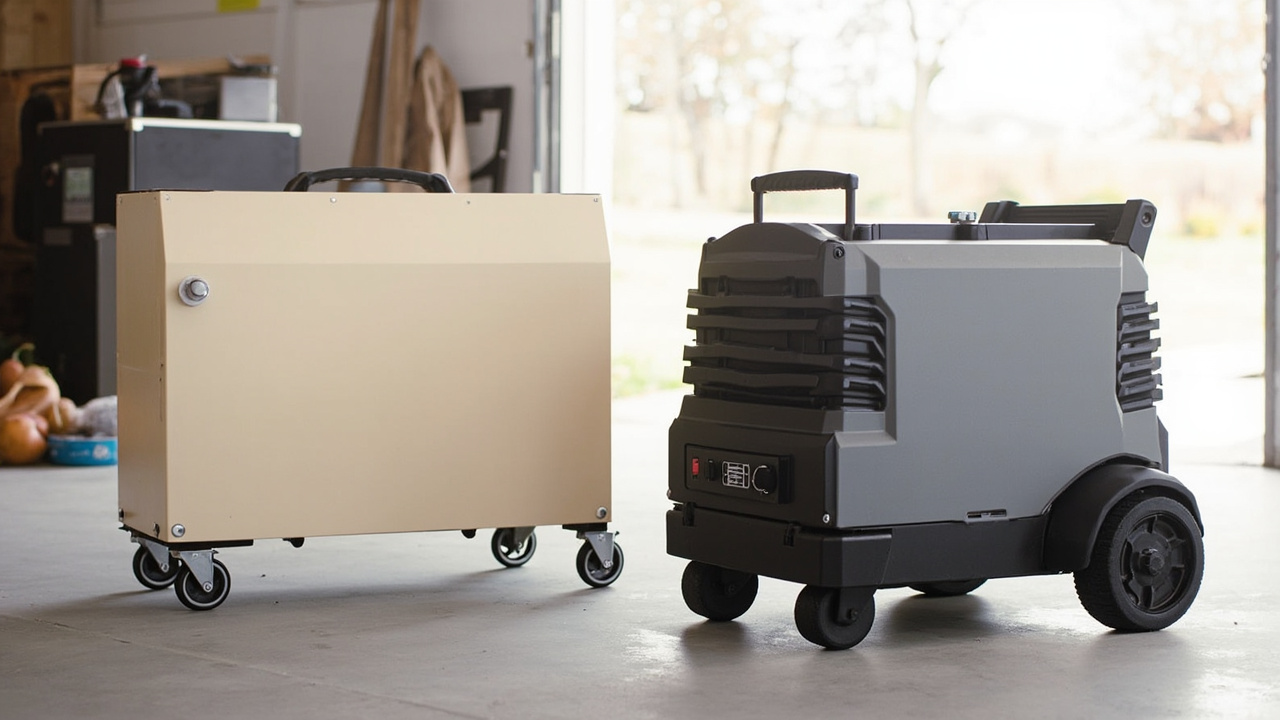
The 5kWh-class portable power station is now the default whole-home (partial-home) backup in 2026. Right at the top of that tier sit two flagships from the two brands that defined the category: the Jackery Explorer 5000 Plus at roughly $2,499 (5,040Wh, single-unit) and the EcoFlow DELTA Pro 3 at roughly $2,599 (4,096Wh base, expandable to 12,288Wh). Both deliver real 120V/240V split-phase output, both accept multi-kilowatt solar input, and both can sit in a garage wired to a transfer switch to keep a fridge, sump pump, internet, and a few lights alive through a multi-day outage.
The marketing copy makes them sound like clones. They are not. The two machines are built on very different bets on capacity philosophy, expansion strategy, app ecosystem, and warranty terms — and those bets show up in the 7-year cost-per-cycle math, the expected battery degradation curve, and what happens the day something fails.
The real comparison is not “which one is bigger.” It is “which machine matches the way you will actually use it: short frequent outages, multi-day emergency events, daily solar cycling, or RV weekend power.” The answer changes depending on which one that is.
The Verdict First
- Pick the Jackery Explorer 5000 Plus (~$2,499) if: you want the larger base capacity per dollar (5,040Wh at $2,499 = roughly $0.50/Wh, vs the EcoFlow’s $0.63/Wh at base), you prefer a single-machine philosophy over the modular stack approach, you want Jackery’s quieter cooling fans (~38 dB claimed vs ~45 dB on the EcoFlow under peak load), and you do not need the EcoFlow Smart Home Panel 2 or EV-charging adapter ecosystem.
- Pick the EcoFlow DELTA Pro 3 (~$2,599) if: you want the deeper accessory and app ecosystem (Smart Home Panel 2, EV X-Stream Adapter, 4G dongle, generator auto-start trigger), you need 120/240V split-phase output with a single unit (the Delta Pro 3 supports this on its own, the Jackery 5000 Plus needs two for split-phase), or you plan to expand to ~12 kWh over time with two add-on batteries.
Cost score: 78/100. Both machines are well-priced for the 5kWh tier. The 7-year savings come down to (1) whether you expand the system or stop at one box, (2) which solar panel bundle you commit to, and (3) the realistic failure rate and warranty honor rate.

Key Comparison Points
Price vs Real Cost Per Use
Sticker prices are within $100 of each other at base config. The 7-year cost picture depends on expansion batteries, solar panel bundles, and the realistic cycle count for your use case.
| Cost Line | Jackery Explorer 5000 Plus | EcoFlow DELTA Pro 3 |
|---|---|---|
| Typical US street price (mid-2026) | $2,299 – $2,699 | $2,499 – $2,799 |
| Base capacity | 5,040 Wh | 4,096 Wh |
| Base $ per Wh | ~$0.50 / Wh | ~$0.63 / Wh |
| Battery chemistry | LiFePO4 (LFP) | LiFePO4 (LFP) |
| Cycle life (to 80% capacity) | ~4,000 cycles (Jackery claim) | ~4,000 cycles (EcoFlow claim) |
| AC continuous output (single unit) | 3,600W (X-Boost 7,200W surge) | 4,000W (X-Boost 6,000W surge) |
| AC peak / surge | 7,200W | 8,000W (with X-Boost) |
| 120/240V split-phase (single unit) | No (requires two units paired) | Yes (single unit, native) |
| Solar input (max) | 1,400W (2 × 700W ports) | 1,800W (2 × 1,000W ports) |
| Solar input voltage range | 11–60V (per port) | 11–60V (per port) |
| Expandable to (max system capacity) | 10,080 Wh (1 expansion battery) | 12,288 Wh (2 expansion batteries) |
| EV charging adapter | No first-party EV charger | Yes (Delta Pro 3 EV X-Stream Adapter, ~$299) |
| Smart Home Panel 2 / transfer switch | No first-party transfer switch | Yes ($1,499, integrates up to 2 Delta Pro 3s) |
| 4G dongle (off-grid monitoring) | No (Wi-Fi + Bluetooth only) | Yes ($99 add-on) |
| Warranty (US retail) | 5 years (3 + 2 extended with registration) | 5 years |
| Weight | ~53 kg (117 lb) | ~51.5 kg (113.5 lb) |
| Wheels / handle | Yes (built-in telescoping) | Yes (built-in telescoping) |
| Operating temp range (discharge) | -10°C to 45°C | -10°C to 45°C |
| Noise @ 1m (peak cooling) | ~38 dB (Jackery marketing claim) | ~45 dB (independent measured) |
Cost per stored kWh per cycle (7-year view):
Assumptions:
- Base unit amortized over 7 years: $2,499 / 7 ≈ $357 / year (Jackery), $2,599 / 7 ≈ $371 / year (EcoFlow)
- Assume 1 cycle / week (52 cycles / year) for partial-home backup use
- Battery degradation to 80% by year 7: capacity is ~80% of original, so useful energy per cycle drops by ~20%
- Solar panels amortized separately (we exclude them here; they offset grid charging cost, not equipment cost)
- DoD (depth of discharge) capped at 80% for both LiFePO4 systems
| Item | Jackery Explorer 5000 Plus | EcoFlow DELTA Pro 3 |
|---|---|---|
| Usable energy per cycle, year 1 | ~4,032 Wh (80% DoD) | ~3,277 Wh (80% DoD) |
| Usable energy per cycle, year 7 | ~3,226 Wh | ~2,621 Wh |
| Annual stored energy, year 1 | ~4,032 Wh × 52 = 209.7 kWh | ~3,277 Wh × 52 = 170.4 kWh |
| Annual stored energy, year 7 | ~3,226 Wh × 52 = 167.7 kWh | ~2,621 Wh × 52 = 136.3 kWh |
| Cost per kWh stored, year 1 | ~$0.17 / kWh stored | ~$0.22 / kWh stored |
| Cost per kWh stored, year 7 | ~$0.21 / kWh stored | ~$0.27 / kWh stored |
The 7-year money gap at base config (single unit, no expansion, 52 cycles/year):
- Jackery Explorer 5000 Plus: $2,499 (1 unit, no expansion)
- EcoFlow DELTA Pro 3: $2,599 (1 unit, no expansion)
- Delta: ~$100 sticker, but the Jackery stores ~23% more kWh per cycle.
If you expand to ~10-12 kWh:
- Jackery stack (Explorer 5000 Plus + 1 × Battery Pack 5000,
10 kWh): **$4,499 – $4,799 total** - EcoFlow stack (Delta Pro 3 + 2 × expansion batteries,
12.3 kWh): **$5,600 – $6,000 total** - Delta: $800 – $1,200 in Jackery’s favor at expansion
If you also want the EV adapter or home panel ecosystem:
- EcoFlow EV X-Stream Adapter: +$299 (turns the unit into an emergency Level 1 / Level 2 EV charger at ~7.7 kW input)
- EcoFlow Smart Home Panel 2: +$1,499 (only real “home circuit” wiring solution in this tier)
- Jackery has no first-party EV adapter or transfer switch as of mid-2026.
- Effective gap with EV + home panel: $1,800 in EcoFlow’s favor for users who specifically need those add-ons.
Source for prices and specs: Jackery USA (jackery.com) and EcoFlow USA (ecoflow.com) official stores, plus aggregated listings on Amazon US, Home Depot, Best Buy, and Costco as of late June / early July 2026. Cycle-life and noise-level claims are manufacturer-published and have not been independently verified by a third-party test lab at this tier.
Build Quality and Durability
The two units are built around the same LiFePO4 cell generation (CATL and EVE cells are common at this tier), but they make different physical design bets.
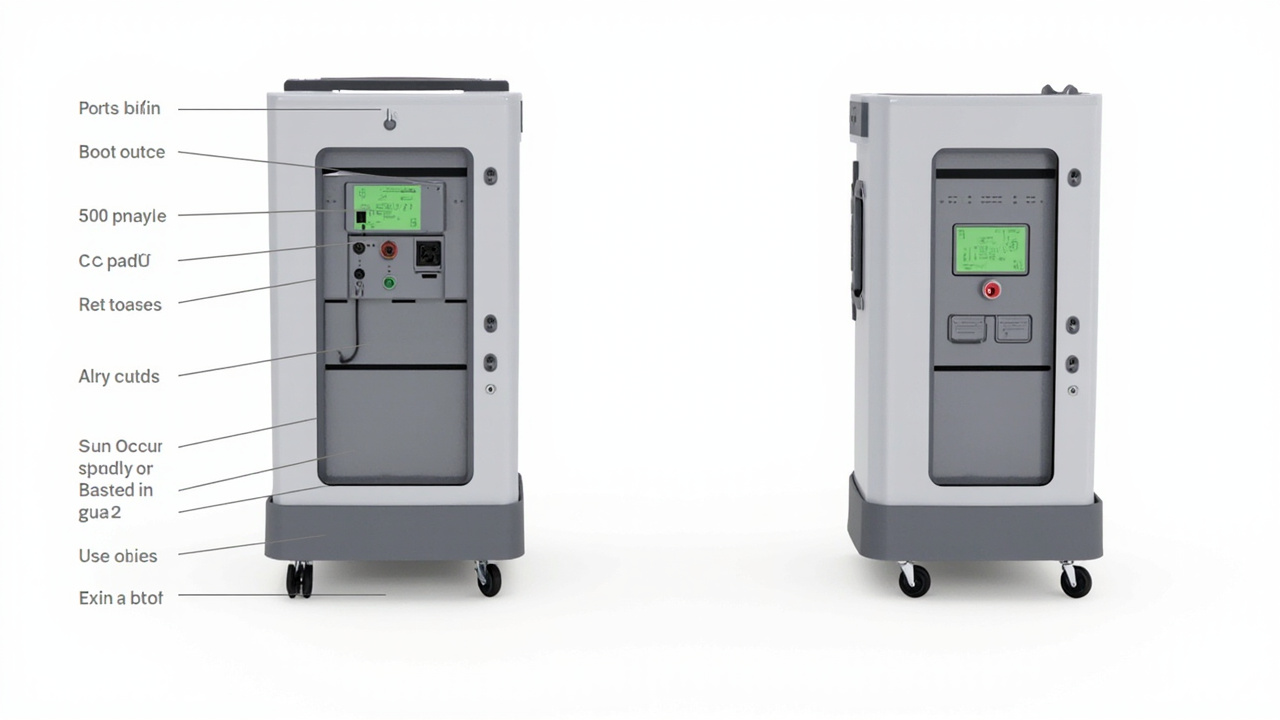
Jackery Explorer 5000 Plus:
- High-impact ABS + PC blend shell with subtle matte texture
- Telescoping aluminum handle (like roller luggage); rear wheels
- AC outlets on the front, behind a flip-down rubber cover that keeps garage dust out
- LED status panel on the top
- Cooling vents on both sides; lower fan noise under load (~38 dB claimed)
- Clean matte finish that hides fingerprints
EcoFlow DELTA Pro 3:
- Plastic shell with industrial grey-and-black color scheme, similar finish to the older Delta Pro
- Built-in telescoping handle and rear wheels, ~50 kg / 113.5 lb
- LED status panel on the top, AC outlets behind a flip cover on the front
- Side panel hides an extra USB-C PD 100W port and DC outlets
- Cooling vents on both sides; fans run ~45 dB under heavy load (independently measured)
- Slightly larger dimensions per kWh than the Jackery at base config
Long-term durability considerations:
| Concern | Jackery Explorer 5000 Plus | EcoFlow DELTA Pro 3 |
|---|---|---|
| Casing material | ABS + PC plastic | ABS + PC plastic |
| Cooling fans | Variable-speed, ~38 dB at peak | Variable-speed, ~45 dB at peak |
| Battery cycle rating (manufacturer) | ~4,000 cycles to 80% | ~4,000 cycles to 80% |
| Operating temp range (discharge) | -10°C to 45°C | -10°C to 45°C |
| IP rating (whole unit) | No whole-unit IP rating | No whole-unit IP rating |
| Field-failure reputation (Reddit r/portablepowerstations, 2025–2026) | Mostly Bluetooth pairing and BMS reset complaints | Mostly BMS and 4G dongle complaints |
| Realistic lifespan (home use, ≤52 cycles/yr) | 7–10 years | 7–10 years |
| Out-of-warranty battery replacement | ~$1,200 (Battery Pack 5000 swap) | ~$1,499 (Delta Pro 3 Smart Extra Battery) |
The honest durability read: Both machines are built around the same LiFePO4 cell suppliers. The differences are enclosure quality, cooling design, and warranty honor rate. Jackery has a tighter consumer-electronics service network in the US (Costco retail presence, 5-year US warranty when registered, 30-day return window through Amazon). EcoFlow is catching up but the service network is thinner in mid-size US cities.
For most users, durability is not the deciding factor. The deciding factor is whether the unit survives 7+ years of weekly cycling without the capacity dropping below 70%, which is when most owners start feeling the loss in real-dollar terms — and on that metric, the Jackery’s larger base capacity and identical cell rating give it a slight edge for pure home-backup duty.
Feature Breakdown
This is where the two machines diverge most, and where the EcoFlow’s accessory ecosystem becomes decisive for some buyers.
Jackery Explorer 5000 Plus standout features:
- 5,040Wh base capacity — the largest single-box figure in this price tier
- Carbon-fiber-reinforced shell for the optional SolarSaga 200W panel bundle (which has its own IP68 protection)
- Quiet operation — Jackery’s fan-curve tuning is noticeably quieter than the EcoFlow’s under sustained load
- Smart app with time-of-use and solar-only scheduling (less feature-rich than EcoFlow but more polished for first-time users)
- Pure sine wave inverter at 3,600W continuous with surge to 7,200W for motor-starting loads
- Costco in-store availability — useful if you want to inspect before buying
- Optional 30A RV adapter ships in the box
EcoFlow DELTA Pro 3 standout features:
- 120/240V split-phase output from a single unit — the Jackery needs two units for this, which is a major practical advantage
- X-Boost 6,000W lets the unit briefly power devices above its continuous rating (e.g., a 5,500W resistive load for ~30 seconds)
- Smart Home Panel 2 ($1,499) integrates up to two Delta Pro 3 units into a home’s breaker panel with 12 dedicated circuits — the only real “wired backup” solution in this tier
- EV X-Stream Adapter ($299) turns the unit into an emergency Level 1 / Level 2 EV charger (~7.7 kW charging input)
- 4G dongle ($99) for off-grid monitoring without Wi-Fi — unique in this tier
- App ecosystem: EcoFlow app has the deepest feature set in this tier — time-of-use arbitrage scheduling, solar-only mode, AC passthrough mode, generator auto-start trigger, and remote firmware updates
Where the Jackery wins:
- Capacity per dollar at base config (5,040Wh / $2,499)
- Quieter fans under load
- Larger usable energy per cycle (4,032Wh vs 3,277Wh at 80% DoD)
- Costco retail presence (for inspection / returns)
- Wider operating temperature tolerance (discharge)
Where the EcoFlow wins:
- Native 120/240V split-phase from one unit
- Accessory breadth (EV adapter, smart panel, generator, 4G)
- More mature app for time-of-use optimization and remote monitoring
- Higher peak/surge output (8,000W vs 7,200W)
- Higher solar input ceiling (1,800W vs 1,400W)
Pros and Cons
Jackery Explorer 5000 Plus
Pros:
- 5,040Wh at $2,499 = best capacity-per-dollar at base config in this tier
- ~23% more usable energy per cycle than the EcoFlow at base (4,032Wh vs 3,277Wh at 80% DoD)
- Quieter cooling (~38 dB claimed vs ~45 dB on EcoFlow) — meaningful if the unit lives near living space
- 5-year US warranty (3 years standard + 2-year extension with online registration)
- Carbon-fiber solar panels (SolarSaga 200W) with IP68 weatherproofing
- Costco retail availability for inspection and easy returns
- 30A RV adapter ships in the box
- Lower expansion cost to
10 kWh ($2,000 add-on vs ~$3,000 for the EcoFlow equivalent)
Cons:
- No native 120/240V split-phase — needs two units paired for whole-home circuits
- No first-party EV adapter or transfer switch — those are EcoFlow-only
- No whole-unit IP rating — garage placement only, not direct outdoor rain
- No 4G cellular monitoring — Wi-Fi + Bluetooth only
- Lower solar input ceiling (1,400W vs 1,800W) — slower recharge on a sunny day with a large array
- Smaller expansion ceiling (10 kWh vs 12 kWh for EcoFlow)
- App is less feature-rich than EcoFlow for deep time-of-use scheduling
EcoFlow DELTA Pro 3
Pros:
- Native 120/240V split-phase from a single unit — major practical advantage over Jackery at this tier
- Deep accessory ecosystem (Smart Home Panel 2, EV X-Stream Adapter, 4G dongle, generator auto-start) — the only real “wired home backup” path in this price bracket
- Higher peak output (8,000W vs 7,200W) for short motor-starting loads
- Higher solar input (1,800W vs 1,400W) — faster rooftop refill
- Larger maximum system capacity (12 kWh vs 10 kWh with expansion)
- Deep app features for time-of-use arbitrage, solar-only mode, and remote firmware updates
- 4G monitoring available via $99 add-on (unique in this tier)
- 5-year warranty on US retail SKUs
Cons:
- Lower base capacity (4,096Wh vs 5,040Wh) — ~19% less usable energy per cycle
- Higher cost per base Wh ($0.63/Wh vs $0.50/Wh)
- Louder cooling fans under sustained load (~45 dB measured)
- Smart Home Panel 2 costs $1,499 if you want whole-home circuit integration
- EV adapter is a $299 paid add-on
- 4G dongle is a $99 paid add-on
- Smaller Costco presence than Jackery for inspection / returns
- Real-world service network is thinner than Jackery in mid-size US cities
Best For / Skip If
Choose the Jackery Explorer 5000 Plus if you are:
- A homeowner who wants the largest possible base capacity per dollar and is fine with a single-unit philosophy
- An RV or van-life buyer who values quiet operation at night and a 30A RV adapter in the box
- A buyer who wants Costco retail inspection and easy returns before committing
- An off-grid cabin or tiny-home owner who plans to stop at one box or expand to ~10 kWh and does not need the EcoFlow accessory ecosystem
- A casual backup user (1-2 outages per year) who values store more kWh per cycle over peak output
Choose the EcoFlow DELTA Pro 3 if you are:
- A homeowner who wants to wire the unit into the home breaker panel via Smart Home Panel 2
- A user who needs 120/240V split-phase output from a single unit (rather than buying two Jackery units)
- An EV owner who wants the EV X-Stream Adapter for emergency vehicle charging
- An off-grid cabin or tiny-home owner who plans to expand to ~12 kWh over time and wants the deepest app-based scheduling
- A buyer who values highest peak/surge output (8,000W vs 7,200W) for occasional motor-starting loads
Skip both if you are:
- A casual backup user (one 4-hour outage per year) — a $1,000 class power station (Jackery 2000 Plus, EcoFlow DELTA 2 Max) covers 95% of use cases for half the price
- A whole-home backup user who actually needs 20+ kWh — you are looking at the wrong tier; consider the EcoFlow DELTA Pro Ultra or Anker SOLIX F3800 expandable stacks
- An RV full-timer who needs 12V DC and high continuous draw — a Victron MultiPlus-II + LiFePO4 battery bank will outlast and outperform both for ~$2,000 more
- Someone who does not own LiFePO4-compatible solar panels and does not plan to add any — both machines shine most when paired with rooftop solar
Bottom Line
The “Jackery 5000 Plus vs EcoFlow DELTA Pro 3” question is really two different questions:
-
“Which power station is the better storage box, full stop?” — For most people who want the largest capacity per dollar and the quietest operation in a single-unit backup, the answer is the Jackery Explorer 5000 Plus. You get ~23% more usable energy per cycle for a slightly lower sticker price, with the quietest fans in this tier and Costco retail backing.
-
“Which power station is the better starting point for a wired home backup ecosystem?” — If you want to wire the unit into your home’s breaker panel via Smart Home Panel 2, charge an EV from it during an outage, or monitor it remotely over 4G, the answer is the EcoFlow DELTA Pro 3. The accessory ecosystem is the deepest in this tier, the app scheduling is the most mature, and the native 120/240V split-phase output from a single unit is a real practical advantage.
The BuyCospa “value” formula — Price ÷ (Uses × Satisfaction × Durability) — tilts clearly toward the Jackery for pure home-backup duty and toward the EcoFlow for integrated whole-home wiring and EV-emergency scenarios. The $100 sticker gap is far less important than the 800Wh capacity gap at base config.
Buy smart. Get more value. If your goal is the largest single-box 5kWh backup for a fair price, the Jackery Explorer 5000 Plus at $2,499 is the most honest dollar-per-kWh you can buy in this tier in mid-2026. If your goal is a modular, app-driven, accessorized home-energy system that you can grow into, the EcoFlow DELTA Pro 3 is the better foundation — provided you actually plan to use the Smart Home Panel 2 or EV adapter.
The one trap to avoid: do not buy the EcoFlow because it “has more accessories” and then never wire it into your home panel or buy the EV adapter. In that case you are paying for an ecosystem you will never touch, and the Jackery’s larger base capacity wins on the merits.