Introduction
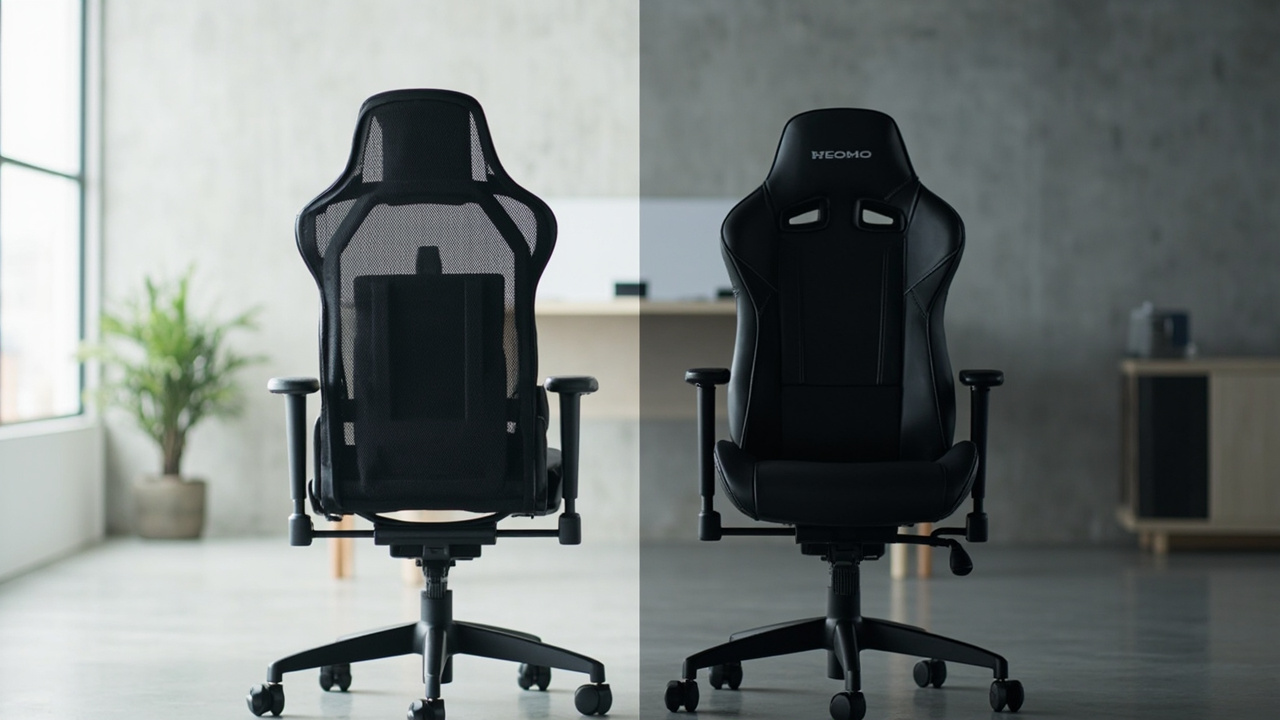
If you are about to drop more than $600 on a gaming chair in 2026, two names dominate the discussion: the Herman Miller x Logitech G Embody Gaming Chair at $1,395 and the Razer Iskur V2 NewGen at $599.99.
The Embody Gaming Chair is the gaming-flavored version of the original Herman Miller Embody — designed by Bill Stumpf and Jeff Weber in 2008, widely cited as one of the most ergonomic office chairs ever made. Logitech G partnered with Herman Miller to release the all-black “gaming” edition in October 2023 at $1,395 on Logitech G’s US store. It carries Herman Miller’s legendary 12-year warranty.
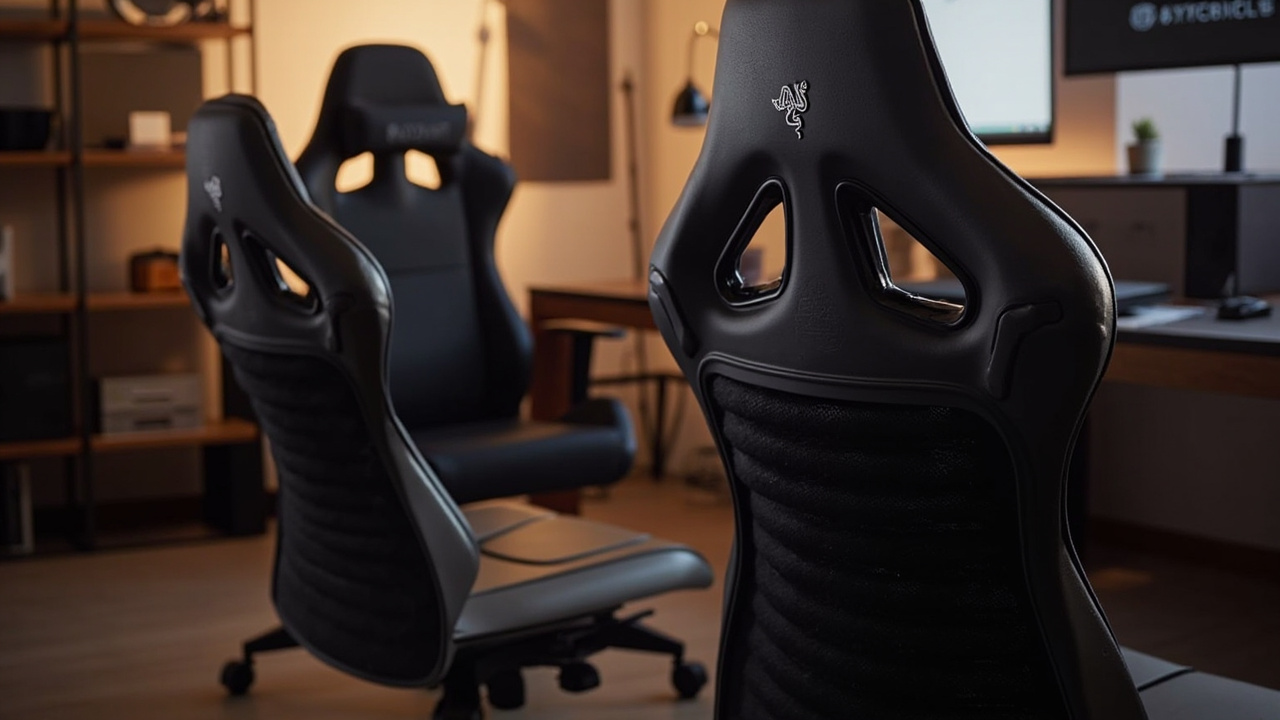
The Razer Iskur V2 NewGen (2025 refresh of the 2023 Iskur V2) is Razer’s flagship ergonomic gaming chair, sold at $599.99 on razer.com and at most US retailers. It ships with a 3-year limited warranty, which is upgradeable to 5 years for free via Razer’s online Extended Warranty Program, and a 14-day risk-free return window on RazerStore orders.
Both chairs clear the $500 bar for a reason. Both brands argue their chair is the ergonomic answer to long sessions. But the price gap is $795.40 — and the warranty gap is 9 years. The real question is not “which one is more comfortable.” It is “which one costs less to live with over the 8-10 year ownership cycle that ergonomic-chair buyers actually keep them?”
That question is not about the sticker. It is about cost per sitting hour, warranty-driven replacement probability, and resale value. The Embody holds resale value like a used Aeron; the Iskur V2 NewGen depreciates the way most gaming chairs do — fast.
The Verdict First
- Pick the Herman Miller x Logitech G Embody Gaming Chair ($1,395) if: you sit 6+ hours a day at your desk, you want Herman Miller’s 12-year warranty covering the chair from the frame to the armrests, and you value long-term resale value (used Embody Gaming Chairs resell for $700-$900 on the secondary market). This is the “buy once, keep for a decade” pick.
- Pick the Razer Iskur V2 NewGen ($599.99) if: you sit 2-4 hours a day, you want the integrated HyperFlex™ adjustable lumbar system with no loose pillow, and you prefer Razer’s gaming-flavored materials (Gen-2 EPU Leather with CoolTouch™ and a perforated dual-density cold-cured foam seat). This is the strong mid-premium pick if you would otherwise replace a chair in 4-5 years anyway.
Cost score (overall value): 78/100. The Embody wins on per-hour cost for heavy sitters and resale value. The Iskur V2 NewGen wins on upfront price and integrated lumbar engineering. If your expected ownership is 8+ years, the Embody is the cheaper chair. If your expected ownership is 3-5 years, the Iskur V2 NewGen is the cheaper chair. The wrong answer is to assume the cheaper chair saves money — it does not, if you have to replace it.
Key Comparison Points
Price vs Real Cost Per Use
The headline price gap is $795. The five-year and ten-year gap is much smaller — and depends entirely on how long you actually keep the chair.
| Cost Line | Herman Miller x Logitech G Embody | Razer Iskur V2 NewGen |
|---|---|---|
| MSRP (USA) | $1,395 (Logitech G store) | $599.99 (Razer store) |
| Typical street / sale price | $1,295-$1,395 (rarely discounted) | $499.99-$599.99 (frequent Razer sales) |
| Warranty (parts and labor) | 12 years (Herman Miller, all components) | 3 years standard, 5 years with free Extended Warranty Program (Razer) |
| Expected ownership (heavy sitter 6+ hrs/day) | 10-12 years (warranty-aligned) | 4-6 years (foam and EPU leather fatigue) |
| Expected ownership (casual 2-3 hrs/day) | 10-12 years (often outlasts warranty) | 6-8 years |
| Resale value at year 3 | ~$900 (used market, ~65% MSRP) | ~$300-$350 (used market, ~55% MSRP) |
| Replacement lumbar pillow | $0 (integrated PostureFit, no pillow) | $0 (integrated HyperFlex, no pillow) |
| Replacement armrest pads (year 5+) | $0 within warranty (covered 12 yrs) | ~$40-$60 out of pocket |
| Replacement gas cylinder (year 7+) | $0 within warranty | ~$50-$80 |
| Cost per sitting hour (10-year, 6 hrs/day, 250 days/yr) | ~$0.023/hr | ~$0.040/hr |
| Cost per sitting hour (5-year, 6 hrs/day, 250 days/yr) | ~$0.046/hr | ~$0.040/hr |
| Cost per sitting hour (5-year, 2 hrs/day, 250 days/yr) | ~$0.093/hr | ~$0.080/hr |
If you sit 6 hours a day, 5 days a week, 50 weeks a year (the heavy-sitter profile that justifies a $1,000+ chair), over 10 years you put in roughly 15,000 hours. The Embody’s $1,395 comes out to $0.093/hour. The Iskur V2 NewGen’s $599.99 — replaced once at year 5 with another $599.99 — comes out to $0.080/hour.
But that assumes you actually replace the Iskur V2 NewGen at year 5. The reality, per Razer Store reviews and r/RazerIskur threads, is closer to year 4-6 as foam begins to compress and the EPU leather starts to peel on the seat pan. If the Iskur V2 NewGen makes it to year 6 without replacement, the cost-per-hour gap closes — but it never flips.
If you sit 2-3 hours a day (casual use), the Iskur V2 NewGen is the cheaper chair across every reasonable ownership horizon. The Embody’s 12-year warranty is wasted on you.
Build Quality and Durability
Both chairs target ergonomic longevity, but they are built around different engineering traditions. The Embody is a 17-year-old proven design with a gaming coat of paint. The Iskur V2 NewGen is a 2025 refresh of a 2023 chair, with all-new foam and lumbar.
| Spec | Herman Miller x Logitech G Embody Gaming | Razer Iskur V2 NewGen |
|---|---|---|
| Chair lineage | Original Embody (2008, Stumpf/Weber), gaming edition since Oct 2023 | Iskur V2 (2023), NewGen refresh in 2025 |
| Backrest material | Polymer “pixelated support matrix” with 7-inch-thick Spine-like flex zones | Razer Gen-2 EPU Leather with CoolTouch™ thermal layer + perforated dual-density foam |
| Seat material | Synchronous tilt with 4-inch foam over spring coils (no pillow) | Dual-density cold-cured foam, perforated, no pillow |
| Lumbar system | PostureFit (two adjustable pads, no separate pillow) | HyperFlex™ integrated lumbar, 360° swivel, adjustable up/down/in/out |
| Lumbar protrusion / depth | ~30-40 mm adjustable | 40 mm protrusion, 60 mm height range (Razer spec) |
| Tilt mechanism | Synchronous tilt with 4-position backstop | Standard tilt with 153.5° ± 2° max recline |
| Recline range | Up to ~150° with lockable positions | 153.5° ± 2° (Razer spec) |
| Armrests | Fully adjustable (height, depth, width, pivot, 4D), covered 12 yrs | 4D armrests, 24 mm side, 40 mm front-back, 50° rotation (Razer spec) |
| Seat pan width | ~510 mm (~20 in) | 400 mm (Razer spec, excluding side bolsters) |
| Backrest height | ~870 mm (~34 in) | 855 mm (Razer spec) |
| Seat depth | ~460 mm (~18 in) | 450 mm (Razer spec) |
| Floor-to-seat height | ~430-560 mm (~17-22 in) | 435-535 mm (Razer spec) |
| Recommended user height | 5’0” – 6’3” (152-190 cm) | 5’3” – 6’6” (160-200 cm) (Razer spec) |
| Max user weight | ~140 kg (~300 lbs) | 136 kg / 299 lbs (Razer spec) |
| Wheelbase | Standard 5-star, 76 mm casters | 5-star, 690 mm wheelbase diameter (Razer spec) |
| Warranty on materials | 12 years, all-inclusive (Herman Miller) | 3 years (Razer) / 5 years with free registration |
| Return window | 30 days via Logitech G | 14 days via RazerStore |
| Recycled content | Up to 41% recycled material (Herman Miller published) | Not published |
The two biggest build differences:
- Backrest engineering. The Embody’s pixelated polymer matrix is designed to distribute pressure across the entire back, with 7 inches of conforming flex (Herman Miller published spec). The Iskur V2 NewGen uses a more traditional foam-and-EPU-leather backrest, with the HyperFlex™ lumbar system doing the heavy lifting at the lower back. The Embody’s matrix is fundamentally more breathable and more forgiving across long sessions; the Iskur V2 NewGen’s EPU leather is cooler to the touch at first, but it can warm up and degrade faster than a polymer mesh.
- Warranty length. This is not a small detail. A 12-year warranty covers everything from a cracked frame to a peeling armrest pad. The 3-year (or 5-year, free) Razer warranty covers most defects but does not cover normal wear-and-tear on foam or upholstery after the first year. If you keep a chair for 10 years, that 7-to-9-year protection gap is the single biggest cost difference between the two chairs.
Feature Breakdown
Ergonomics and Lumbar Support
- Herman Miller x Logitech G Embody: PostureFit lumbar system with two independent pads that sit at the base of the spine. BackFit adjustment re-aligns the backrest to your spine’s natural curve. The pixelated support matrix flexes in response to micro-movements, so the chair adapts as you shift. No pillow, no separate lumbar.
- Razer Iskur V2 NewGen: HyperFlex™ Lumbar Support System integrated into the chair, adjustable up/down and in/out with a 40 mm protrusion depth and 60 mm height range. 360° swivel follows natural spine movement. Also no separate pillow.
Both designs avoid the cheap gaming-chair lumbar pillow. The Embody’s PostureFit has been on the market since 2008 and is the more clinically validated system — multiple physical therapy practices reference it. The HyperFlex™ is newer (2023+) and well-reviewed on r/MouseReview and r/pcgaming, but lacks the 17-year track record.
Recline and Tilt
- Embody: Synchronous tilt — seat and back move together in a fixed ratio, mimicking the body’s natural recline. Lockable in multiple positions. Up to ~150°.
- Iskur V2 NewGen: Standard tilt with 153.5° ± 2° max recline. Larger recline range but the synchronous ratio is less refined.
For working, the Embody’s synchronous tilt is more comfortable for keyboard-and-mouse use. For leaning back during a cutscene, the Iskur V2 NewGen’s deeper recline is more pleasant. Most buyers use their gaming chair 80% upright, so this gap is minor.
Materials and Breathability
- Embody Gaming: All-black Sync fabric (Logitech G exclusive) over a polymer matrix. Cool to the touch, breathable, no foam against your back. Designed for 8+ hour sessions without heat buildup.
- Iskur V2 NewGen: Razer Gen-2 EPU Leather with CoolTouch™ and a perforated dual-density cold-cured foam seat. CoolTouch™ feels noticeably cooler than standard PU leather for the first 30 minutes, then warms to body temperature. Foam is perforated under the seat for airflow.
The Embody’s polymer-matrix backrest is fundamentally more breathable than any foam-and-leather design — there is no foam against your back to retain heat. The Iskur V2 NewGen’s perforated EPU leather and foam are an improvement over the original Iskur V2, but a polymer mesh is still cooler at hour four.
Adjustability and Fit
- Embody Gaming: 4D armrests, Seat Height, Seat Depth, Backfit, tilt tension, tilt lock. Recommended for 5’0” – 6’3” (152-190 cm), max ~300 lbs.
- Iskur V2 NewGen: 4D armrests (24 mm side, 40 mm front-back, 50° rotation), seat height 435-535 mm, tilt. Recommended for 5’3” – 6’6” (160-200 cm), max 299 lbs (136 kg).
The Iskur V2 NewGen fits taller users better (up to 200 cm / 6’6”). The Embody fits a wider range down to 5’0”. If you are under 5’2”, the Embody is one of the few premium gaming chairs that works. If you are over 6’3”, the Iskur V2 NewGen is the safer pick.
Pros and Cons
Herman Miller x Logitech G Embody Gaming Chair
Pros
- 12-year warranty covers frame, foam, armrests, gas cylinder — essentially everything
- Pixelated polymer backrest stays breathable across 8+ hour sessions
- PostureFit lumbar is clinically validated and adjusts to spine shape
- High resale value — used Embody Gaming Chairs sell for ~65% of MSRP at year 3
- Synchronous tilt mimics natural body recline, ideal for keyboard work
- Designed for 5’0” – 6’3”, broader fit range than most gaming chairs
- Up to 41% recycled material (Herman Miller published)
Cons
- $1,395 MSRP is more than double the Iskur V2 NewGen
- All-black only — no color options beyond the Logitech G gaming edition
- No integrated cooling tech (relying on mesh breathability instead)
- Synchronous tilt takes a few sessions to feel right vs. standard tilt
- 30-day return window via Logitech G; harder to “test” than 14-day returns with no-questions-asked policies
Razer Iskur V2 NewGen
Pros
- $599.99 MSRP — $795 cheaper than the Embody Gaming
- HyperFlex™ integrated lumbar with 40 mm protrusion and 60 mm height range — strong lower-back support out of the box
- Gen-2 EPU Leather with CoolTouch™ feels noticeably cooler for the first hour
- Perforated dual-density cold-cured foam seat reduces heat buildup
- Fits taller users (up to 200 cm / 6’6”) better than most premium gaming chairs
- 5-year warranty is achievable via free Extended Warranty Program registration
- 153.5° ± 2° recline — deeper than the Embody
Cons
- 3-year standard warranty is 9 years shorter than the Embody
- EPU leather can peel or crack on the seat pan after 3-5 years of daily use per user reports
- Foam compresses over time; replacement pads are not officially sold
- Lower resale value: ~$300-$350 on the used market at year 3 (~55% of MSRP)
- Polymer mesh breathability of the Embody still outperforms leather at hour 4+
- Higher seat minimum (435 mm) is too high for users under 5’2”
Best For / Skip If
Best For
- Herman Miller x Logitech G Embody Gaming Chair: Heavy sitters (6+ hrs/day) who want a single chair to last 10+ years. Buyers who value resale value — common for students, contractors, and people who move offices. Anyone in the 5’0” – 6’3” range with back pain, posture concerns, or PT-recommended ergonomic support. Buyers who want a chair that holds up to pet hair and daily abuse better than a foam-back chair.
- Razer Iskur V2 NewGen: Casual-to-moderate sitters (2-4 hrs/day) who do not want to spend $1,400 on a chair. Taller users (5’3” – 6’6”) who find most premium gaming chairs too short. Buyers who prefer integrated lumbar over Herman Miller’s PostureFit design. Anyone who wants a cooler-to-the-touch gaming aesthetic without spending Embody money.
Skip If
- You sit less than 1 hour a day. A $200-300 chair will work fine — both of these are overkill.
- You already own an Embody (any generation) or Aeron Remastered. The Gaming Chair is a small upgrade, not a generational leap.
- You want a stitching / colorway beyond all-black. Neither chair offers alternatives.
- You are a renter who moves every 1-2 years and does not want to ship a heavy chair. The Embody is 24.9 kg (54.8 lbs) — heavy.
- You have a strict $300 budget. Look at the Secretlab Titan Evo Lite or a used Steelcase Series 1 instead.
Bottom Line
The Herman Miller x Logitech G Embody Gaming Chair and the Razer Iskur V2 NewGen are both honest ergonomic gaming chairs. Neither is a waste of money. Both are well-built for their price class. But they target fundamentally different buyers.
If your goal is the lowest total cost across an 8-12 year ownership cycle — and you sit long enough each day to wear out a cheaper chair — the Embody Gaming Chair is the cheaper chair, even at $1,395. The 12-year warranty, the polymer backrest that does not degrade like foam, and the high resale value close the upfront gap by year 4 and turn it into a clear win by year 6.
If your goal is a strong mid-premium chair today, with no plan to keep it for a decade, the Razer Iskur V2 NewGen earns its $599.99 price tag with a real integrated lumbar system, modern materials, and a 5-year warranty path. Just expect to replace it once between years 4 and 6, and price that into your cost.
The wrong answer is buying the cheaper chair and assuming you saved money — you did not, if you have to buy it twice.
Buy smart. Get more value.