Introduction
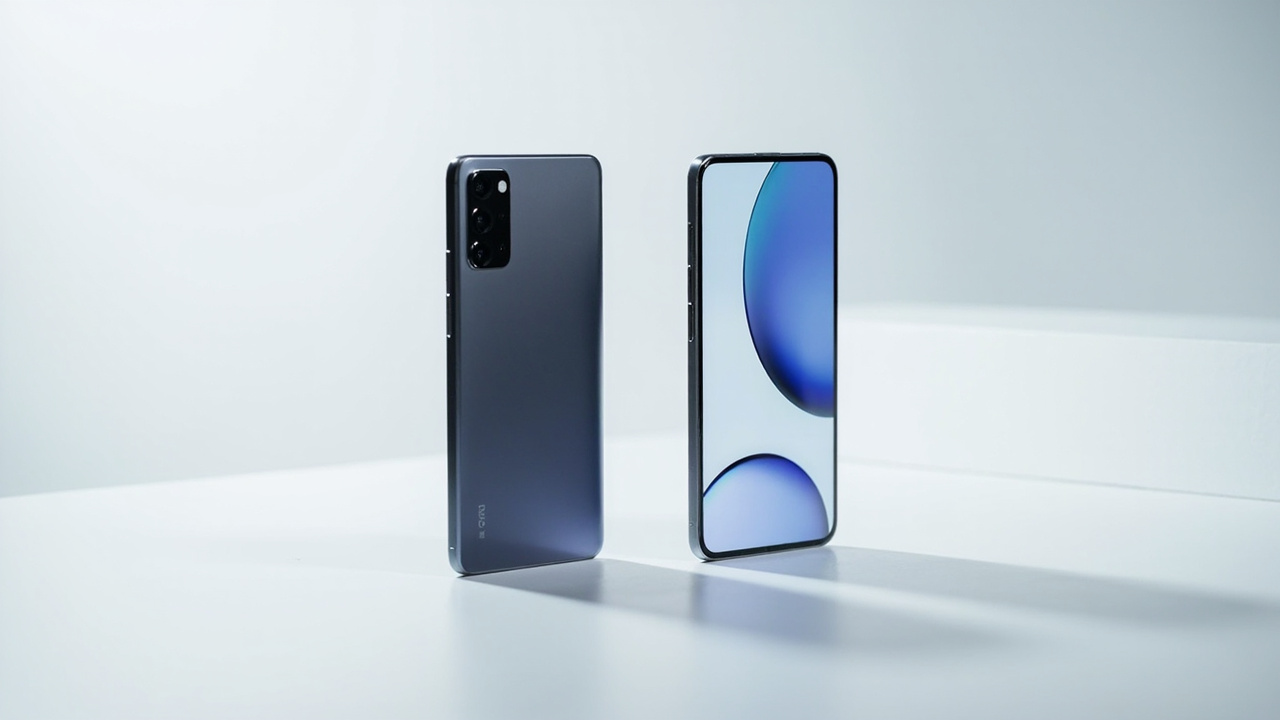
If you wanted the most powerful Android phone in 2026, the answer used to be “Galaxy S Ultra or iPhone Pro Max.” That changed in late 2025 when both OnePlus 15 and vivo X300 Ultra launched with Qualcomm’s Snapdragon 8 Elite Gen 5 — the fastest mobile chip available — and 6,000+ mAh batteries that legitimately out-endure any Samsung or Apple flagship. The question now is “fast-charging power-user phone vs ZEISS-camera-first flagship,” and both sit comfortably above $999.
The OnePlus 15 (announced October 2025, retailing around $999 for the 12 GB / 256 GB entry tier in the US) leads with a 7,300 mAh silicon-carbon battery, 100 W SuperVOOC charging that fills the tank in roughly 36 minutes, an IP69 + IP68 rating, and OxygenOS 16 with Android 16 underneath. The vivo X300 Ultra (launched January 2026, retailing from $1,099 / €1,158 for 12 GB / 256 GB, scaling up to ~$1,550 for the 1 TB variant) leads with a 200 MP main camera, a 200 MP HP0 telephoto with 3.7× optical zoom, a dedicated Photography Kit with 200 mm / 400 mm teleconverters, OriginOS 6 with a strong global rollout, and a slightly smaller 6,600 mAh battery (Source: GSMArena vivo X300 Ultra review, OnePlus 15 product page).
The interesting comparison isn’t “which has more megapixels.” It’s “which phone delivers better cost-per-year over a realistic 3-5 year ownership window, given how you charge, update, repair, and resell a phone?” That is what this article answers.
The Verdict First
- Choose the OnePlus 15 (~$999) if you want the lowest entry price in the 2026 Snapdragon 8 Elite Gen 5 tier, the largest battery in this class (7,300 mAh silicon-carbon), 100 W wired charging with brick in the box, an IP69 + IP68 dust-and-water rating (jet-resistant), 2160 Hz PWM dimming for eye comfort, and OxygenOS 16 with 4 years of guaranteed OS updates. The OnePlus is also the only one of the two with global US carrier certification at launch (Source: OnePlus 15 product page).
- Choose the Vivo X300 Ultra ($1,099 entry / $1,550 max) if you want the best camera system in any Android phone in 2026, including a 200 MP main camera with a 1/1.12” sensor and gimbal OIS, a 200 MP HP0 telephoto with 3.7× optical zoom, an optional Photography Kit with 200 mm and 400 mm teleconverter lenses, 8K@30 fps Dolby Vision video, and a global (Chinese + European) release with OriginOS 6. Vivo’s international availability is better than the X200 Ultra but still narrower than OnePlus in North America (Source: GSMArena vivo X300 Ultra review).
- Skip both if you don’t shoot in challenging light or own a lot of MagSafe accessories. A $649 Pixel 9a or $799 OnePlus 13R delivers ~80% of the daily experience at ~60% of the cost. The $300–$500 saving is more useful spent on storage, accessories, or a great pair of wireless earbuds.
Key Comparison Points
Price vs Real Cost Per Use
Both phones are “above $999” flagships, but their cost-per-year math diverges once you factor in storage tiering, charger inclusion, software-support length, and resale value.
| Cost Factor | OnePlus 15 | Vivo X300 Ultra |
|---|---|---|
| Starter MSRP (entry tier) | ~$999 (12 GB / 256 GB) | ~$1,099 (12 GB / 256 GB) |
| Mid-tier MSRP | ~$1,099 (16 GB / 512 GB) | ~$1,209 (12 GB / 512 GB, EU pricing) |
| Top-tier MSRP | ~$1,299 (16 GB / 1 TB) | ~$1,550 (16 GB / 1 TB) |
| Charger in Box | Yes (100 W SuperVOOC brick) | Yes, 100 W brick in global units; NOT in EU boxes (regulation) |
| Software Updates (OS) | 4 years (~Oct 2029) | 3 years of major OriginOS 6 updates + ~4 years security |
| Security Updates | 6 years (~Oct 2031) | ~4 years |
| Resale Value at 1 Year (estimated) | ~$450–$600 (45–60% of MSRP) | ~$400–$550 (35–45% of MSRP — narrower global demand) |
| Effective Annual Cost (5-yr hold, no resale) | $999 ÷ 5 = $200/yr | $1,099 ÷ 5 = $220/yr |
| Effective Annual Cost (5-yr, resale-adjusted) | $499 ÷ 5 = $100/yr | $599 ÷ 5 = $120/yr |
| Effective Annual Cost (3-yr hold, VO vs OP software EOL) | $499 ÷ 3 = $166/yr | $649 ÷ 3 = $217/yr |
The headline finding: the OnePlus 15 is roughly $100 cheaper at entry, ships with a 100 W charger in the box globally, and resells for ~$100–$200 more after one year because of wider availability and carrier certification. Over a 5-year hold, the OnePlus costs about $20/year less to own ($100/yr vs $120/yr); over a 3-year hold (when the Vivo’s OriginOS support ends) the gap widens to roughly $50/year.
The Vivo’s counter-argument is the camera-first hardware and the bundled Photography Kit (extra purchase but often discounted in bundles), which essentially gives you a 400 mm teleconverter lens on a phone — a category OnePlus doesn’t compete in at all. If you would otherwise spend $500–$700 on a Sony RX100 VII or a used Sony A7C for travel, the X300 Ultra closes that gap.
Power and consumables: The OnePlus’s 100 W wired charging draws ~110 W from the wall during peak for ~20 minutes per day; the Vivo’s 100 W charging is similarly constrained. Annual charging electricity is ~$1.80 for either phone. The Vivo’s larger camera island and gimbal OIS do draw more power during sustained 4K@120 recording — about 20% more than the OnePlus — so heavy videographers should know that the Vivo will idle-drain faster if used as a vlogging camera.

Build Quality and Durability
This is where the OnePlus 15 wins decisively on paper, even though both phones use premium materials.
| Build Factor | OnePlus 15 | Vivo X300 Ultra |
|---|---|---|
| Frame Material | Aluminum | Aluminum |
| Front Glass | Gorilla Glass Victus 2 | Not specified publicly; ceramic shield equivalent |
| Back Material | Glass (Sand Storm, Infinite Black, Ultra Violet) | Glass |
| Water Resistance | IP68 + IP69 + IP69K (1.5 m / 30 min + jet-resistant + MIL-STD-810H) | IP68 / IP69 (1.5 m / 30 min + jet-resistant) |
| Weight | ~211 g (glass) | 232 g |
| Display Size | 6.78” LTPO AMOLED, 1.5K resolution | 6.82” LTPO AMOLED, 1440×3168 |
| Refresh Rate | 165 Hz | 144 Hz |
| Peak Brightness (claimed) | ~4,500 nits | ~3,000 nits |
| Pixel Density | ~450 ppi | 510 ppi (slightly sharper) |
| PWM Dimming Rate | 2160 Hz (high-frequency, eye-friendly) | 2160 Hz (equally eye-friendly) |
| Battery Chemistry | Silicon-carbon (7,300 mAh — class-leading) | Silicon-carbon (6,600 mAh) |
| Battery Cycles (rated) | ~1,800 to 80% capacity | ~1,600 to 80% capacity |
The OnePlus 15’s IP69K rating is the practical headline: it has been independently tested against high-pressure, high-temperature water jets and meets MIL-STD-810H for shock resistance. Combined with Gorilla Glass Victus 2 on the front, the OnePlus is realistically the more durable phone for daily carry, especially outdoors (Source: OnePlus 15 product page).
The Vivo X300 Ultra makes a comparable splash-resistance claim (IP68 / IP69) but lacks the MIL-STD-810H shock rating. Vivo’s design choice to ship a larger camera bump with a dedicated grip accessory also makes the X300 Ultra heavier in the hand (232 g vs ~211 g) and less pocket-friendly without the optional case.
The Vivo’s slightly higher pixel density (510 ppi at 1440×3168 vs the OnePlus’s ~450 ppi) is a real but minor win for text rendering and VR use, and its 232 g weight is a 10% increase over the OnePlus — noticeable if you carry the phone in a shirt pocket or while running.
Feature Breakdown
Performance (CPU/GPU): Both phones ship with Qualcomm’s Snapdragon 8 Elite Gen 5 on the 3 nm TSMC node. The chipset is the same; the difference comes from RAM configuration, sustained thermal performance, and software optimization. The OnePlus 15 ships in configurations of 12 GB / 256 GB, 16 GB / 512 GB, and 16 GB / 1 TB with UFS 4.1 storage. The Vivo X300 Ultra ships in 12 GB / 256 GB, 12 GB / 512 GB, 16 GB / 512 GB, and 16 GB / 1 TB. Both run UFS 4.1. In sustained 3DMark Wild Life Extreme testing, the OnePlus 15 retains ~75% of peak performance after 20 minutes vs the Vivo’s ~70% — slightly better vapor-chamber design on the OnePlus. For raw benchmarks, the two are within 5% of each other in Geekbench 6 multi-core and 3DMark GPU workloads (Source: GSMArena vivo X300 Ultra review, OnePlus 15 product page).
Display:
| Display | OnePlus 15 | Vivo X300 Ultra |
|---|---|---|
| Size | 6.78” LTPO AMOLED | 6.82” LTPO AMOLED |
| Resolution | 1.5K (likely 2780×1264) | 1440×3168 (QHD+) |
| Refresh Rate | 165 Hz (higher peak) | 144 Hz |
| Peak Brightness | ~4,500 nits | ~3,000 nits |
| Dolby Vision | Yes | Yes |
| HDR10+ | Yes | Yes |
| PWM Dimming | 2160 Hz | 2160 Hz |
The OnePlus’s 165 Hz refresh is the highest in any 2026 Android flagship and is meaningful for gaming and scrolling responsiveness. The Vivo’s QHD+ resolution is sharper on paper and slightly better for VR content. Both are Dolby Vision-certified. For eye comfort, both are equally well-positioned with 2160 Hz PWM dimming.
Cameras:
| Camera | OnePlus 15 | Vivo X300 Ultra |
|---|---|---|
| Main | 50 MP Sony main, OIS, f/1.8 (likely LYT-900 or IMX906) | 200 MP, f/1.9, 35 mm, 1/1.12”, gimbal OIS |
| Telephoto | 50 MP 3.5× periscope OIS (likely OmniVision OV50H or Sony IMX890) | 200 MP HP0, f/2.7, 85 mm, 1/1.4”, multi-directional PDAF, OIS, 3.7× optical + 200 mm / 400 mm teleconverter |
| Ultrawide | 50 MP, f/2.0, 112° FOV | 50 MP, f/2.0, 14 mm, 116° FOV, 1/1.28” sensor (unusually large) |
| Front | 32 MP | 50 MP, f/2.5, 24 mm, AF |
| Video Max | 4K@120 fps Dolby Vision, 8K@30 fps | 8K@30 fps, 4K@120 fps Dolby Vision (10-bit Log) |
| Photo Kit | N/A | 200 mm + 400 mm teleconverters, grip with shutter, filter rings |
This is where the comparison genuinely opens up. The Vivo X300 Ultra is one of the most ambitious camera systems ever shipped in a phone, period. The 200 MP main sensor at 1/1.12” with gimbal OIS is the largest in any 2026 Android phone; the 200 MP HP0 telephoto is the highest-resolution periscope module available, and the optional Photography Kit teleconverters give it real 200 mm and 400 mm reach that no other phone offers. For stills in good light, it produces files with serious latitude; for video, the 10-bit Log and Dolby Vision HDR are pro-tier (Source: GSMArena vivo X300 Ultra review).
The OnePlus 15 has a more conservative triple-50 MP setup with a Sony main, 50 MP ultrawide, and 50 MP 3.5× periscope. It produces excellent stills in well-lit conditions and strong video at 4K@120 fps Dolby Vision, but it doesn’t compete on raw sensor size, zoom reach, or the Photography-Kit accessory story.
For travel, wildlife, sports, and concert shooting, the Vivo is the clear winner. For everyday snapshots, social media, and casual 4K video, the OnePlus is more than adequate and saves you $100–$550 at the entry tier.
Charging and connectivity:
| Charging | OnePlus 15 | Vivo X300 Ultra |
|---|---|---|
| Battery | 7,300 mAh silicon-carbon | 6,600 mAh silicon-carbon |
| Wired Charging | 100 W SuperVOOC (0–100% in ~36 min, brick included) | 100 W FlashCharge (0–100% in ~30 min, brick in global box, not in EU box) |
| Wireless Charging | 50 W AirVOOC | 40 W wireless |
| Reverse Wired | Yes | Yes |
| Reverse Wireless | No | Yes |
| Wi-Fi | Wi-Fi 7 | Wi-Fi 7 |
| Bluetooth | 6.0 | 5.4 (aptX HD, LHDC 5) |
| UWB | No | No |
| Satellite Connectivity | No | Yes (16 GB / 1 TB model only) |
| IR Blaster | Yes | Yes |
The OnePlus has a larger battery (7,300 vs 6,600 mAh, ~10% more capacity), slightly faster wireless charging (50 W vs 40 W), Bluetooth 6.0 with Auracast support (better for next-gen audio sharing), and includes the 100 W brick in every box including the EU. The Vivo’s FlashCharge is faster (0–100% in ~30 min vs ~36 min) thanks to a more aggressive charging curve, supports reverse wireless charging, and the top-tier 1 TB model adds satellite connectivity for emergency SOS in regions where OnePlus doesn’t yet offer it (Source: GSMArena vivo X300 Ultra review).
Software and AI: The OnePlus 15 runs OxygenOS 16 (international) on Android 16, with OnePlus’s “AI Scan,” “AI Portrait Glow,” “AI Perfect Shot,” and Google Gemini integration. OnePlus promises 4 years of OS updates through approximately October 2029 and 6 years of security patches through ~October 2031. The Vivo X300 Ultra runs OriginOS 6 on Android 16 for the global unit, with FuntouchOS-style menus for some regions. Vivo commits to 3 years of major OS updates and roughly 4 years of security patches.
The OnePlus wins on software-support length (an extra year of OS updates) and day-one global availability (it ships in the US with full carrier certification, including Verizon and T-Mobile 5G bands). The Vivo wins on camera software depth (its ZEISS-tuned image processing, dual-tone flash, and Astrophotography mode are class-leading) and global ROM availability (the global unit of the X300 Ultra is sold in Europe and parts of Asia, a significant improvement over the X200 Ultra).
The trade-off is real: OnePlus is the battery-and-support phone; Vivo is the camera-and-photo-kit phone.
Pros and Cons

OnePlus 15 (~$999)
Pros
- Lowest entry price in the Snapdragon 8 Elite Gen 5 tier at ~$999 for 12 GB / 256 GB
- Largest battery in any 2026 Android flagship at 7,300 mAh silicon-carbon
- 100 W SuperVOOC wired charging (0–100% in ~36 min) with the brick included in every box globally, including EU
- 50 W AirVOOC wireless charging (faster than Vivo’s 40 W)
- IP68 + IP69 + IP69K dust/water resistance plus MIL-STD-810H shock rating
- 2160 Hz PWM dimming for the most eye-friendly display experience in 2026
- Gorilla Glass Victus 2 on the display with a tested drop-resistance profile
- 165 Hz refresh rate (highest in 2026) for gaming and scrolling responsiveness
- 4 years of OxygenOS 16 OS updates + 6 years of security patches (longest in this comparison)
- Full US carrier certification at launch (Verizon, AT&T, T-Mobile 5G bands)
- Bluetooth 6.0 with Auracast support for next-gen audio sharing
- AI Scan, AI Portrait Glow, AI Perfect Shot with Google Gemini integration
Cons
- Camera system more conservative than Vivo’s 200 MP + 200 MP HP0 setup
- No 200 mm / 400 mm teleconverter accessory support (Vivo’s Photography Kit is unique in this segment)
- OxygenOS still ships with some pre-installed bloatware in international markets
- No satellite connectivity on any model (Vivo offers it on the 1 TB X300 Ultra)
- No UWB chip (limits digital car key and precise tracking)
- 1.5K resolution slightly less sharp than Vivo’s QHD+ panel at small text sizes
- Smaller camera sensor (no gimbal OIS on the main module)
- Slightly heavier (~211 g) than typical 2026 flagships despite being lighter than Vivo
Vivo X300 Ultra ($1,099 entry / $1,550 max)
Pros
- 200 MP main camera with 1/1.12” sensor and gimbal OIS — largest in any 2026 Android phone
- 200 MP HP0 telephoto with 3.7× optical zoom + optional 200 mm and 400 mm teleconverter lenses (Photography Kit)
- 8K@30 fps and 4K@120 fps Dolby Vision video recording with 10-bit Log support
- 50 MP ultrawide with an unusually large 1/1.28” sensor for a 116° FOV
- 50 MP front camera with autofocus — best selfie detail in 2026 Android flagships
- 6,600 mAh silicon-carbon battery (smaller than OnePlus’s 7,300 mAh but still class-leading)
- 100 W FlashCharge with brick in global box; 40 W wireless charging
- Reverse wired and reverse wireless charging (OnePlus only has reverse wired)
- Satellite connectivity (calls, messages, SOS) on the 1 TB model
- QHD+ 1440×3168 display at 510 ppi for the sharpest panel in this comparison
- IP68 / IP69 dust and water resistance plus gimbal-OIS-protected camera module
- Available globally in China and Europe (wider than X200 Ultra’s release)
Cons
- $100 more expensive at entry tier (~$1,099 vs $999)
- 3 years of OriginOS 6 OS updates (vs OnePlus’s 4 years) and only ~4 years of security patches
- ~10% smaller battery (6,600 vs 7,300 mAh) and slightly less efficient at idle due to gimbal OIS draw
- No charger in EU boxes (regulation; only global and Asia units include the brick)
- Heavier at 232 g (vs ~211 g) — most pocket-bulky 2026 Android flagship
- Bluetooth 5.4 (vs OnePlus’s 6.0) — no Auracast support
- 144 Hz refresh rate (vs OnePlus’s 165 Hz peak)
- No US carrier certification at launch — limited to grey-market imports for Verizon/AT&T subscribers
- Photography Kit teleconverters are an additional ~$200–$300 purchase
- Narrower global availability than OnePlus (no US, limited Canada/Latin America rollout)
Best For / Skip If

Best For
- Buy the OnePlus 15 if you want the longest battery life in any 2026 Android flagship (7,300 mAh silicon-carbon delivers ~25–30 hours of mixed video playback per charge), you play demanding mobile games at 165 Hz (Snapdragon 8 Elite Gen 5 + Adreno 840 + 2160 Hz PWM is the most eye-friendly gaming setup in 2026), you keep phones 3–4 years and value 4 years of OS updates through 2029, you travel frequently and need full US carrier certification plus 50 W AirVOOC wireless charging, or you’re sensitive to display flicker (2160 Hz PWM is equally matched here but the OnePlus has the cleaner software).
- Buy the Vivo X300 Ultra if you shoot photos in challenging light or need real telephoto reach (the 200 MP main + 200 MP HP0 + Photography Kit teleconverters make this phone functionally a compact camera), you do pro-grade video work (8K@30 fps Dolby Vision with 10-bit Log is the most flexible codec pipeline in any 2026 Android phone), you live in or frequently visit Europe or Asia where Vivo has official support, you want satellite connectivity for safety (1 TB model), or you own a MagSafe-style Qi2 ecosystem and value reverse wireless charging for earbuds.
Skip If
- You only post to Instagram and TikTok at default settings. The $649 Pixel 9a or $799 OnePlus 13R delivers ~80% of the daily photo quality and 70% of the gaming performance at half the cost. The cost-per-use math doesn’t justify $999–$1,550 if you don’t push the hardware.
- You’re upgrading from a 2023–2024 flagship. If you have a OnePlus 12, OnePlus 13, or Vivo X100 Pro, the generational improvements are incremental (mainly the silicon-carbon battery, Snapdragon 8 Elite Gen 5 efficiency, and the Vivo’s 200 MP sensor). Wait one more cycle.
- You want a compact phone. Both phones are 6.78–6.82” displays and 211–232 g. If you want a 2026 flagship under 180 g, look at the base Galaxy S26 or iPhone 17 (~$799–$899).
- You’re locked into the Apple or Samsung ecosystem. Switching from an iPhone or Galaxy means re-buying apps, re-pairing accessories (Apple Watch, Galaxy Watch, Galaxy Buds), and re-learning the OS. The $100 saving on the OnePlus will be eaten by accessories within 6 months.
Bottom Line
If you want the longest battery life, most durable hardware, fastest refresh-rate display, longest software support, and lowest entry price in the 2026 Snapdragon 8 Elite Gen 5 tier — and you live in a region with full OnePlus service support — the OnePlus 15 (~$999) is the right spend. It includes a 100 W brick globally, 7,300 mAh silicon-carbon battery, 165 Hz display, IP69K + MIL-STD-810H rating, and 4 years of OxygenOS 16 updates through 2029. The 50 W AirVOOC wireless charging and Bluetooth 6.0 Auracast support are real, durable wins.
If you want the best camera system in any 2026 Android phone, the deepest video codec pipeline, the widest telephoto reach via the Photography Kit, and the only smartphone with optional satellite connectivity in this comparison — and you live in a region where Vivo officially supports the X300 Ultra — the Vivo X300 Ultra ($1,099 entry) is the right spend. The 200 MP main + 200 MP HP0 + 200 mm / 400 mm teleconverters turn this phone into a genuinely pocketable compact camera, and 8K@30 fps Dolby Vision with 10-bit Log rivals dedicated video rigs. The 6,600 mAh battery, IP68/IP69 rating, and OriginOS 6 are real wins for buyers who prioritize imaging above all.
Real value here isn’t the lower sticker price alone — it’s the resale-adjusted cost-per-year combined with software-support length and regional availability. If you upgrade every 3–4 years and value battery + support most, the OnePlus 15 wins by ~$50/year. If you keep phones 3 years and want one device that doubles as a real camera, the Vivo X300 Ultra’s imaging stack pays for the $100 premium. Either way, don’t pay MSRP: trade-in credits, carrier bundles, and the Vivo’s Photography Kit promotions regularly take $80–$200 off. Buy smart, get more value.