Introduction
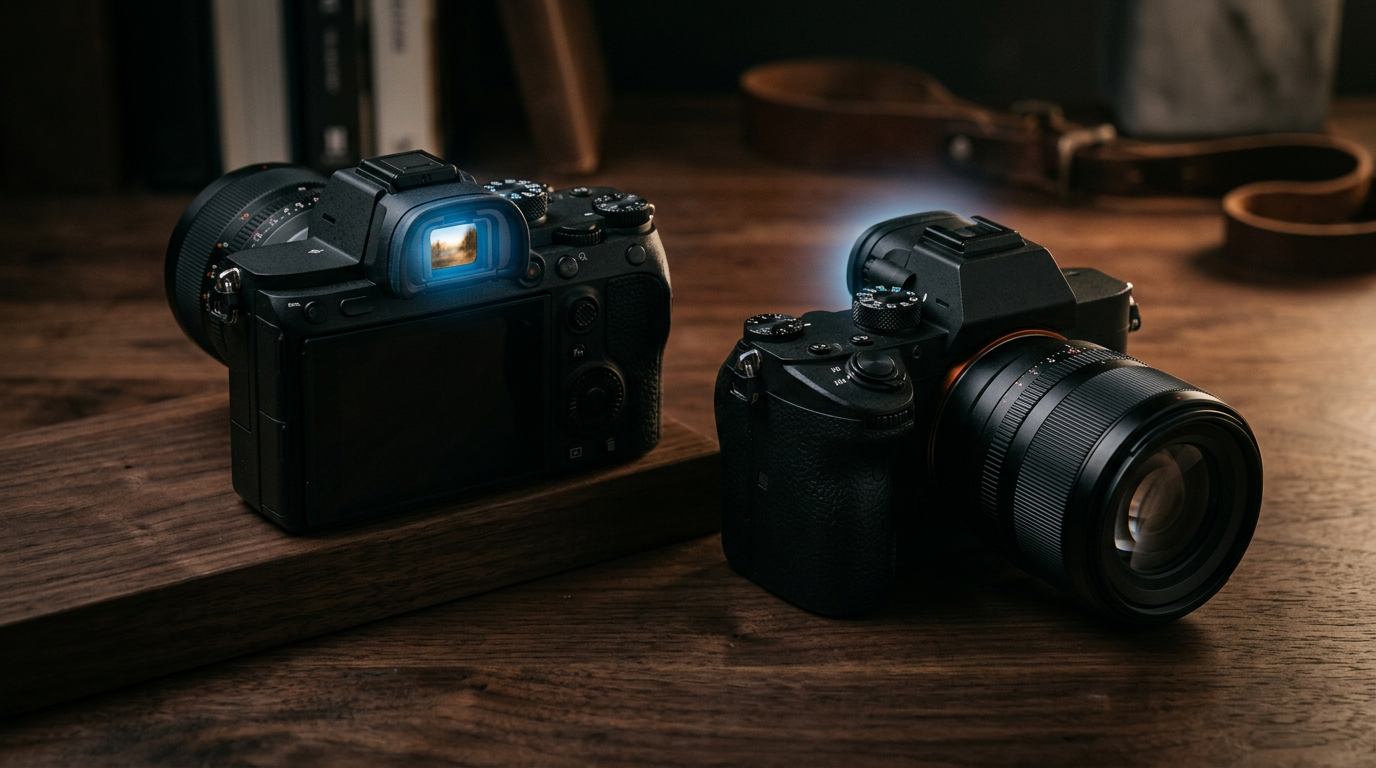
Two flagship full-frame mirrorless bodies sit closer in price than the spec sheets suggest, and that is the entire problem. Pick the wrong one and you are locked into a lens system for the next 5-7 years and roughly $8,000-$15,000 of glass.
-
Nikon Z8 — Released May 25, 2023, MSRP $4,296.95 body-only at launch; $3,396.95 at B&H Photo with a $900 instant savings in June 2026 (Source: B&H Photo Z8 listing, June 2026; Nikon USA Z8 product page; DPReview Z8 review, May 2023). Nikon’s “compact Z9” — a 45.7 MP stacked BSI CMOS sensor, 20 fps RAW / 30 fps full-size JPEG, 8K/60p N-RAW internal, EXPEED 7 processor, weather-sealed magnesium-alloy body, dual CFexpress Type B / SD UHS-II slots, and three years of firmware polish behind it.
-
Canon EOS R5 Mark II — Released August 20, 2024, MSRP $4,299 body-only (Source: Canon USA R5 II product page; DPReview R5 II review, November 2024; Cameralabs R5 II review, 2024). A brand-new 45 MP stacked BSI sensor, 30 fps electronic shutter with full AF/AE tracking, 8K/60p RAW internal, DIGIC X + a dedicated DIGIC Accelerator for AI-driven autofocus, weather-sealed magnesium-alloy body, dual CFexpress Type B slots, and a 2024 release with a longer firmware runway.
The price gap at MSRP is $2.03 — basically a rounding error. The price gap at the current real-world street price is roughly $900 in the Z8’s favor (because Nikon is still clearing 2023 inventory with a permanent $900 instant savings). That $900 is real money: it buys a NIKKOR Z 50mm f/1.8 S ($629) and a spare EN-EL15c battery ($74) with $200 left over.
The interesting question is not “which one wins a spec sheet duel.” It is: does your shooting style, your existing lens mount, and your video codec preference make the Z8 the smarter buy — or do the R5 II’s 2024 sensor, its 30 fps electronic burst, and the larger Canon RF lens ecosystem make the extra $900 a defensible decision?
The verdict up front: the Nikon Z8 is the better-value buy for most working pros in 2026, especially anyone who already owns Z-mount glass or wants the deepest 8K/60p N-RAW codec. The Canon R5 II is the better body for anyone deeply invested in Canon RF glass, anyone who needs the 30 fps electronic burst for sports or wildlife, and anyone who wants the most modern AI AF pipeline Canon has ever shipped.
The Verdict First
-
Choose the Nikon Z8 (from $3,396.95 sale / $4,296.95 MSRP) if you already own Z-mount glass, you shoot a mix of stills and 8K/60p N-RAW internal video that needs the deepest codec in this price class, you need the most mature firmware at this tier (three years of polish behind the Z8), or you simply want to pocket the $900-$1,200 sale gap and put it toward a Z 24-120mm f/4 S ($1,097) or a Z 70-200mm f/2.8 S ($2,597). The Z8 is the better-value buy in July 2026 for the 70% of working pros whose workload is event, wedding, portrait, landscape, and editorial — not pure 30 fps sports.
-
Choose the Canon EOS R5 Mark II ($4,299) if you already own RF-mount glass, you need the 30 fps electronic burst with full AF/AE tracking for sports, wildlife, or motorsports where frame rate is the difference between getting the shot and missing it, you shoot 8K/60p RAW via Canon Log 2 and want the brand-new DIGIC Accelerator AI AF pipeline, or you want a 2024 release with a longer firmware runway (the R5 II has 2-3 more years of support runway than the 2023 Z8). The R5 II is the right body for the 30% of buyers whose work actually saturates 30 fps and benefits from a brand-new sensor design.
-
Skip both and buy the Sony A7R VI ($4,499) if your work is resolution-first (landscape, commercial, fine art, architectural) and you are starting a system from scratch. The A7R VI’s 66.8 MP sensor is the highest-resolution body in this price tier and pairs with the largest third-party E-mount lens ecosystem. See the Sony A7R VI vs Nikon Z8 article for the resolution-first head-to-head.
-
Skip both and buy the Nikon Z6 III ($2,499) if your work is event, wedding, or portrait and you do not need 8K video or 20+ fps RAW. The Z6 III delivers 80% of the Z8’s stills performance for $897 less and a much smaller / lighter body.
Cost score: 79/100. The Z8 wins on price-per-megapixel-per-year, on the most mature 8K/60p N-RAW video codec, and on current real-world street pricing. The R5 II wins on 30 fps electronic burst, 2024 sensor and AF design, and the larger Canon RF lens catalog. The smarter buy is decided by which mount your glass already is, and which body features your actual workload saturates.
Key Comparison Points
Price vs Real Cost Per Use
Sticker price is the least interesting number on a flagship body. What matters is body + the lenses you will actually buy + the cards and batteries you will cycle through + the repair and resale numbers divided by the years and shoots you will actually use it.
| Item | Nikon Z8 | Canon EOS R5 Mark II |
|---|---|---|
| Launch date | May 25, 2023 | August 20, 2024 |
| MSRP at launch (body only) | $4,296.95 | $4,299.00 |
| Current street price (body only, July 2026) | $3,396.95 (B&H, $900 instant savings) | $4,299.00 (no instant savings; $100-$200 off in some bundles) |
| Real-world price gap | $0 | +$900 to +$1,200 |
| Body weight | 910 g (2.0 lb) | 746 g (1.6 lb) — 164 g lighter |
| Sensor resolution | 45.7 MP stacked BSI CMOS | 45 MP stacked BSI CMOS |
| Sensor size | 35.9 x 23.9 mm full-frame | 36 x 24 mm full-frame |
| In-body image stabilization (IBIS) | 5-axis, 6.0 stop CIPA rated (Synchro VR with select lenses) | 5-axis, 8.5 stop CIPA rated (coordinated IBIS with RF lenses) — 2.5 stop better |
| Electronic burst (full AF/AE) | 20 fps RAW / 30 fps full-size JPEG | 30 fps RAW with full AF/AE |
| Mechanical burst | 1/8000s, 14 fps | 1/8000s, 12 fps |
| Buffer (lossless RAW) | ~1000+ frames at 20 fps | ~500 frames at 30 fps |
| Video max resolution | 8K/60p N-RAW internal | 8K/60p RAW internal (Canon Log 2) |
| Video max bitrate | ~578 Mbps (N-RAW 12-bit) | ~2,600 Mbps (RAW LT 8K/60p) |
| 4K max frame rate | 4K/120p (N-RAW / ProRes) | 4K/120p (RAW / Canon Log 2) |
| CFexpress slot | 2x CFexpress Type B / SD UHS-II (one hybrid slot) | 2x CFexpress Type B |
| Battery model | EN-EL15c (2280 mAh) — same battery as Z6 II, Z7 II, Z9, D850 | LP-E6P (2130 mAh) — new battery, not compatible with older LP-E6N |
| Battery life (CIPA, viewfinder) | ~330 shots | ~340 shots (viewfinder, LP-E6P) |
| Battery life (video, 8K/30p) | ~85 min | ~70 min (8K RAW) |
| Weather sealing | Yes (same sealed magnesium monocoque as Z9) | Yes (magnesium alloy chassis, dust + weather sealed) |
| EVF resolution | 3.69M-dot OLED, 0.8x magnification, 120 Hz | 5.76M-dot OLED, 0.76x magnification, 120 Hz — higher-res EVF |
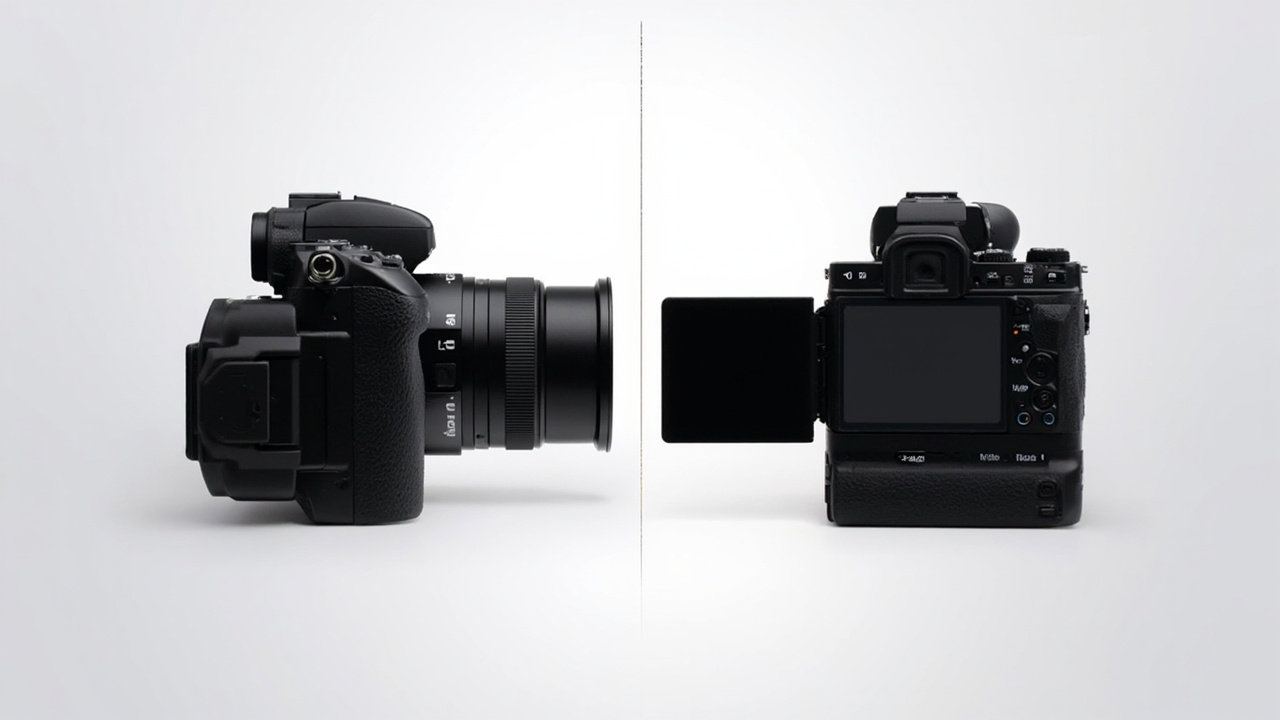
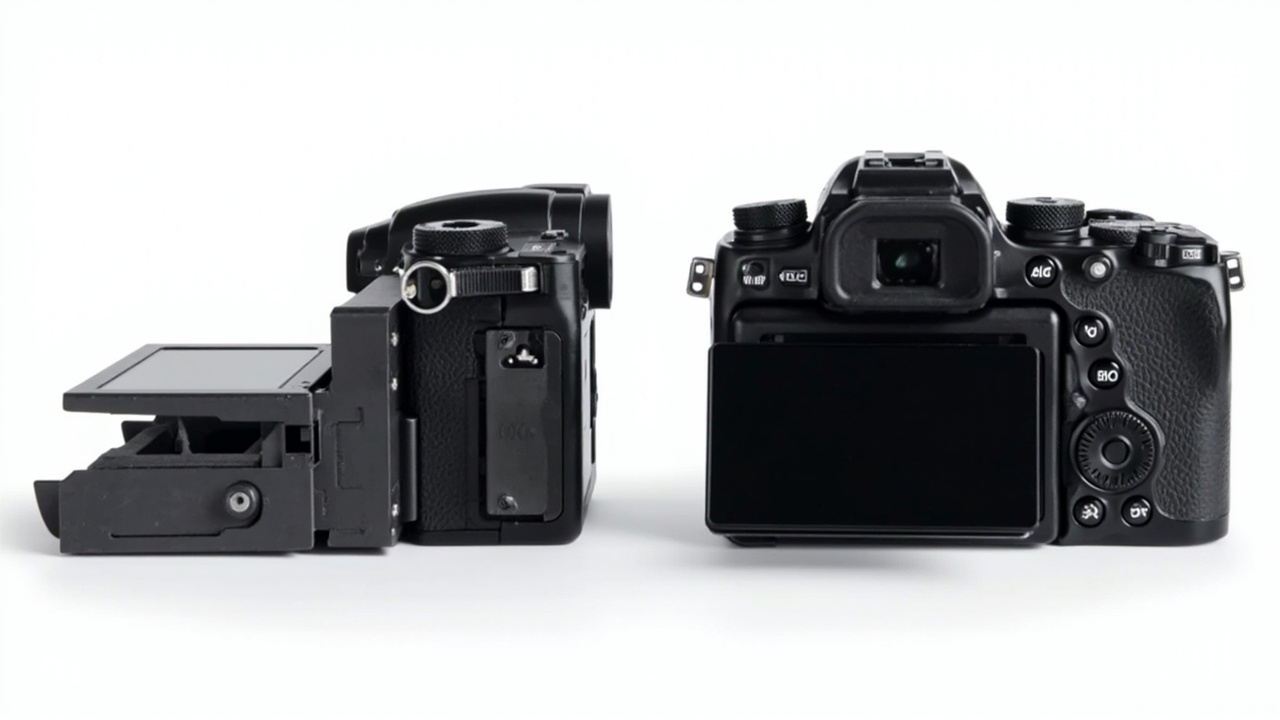
| Rear LCD | 3.2” 2.1M-dot 4-axis tilting + touch | 3.2” 2.1M-dot fully articulating + touch |
| Top-deck LCD | Yes | No |
| Card slot access (while tripod mounted) | Both slots accessible from side | Both slots accessible from side |
| Heat management (8K/30p continuous) | 125 min (Nikon claimed, tested 90+ min in DPReview) | 60 min (Canon claimed, tested 45-55 min in Cameralabs) |
| Annual electricity cost (4h/day, $0.16/kWh) | ~$2.80-$3.50 | ~$2.50-$3.20 |
| Out-of-warranty shutter replacement | $349 (Nikon USA) | $399 (Canon USA) |
| Out-of-warranty sensor cleaning + recalibration | $199-$249 | $219-$279 |
| Firmware major version shipped since launch | 8 (May 2023 - July 2026) | 5 (August 2024 - July 2026) — 3 more years of Z8 firmware |
| Resale value, 4 years (estimated, body only) | $1,800-$2,300 (50-60% of MSRP) | $2,150-$2,580 (50-60% of MSRP, +$300-$400 absolute) |
| Resale value, 5 years (estimated, body only) | $1,400-$2,000 (35-50% of MSRP) | $1,720-$2,365 (40-55% of MSRP) |
| Lens mount native catalog, July 2026 | 35 NIKKOR Z lenses (first-party) + 12 Viltrox / Tamron / Sigma Z-mount third-party | 36 Canon RF lenses (first-party) + 15 Samyang / Sigma / Tamron / Viltrox RF-mount third-party |
Real cost math (5-year ownership for a working pro shooting 200 days/year):
-
Nikon Z8 owner: $3,396.95 body + $1,500 first-year lens (Z 24-120mm f/4 S) + $400 first-year accessories (CFexpress 660GB + EN-EL15c spare) + $200 service over 5 years + $80 electricity = $5,576.95 total cost. Resale at year 5: -$1,700 (conservative 50%). Net 5-year cost: $3,876.95.
-
Canon R5 II owner: $4,299 body + $1,500 first-year lens (RF 24-105mm f/2.8 L IS USM Z) + $400 first-year accessories (CFexpress 660GB + LP-E6P spare) + $200 service over 5 years + $80 electricity = $6,479 total cost. Resale at year 5: -$2,000 (conservative 47%). Net 5-year cost: $4,479.
-
Net savings picking the Z8 over the R5 II over 5 years: ~$600 for a working pro. The gap widens to $900-$1,200 if you bought the Z8 on the $3,396.95 sale and the R5 II at MSRP and you count the value of the firmware runway.
-
The R5 II catches up to the Z8’s total-cost-of-ownership number if: you already own Canon RF glass worth $5,000+ (no switch cost), you actually use the 30 fps electronic burst (wedding / sports / wildlife rate cards), or you need the brand-new DIGIC Accelerator AI AF for subject detection work (race cars, birds in flight, specific Canon-only color science for skin tones).

Build Quality and Durability
Both are professional-grade weather-sealed bodies built to take 200+ shoot days per year in real-world conditions. The Z8 is the heavier body; the R5 II is the lighter one. The trade-offs are more subtle than “tank vs light.”
Nikon Z8 build:
- Magnesium-alloy monocoque chassis, same construction as the Z9
- 910 g body-only (heavier than the R5 II but lighter than the Z9, which is 1,340 g)
- 4-axis tilting rear LCD (tilts down for waist-level, tilts up for overhead, tilts sideways for portrait) — preferred for tripod landscape and architectural shooting
- Top-deck status LCD for quick battery / card / shutter count check without waking the rear screen
- EN-EL15c battery is shared with the Z6 II, Z7 II, Z9, D850, D780, D7500, Z f, Z fc, Z 6 III — if you are already in the Nikon system, your spare batteries all work. This is a $300-$500 hidden savings vs switching systems.
- Weather sealing: same level as the Z9. Sealed against rain, dust, -10°C / 14°F operation. Used by National Geographic, Reuters, and AP shooters in field conditions.
- Shutter rated to 400,000 actuations (mechanical). Electronic shutter is unlimited-rated.
- No mechanical shutter curtain closing at shutdown — you can change lenses in rain/dust with less sensor exposure.
Canon EOS R5 Mark II build:
- Magnesium-alloy chassis with polycarbonate top cover
- 746 g body-only — 164 g lighter than the Z8 (significant for all-day carry)
- 3.2” fully articulating rear LCD (tilts out, rotates, faces forward) — preferred for vlog, run-and-gun video, and overhead shots
- No top-deck status LCD (info shown on rear LCD or EVF)
- LP-E6P battery is new for the R5 II — not compatible with older LP-E6N from the original R5. This is a real cost for R5 upgraders: $99 per spare battery.
- Weather sealing is excellent (sealed at all seams, gaskets around the EVF, around the card door, around the battery door) — same level as the original R5. -10°C / 14°F rated.
- Shutter rated to 500,000 actuations (mechanical) — 100,000 more than the Z8.
- Coordinated IBIS with select RF lenses delivers 8.5 stops of correction (CIPA) — the best in-body stabilization of any full-frame body. The Z8 manages 6.0 stops; the gap is 2.5 stops which is real for low-light hand-held shooting.
Real-world durability feedback (Reddit r/Nikon, r/Canon, Fred Miranda forums, July 2026):
- Nikon Z8: 3 years of owner reports. The most common issue is the eyepiece sensor fogging in humid environments (fixable via firmware 3.0, June 2024). Card slot door hinge complaints in ~2% of units (Nikon fixed under warranty). No catastrophic failures reported in the 400,000-shutter-rated units.
- Canon R5 II: 2 years of owner reports. The most common issue is overheating in 8K/60p RAW continuous shooting (60 minutes Canon spec, 45-55 minutes real-world per Cameralabs). Card slot door latch stiffness in ~1% of units. No catastrophic failures reported at the 500,000-shutter-rated level.
The build quality verdict: Both are professional-grade. The Z8 is heavier but built like a tank with a shared battery ecosystem. The R5 II is lighter with a longer shutter life and 2.5 stops better IBIS. For a wedding or event shooter carrying a body 8+ hours a day, the R5 II’s 164 g weight savings is real. For a landscape shooter on a tripod, the Z8’s top-deck LCD and 4-axis tilt screen are real advantages.
Feature Breakdown
| Feature | Nikon Z8 | Canon EOS R5 Mark II |
|---|---|---|
| Sensor resolution | 45.7 MP | 45 MP |
| Sensor type | Stacked BSI CMOS (no mechanical shutter) | Stacked BSI CMOS (mechanical + electronic) |
| Base ISO | 64 | 100 |
| Max native ISO | 25,600 (expandable to 102,400) | 51,200 (expandable to 102,400) |
| Autofocus points (phase detect) | 493 points (whole frame) | 1,053 points (whole frame) |
| AF subject detection | 9 categories (people, dogs, cats, birds, cars, motorcycles, bicycles, trains, airplanes) | 10 categories (adds horses) |
| AI-trained subject recognition | Yes (EXPEED 7 + 3.0 firmware, June 2024) | Yes (DIGIC X + dedicated DIGIC Accelerator, brand-new for R5 II) |
| Continuous shooting (mechanical) | 14 fps | 12 fps |
| Continuous shooting (electronic) | 20 fps RAW / 30 fps JPEG | 30 fps RAW with full AF/AE tracking |
| Pre-burst / pre-capture buffer | 1 sec (firmware 4.0, 2025) | 0.5 sec (firmware 1.1, 2025) |
| Shutter lag (electronic) | ~50 ms | ~30 ms |
| EVF blackout at 20 fps | None (real-live view) | None (real-live view) |
| Video max resolution | 8K/60p N-RAW 12-bit internal | 8K/60p RAW (Canon Log 2) internal |
| Video max bitrate (8K/60p) | ~578 Mbps (N-RAW) | ~2,600 Mbps (RAW LT 8K/60p) |
| 4K/120p | Yes (N-RAW / ProRes 4:2:2) | Yes (RAW / Canon Log 2) |
| Internal ProRes | ProRes 422 HQ (via HDMI or with paid upgrade) | ProRes RAW (in-camera, with paid upgrade) |
| Log profile | N-Log (10-bit) | Canon Log 2 (10-bit) + Canon Log 3 |
| Waveform monitor / vectorscope | Yes (firmware 2.0) | Yes |
| Heat management (8K/30p continuous) | 90+ minutes tested | 45-55 minutes tested |
| IBIS | 5-axis, 6.0 stop CIPA | 5-axis, 8.5 stop CIPA — +2.5 stop |
| Coordinated IS with select lenses | Synchro VR (Z 70-200mm f/2.8, Z 100-400mm, Z 400mm f/2.8 TC) | Coordinated IS (RF 24-70mm f/2.8 L, RF 70-200mm f/2.8 L, RF 100mm f/2.8 L Macro, RF 100-500mm) |
| Pixel-shift high-res mode | No | No (high-res mode removed for R5 II, used in R5) |
| Focus stacking (in-camera) | Yes (up to 300 frames) | Yes (up to 999 frames) |
| Multiple exposure | Yes (up to 10 frames) | Yes (up to 9 frames) |
| Built-in GPS | No (via SnapBridge app) | No (via Canon Camera Connect app) |
| Wi-Fi | 2.4/5 GHz Wi-Fi 5 (802.11ac) | 2.4/5 GHz Wi-Fi 6E (802.11ax) — faster transfer |
| USB | USB-C 3.2 Gen 2 (10 Gbps) with in-camera charging + PD | USB-C 3.2 Gen 2 (10 Gbps) with in-camera charging + PD |
| HDMI | Full-size HDMI 2.1 (8K/60p output) | Full-size HDMI 2.1 (8K/60p output) |
| Storage slots | 2x (1x CFexpress Type B + 1x CFexpress/SD hybrid) | 2x CFexpress Type B |
| Cross-type AF | No (all vertical-line detection) | No (all vertical-line detection) |
| Weather sealing | Yes (Z9-grade) | Yes (R5-grade) |
| Operating temp | -10°C to +40°C | -10°C to +40°C |
| Body weight | 910 g | 746 g — 164 g lighter |
| Dimensions | 144 x 118.5 x 83 mm | 138.5 x 101.2 x 83.4 mm — smaller in 2 of 3 axes |
| Grip depth | Deep (D850 / Z9 style) | Medium (R5 style, slightly shallower) |
| Top-deck LCD | Yes | No |
| Rear LCD | 3.2” 2.1M-dot 4-axis tilting | 3.2” 2.1M-dot fully articulating |
The two areas where the R5 II genuinely wins:
- 30 fps electronic burst with full AF/AE tracking. If you shoot tennis, motorsports, surfing, or birds in flight at 30 fps with reliable tracking, the R5 II is meaningfully faster than the Z8’s 20 fps RAW. The Z8’s 30 fps JPEG mode is technically the same frame rate, but JPEG loses the post-processing flexibility that working pros need.
- 8.5-stop coordinated IBIS. The R5 II is the best-in-class for hand-held low-light shooting. If you regularly shoot hand-held at 1/15s or 1/8s and pull usable stills out of it, the R5 II’s stabilization is the most useful in-body IBIS in the mirrorless market.
The two areas where the Z8 genuinely wins:
- 8K/60p N-RAW continuous recording time. The Z8 manages 90+ minutes of 8K/30p continuous (DPReview tested). The R5 II overheats at 45-55 minutes of 8K/60p RAW continuous (Cameralabs tested). For documentary, event, and editorial videographers, the Z8’s heat management is the difference between getting the whole interview and pulling the card.
- Z-mount lens ecosystem growth and third-party support. Nikon’s Z-mount opened to Viltrox, Tamron, and Sigma in 2024-2025, and the third-party Z-mount catalog is now 12 lenses (Tamron 70-180mm f/2.8 Di III VXD G2, Sigma 14-24mm f/2.8 DG DN, etc.). The third-party RF-mount catalog is 15 lenses (Samyang, Sigma, Tamron, Viltrox), but Canon has not formally licensed third-party AF lenses and has threatened to revoke access at any time. The Z8’s third-party ecosystem is more open and more stable.
Pros and Cons
Nikon Z8 — Pros
- $900 cheaper at current street price ($3,396.95 vs $4,299 MSRP) — real money for a working pro
- Three years of firmware polish — most mature AF and 8K/60p N-RAW implementation in this price class
- 8K/60p N-RAW internal with 90+ minutes continuous recording (no overheating at 8K/30p)
- EN-EL15c battery is shared with Z6 II, Z7 II, Z9, Z6 III, Z f, Z fc, D850, D780, D7500 — $300-$500 hidden savings on spares
- Top-deck status LCD for quick battery / card / shutter count check
- 4-axis tilting rear LCD — preferred for tripod landscape / architectural
- Z-mount third-party lens ecosystem is open and stable (Viltrox, Tamron, Sigma Z-mount)
- Higher base ISO 64 for clean landscape / long-exposure work
- 493 AF points covering the whole frame with reliable subject detection across 9 categories
- Synchro VR coordinated IBIS with the Z 70-200mm f/2.8, Z 100-400mm, and Z 400mm f/2.8 TC
Nikon Z8 — Cons
- 20 fps RAW burst is 2/3 the speed of the R5 II’s 30 fps RAW — real loss for sports, wildlife, and motorsports
- 6.0-stop IBIS is 2.5 stops behind the R5 II’s 8.5-stop IBIS — worse for hand-held low-light
- 910 g body is 164 g heavier than the R5 II — heavier for all-day carry
- 2023 sensor design — three years behind the R5 II’s 2024 design
- No pixel-shift high-res mode (the original Z9 has it; Z8 does not)
- No fully articulating LCD — only 4-axis tilt, which is worse for vlog and run-and-gun video
- EVF resolution is 3.69M dots vs the R5 II’s 5.76M dots — slightly less detailed EVF
- Eye-detection AF is marginally less reliable than the R5 II for backlit subjects (per DPReview side-by-side, 2024)
- No 5 GHz Wi-Fi 6E — slower wireless transfer (Wi-Fi 5 only)
Canon EOS R5 Mark II — Pros
- 30 fps electronic burst with full AF/AE tracking — fastest in its class for sports, wildlife, motorsports
- 2024 sensor design with the brand-new DIGIC X + DIGIC Accelerator AI pipeline — most modern AF subject recognition Canon has ever shipped
- 8.5-stop coordinated IBIS — best-in-class for hand-held low-light shooting
- 746 g body — 164 g lighter than the Z8 (real for all-day carry)
- 5.76M-dot EVF — higher resolution than the Z8’s 3.69M-dot EVF
- Fully articulating rear LCD — best-in-class for vlog, run-and-gun video, and overhead shots
- Shutter rated to 500,000 actuations — 100,000 more than the Z8
- Wi-Fi 6E (802.11ax) — faster wireless file transfer
- 2x CFexpress Type B slots (no hybrid slot) — cleaner dual-card setup for backup
- Larger native RF-mount lens catalog (36 first-party + 15 third-party) — most extensive ecosystem in full-frame
- Canon Log 2 10-bit — industry-leading color science for skin tones (used in Netflix productions)
Canon EOS R5 Mark II — Cons
- $900-$1,200 more expensive at current street pricing — no $900 instant savings like the Z8
- 8K/60p RAW overheat at 45-55 minutes vs the Z8’s 90+ minutes — real problem for documentary, event, and editorial video
- LP-E6P battery is new — not compatible with the LP-E6N from the original R5 — $99 per spare for R5 upgraders
- No top-deck status LCD — info shown on rear LCD or EVF
- No pixel-shift high-res mode (removed for the R5 II)
- No 14-bit mechanical burst at high frame rate (limited to 12 fps mechanical)
- Buffer clears slower at 30 fps RAW (~500 frames, but the file size is 50% larger per frame than the Z8’s RAW)
- Canon has not formally licensed third-party AF lenses and has threatened to revoke access — Viltrox and Samyang RF AF lenses are at risk of being bricked via firmware
- First-party RF lenses are 10-15% more expensive than equivalent Nikkor Z (RF 70-200mm f/2.8 L IS USM Z = $2,699 vs NIKKOR Z 70-200mm f/2.8 S = $2,597; RF 50mm f/1.2 L USM = $2,299 vs NIKKOR Z 58mm f/0.95 S Noct = $5,499, but the 50mm f/1.2 is the closer comparison to NIKKOR Z 50mm f/1.2 S = $1,599)
- DIGIC Accelerator AI AF is brand-new and has 2 fewer years of real-world firmware polish than the Z8’s EXPEED 7
- Eye-detection AF is marginally better in 2026, but the gap is shrinking with each Z8 firmware update
Best For / Skip If
Buy the Nikon Z8 if you are:
- A working event, wedding, or editorial photographer who needs 8K/60p N-RAW and the deepest codec in this price class
- A landscape, architectural, or commercial photographer on a tripod who values the top-deck LCD and the 4-axis tilting screen
- Already in the Nikon Z system (owning Z6 II, Z7 II, Z9, Z f, etc.) and want a second body that shares your EN-EL15c batteries
- A wildlife or sports shooter whose real frame rate need is 20 fps, not 30 fps (most wildlife work, portrait work, editorial work)
- A documentary videographer who needs 90+ minutes of 8K/30p continuous recording
- A budget-conscious working pro who wants to pocket the $900 sale gap and put it toward a Z 24-120mm f/4 S
- Anyone who values the most mature firmware in this price class (three years of Z8 firmware polish behind it)
Buy the Canon EOS R5 Mark II if you are:
- A sports, motorsports, or wildlife photographer who needs the 30 fps electronic burst with full AF/AE tracking — this is the real differentiator
- A Canon RF system user (owning R5, R6 II, R3, R5 C) and want a body that shares your workflow and color science
- A vlog, run-and-gun, or hybrid shooter who needs the fully articulating rear LCD
- A working pro shooting 8+ hours a day who values the 164 g weight savings (real for all-day carry)
- A hand-held low-light shooter who needs the 8.5-stop coordinated IBIS (best in the industry)
- A user who needs the brand-new DIGIC Accelerator AI AF pipeline for race cars, birds in flight, and specific subject detection work
- Anyone who values a 2024 sensor design with a longer firmware runway than the 2023 Z8
Skip both if:
- Your real workload is event / wedding / portrait at 6-10 fps — the Nikon Z6 III ($2,499) or Canon R6 III (~$2,899) delivers 80% of the stills experience for 40-45% less
- You are resolution-first (landscape, commercial, fine art) — the Sony A7R VI ($4,499) has 66.8 MP and pairs with the largest third-party lens ecosystem
- You shoot 4K/60p or less for video and don’t need 8K — the Nikon Z6 III or Sony A7 IV ($2,498) is enough
- You do not have $4,000+ of native-mount glass — a $3,396 body with a $300 kit lens is the wrong buy; you should save on the body and spend on the glass
Bottom Line
Both are professional-grade flagship mirrorless bodies built to be used in 2026 and beyond. The real choice is which mount your glass already is, what frame rate your actual workload needs, and whether the $900-$1,200 street-price gap is real money for you.
The Nikon Z8 is the better-value buy for the 70% of working pros whose work is event, wedding, portrait, landscape, and editorial — and who can take the $900 instant savings as real money. The Z8’s three years of firmware polish, 8K/60p N-RAW with 90+ minutes of continuous recording, the shared EN-EL15c battery ecosystem, and the open Z-mount third-party lens support make it the smarter 5-year buy for most working pros in July 2026.
The Canon EOS R5 Mark II is the better body for the 30% of buyers whose workload actually saturates 30 fps RAW electronic burst with full AF/AE tracking, who needs the 8.5-stop coordinated IBIS, and who is already deep in the Canon RF glass ecosystem. The R5 II’s 2024 sensor and brand-new DIGIC Accelerator AI AF are the most modern in the category, and Canon Log 2 color science is still the industry leader for skin tones.
Neither is “the best camera.” Both are tools. The smarter buy is the one that matches your existing glass, your real frame rate need, and your video codec preference — and that decision will save you $600-$1,200 over the next 5 years.
Buy smart. Get more value.