Introduction
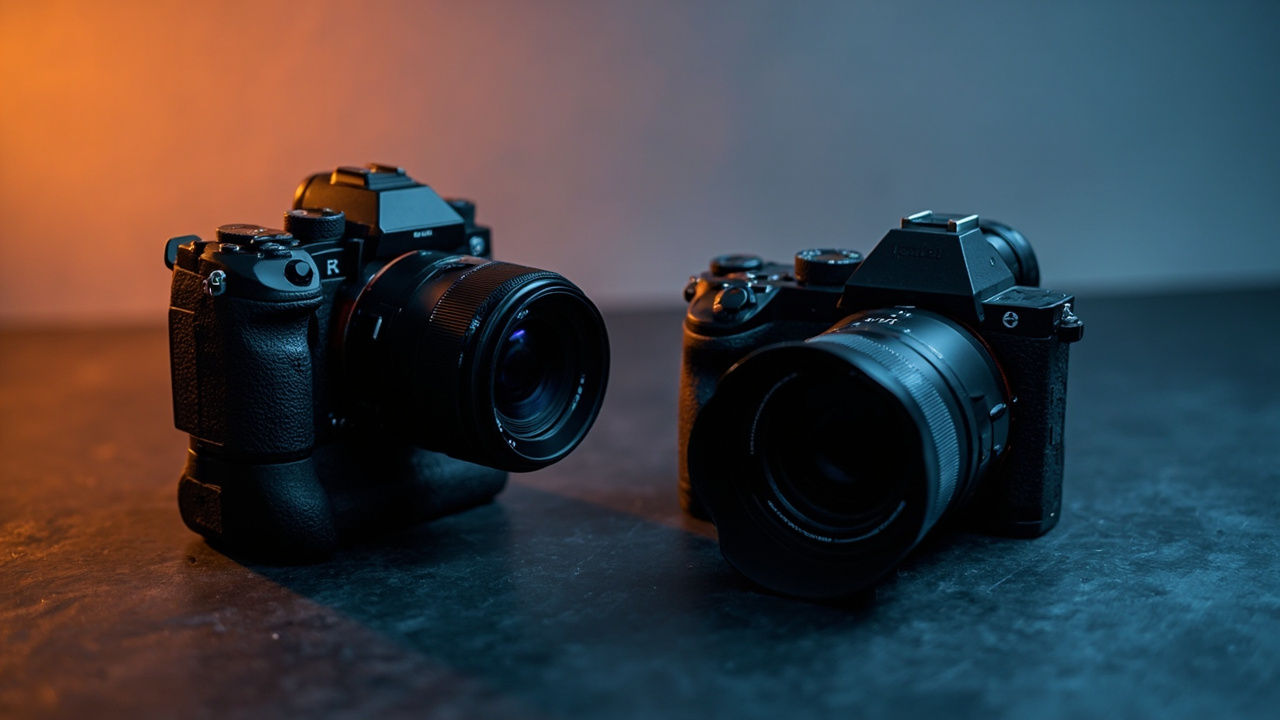
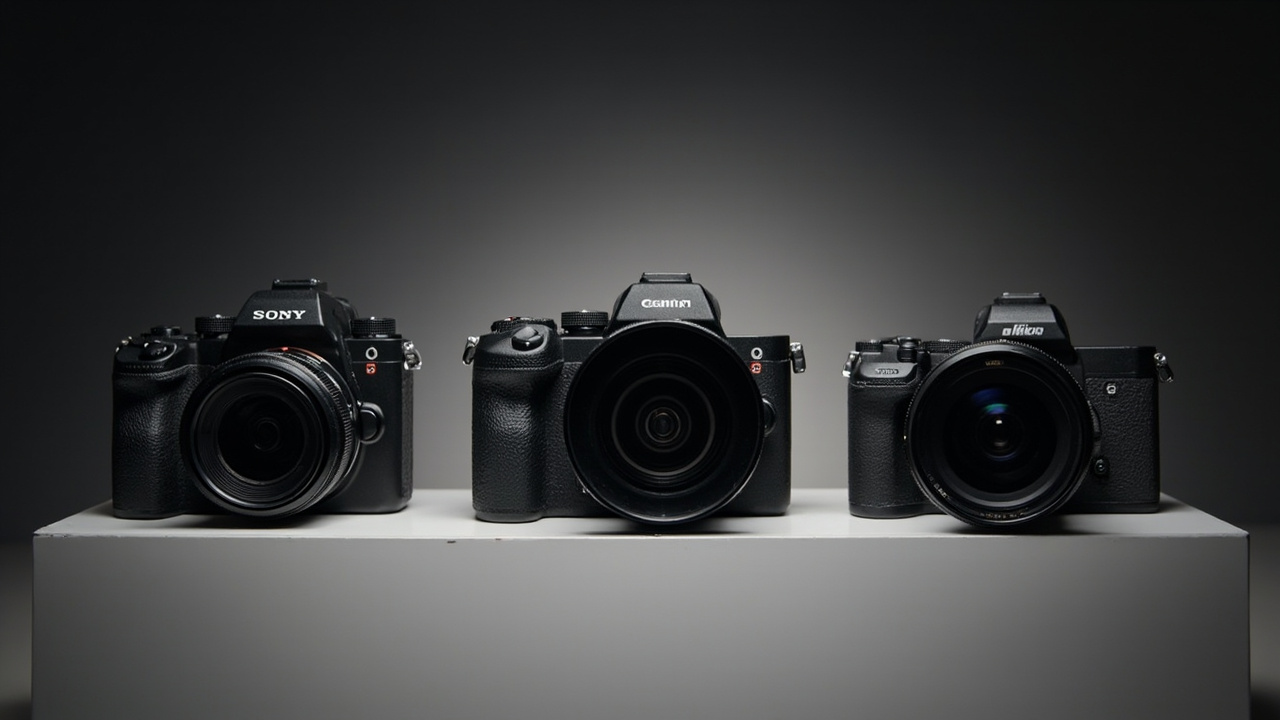
Three flagship mirrorless bodies define professional full-frame photography in 2026. The Sony A1 II ($6,499 MSRP, available December 2024) is the second-generation stacked 50.1MP all-rounder aimed squarely at commercial print, sports, and hybrid shooters. The Canon EOS R1 ($6,299 MSRP, available November 2024) is Canon’s first dedicated flagship R-system body — a 24.2MP stacked sensor built for 40 fps electronic bursts and 6K RAW video. The Nikon Z9 ($5,499 MSRP, available December 2021, still in production with continuous firmware updates through 2026) is the value-priced original flagship with 45.7MP, an integrated vertical grip, and the longest real-world battery life of the three.
The MSRP gap between the cheapest and most expensive body in this comparison is $1,000. Over a realistic 5-year ownership cycle, the system-level gap — lenses, batteries, media, accessories — grows to $2,000–$4,000 once you factor in the entire ecosystem. That is the difference between financing the next flagship body out of pocket and reaching for a card.
This comparison is not about which camera has the most flattering spec sheet — all three are excellent. It is about which one delivers more value per dollar for the work you actually shoot, and which ecosystem protects you from sunk-cost lock-in over a 5-year span.

The Verdict First
- Pick the Nikon Z9 ($5,499) if you shoot sports, wildlife, photojournalism, or weddings, want the longest battery life in the class (~740 shots CIPA), prefer the integrated vertical grip for portrait-orientation work, want the cheapest total cost of ownership over 5 years, and are fine with 45.7MP instead of 50MP. It also matches or beats the other two on 8K video capability with the most recent firmware.
- Pick the Sony A1 II ($6,499) if you need 50.1MP for commercial print, gallery work, or any discipline that benefits from heavy cropping, prefer the lightest body in the class (743 g), or already own Sony E-mount lenses and want the smoothest system continuity. It is also the strongest AI-driven subject-detection refinement after five generations of refinement.
- Pick the Canon EOS R1 ($6,299) if you shoot action-first (40 fps vs 30 fps), need 6K RAW internal video at 60p, want the longest battery life (LP-E19, ~1,200 shots), or are already invested in Canon RF lenses. It has the most rugged build in the group and the most responsive mechanical-feel ergonomics for cold-weather sports work.
- Skip all three if you actually only shoot for 30 minutes a week — a Sony A7 V ($2,799) or Canon R5 Mark II ($4,299) covers 80% of the use cases for half or a third of the price. Flagship bodies earn their cost only at 200+ shoot-days/year.
Cost score: 79/100. The Nikon Z9 is the runaway value winner at the body level; the Sony A1 II is the resolution and ecosystem winner; the Canon EOS R1 wins on speed and battery. None of these are “cheap” choices — they are all $5,500+ professional tools — but the gap in total ownership cost between the Z9 and A1 II is meaningful enough to fund a couple of high-end Z-mount zooms.

Key Comparison Points
Price vs Real Cost Per Use
Sticker price is the smallest lever here. Working pros typically replace batteries, CFexpress cards, and grip accessories every 18–36 months, and a flagship body is usually retired after 5 years. That is roughly 1,000–1,250 shoot-days per ownership cycle for active pros, or ~50–250 shoot-days/year for enthusiastic amateurs.
| Cost Item | Sony A1 II | Canon EOS R1 | Nikon Z9 |
|---|---|---|---|
| Body MSRP (mid-2026) | $6,499 | $6,299 | $5,499 |
| Street price variability | ~$6,499 (Sony rarely discounts) | ~$6,299 (Canon rarely discounts) | $5,499 (occasionally $5,299 on sale) |
| Battery model | NP-FZ100 (~$110 each) | LP-E19 (~$140 each) | EN-EL18d (~$110 each, often discounted in bundles) |
| Battery life (CIPA, real-world) | ~420–530 shots | ~1,200 shots | ~740 shots |
| Spare batteries needed (typical shoot day) | 3–4 | 1–2 | 2 |
| Media slots | 2× CFexpress Type A | 2× CFexpress Type B | 1× CFexpress Type B + 1× SD UHS-II |
| 1 TB CFexpress card (best-available) | ~$320 (Type A) | ~$200 (Type B) | ~$200 (Type B) |
| Vertical grip | Add-on VG-C5 (~$450) | Add-on BG-R20 (~$400) | Integrated (no extra cost) |
| 5-year battery + media + grip overhead | ~$1,150 | ~$900 | ~$550 |
| 5-year total (body + overhead) | ~$7,650 | ~$7,200 | ~$6,050 |
Sources: Sony α1 II product page, Canon EOS R1 product page, Nikon Z9 product page, and B&H/Adorama listed prices as of July 2026.
Five takeaways from this table:
- Body MSRP alone puts Nikon Z9 $1,000 below the other two. That $1,000 immediately buys a Nikon Z 24–70mm f/2.8 S or a Sony FE 24–70mm f/2.8 GM II (if you are switching ecosystems).
- The Canon R1’s battery advantage is the most underrated cost lever. A single LP-E19 covers a 1,200-shot day that requires 3–4 NP-FZ100 charges on the Sony or 2 EN-EL18d cells on the Nikon. Over 5 years, the Canon buys back roughly $200–$400 in spare batteries and charger cycles.
- CFexpress Type A cards (Sony) cost roughly 60% more per TB than Type B (Canon/Nikon). That is a real cost if you shoot sports or video where a 1 TB card fills in 90 minutes.
- The Sony A1 II and Canon EOS R1 both require expensive add-on vertical grips. The Nikon Z9 has the grip built in. If you shoot portrait-orientation work (weddings, wildlife, sports), the integrated grip saves $400–$450 and adds zero balance compromise.
- 5-year total cost spans ~$1,600 between the Nikon Z9 ($6,050) and the Sony A1 II ($7,650). For working pros, that is meaningful. For amateurs, it is less material — but if you only shoot 100 days/year, the Nikon remains the most economical even adjusted for amortized battery/media overhead.
The lens ecosystem is the silent multiplier most reviews ignore:
| Ecosystem | Native flagship zoom trio (24–70, 70–200, 100–400 f/2.8–4 class) | Third-party support |
|---|---|---|
| Sony E-mount | $5,400–$7,200 (G-Master II) | Excellent — Tamron, Sigma, Tokina all certified |
| Canon RF-mount | $5,600–$8,000 (L-series) | Re-opened in 2024 (Sigma, Tamron); some restrictions remain |
| Nikon Z-mount | $4,800–$6,500 (S-line) | Opened April 2024; Sigma and Tamron now shipping native Z lenses |
If you already own lenses in any of these systems, switching bodies to match a sale price is a $4,000–$10,000 proposition once you sell and rebuy glass. That swamps the body-MSRP difference entirely.
Build Quality and Durability
All three are professional-grade magnesium-alloy bodies with deep weather sealing. They differ on weight, ergonomics, and operational durability.
| Build Spec | Sony A1 II | Canon EOS R1 | Nikon Z9 |
|---|---|---|---|
| Weight (with battery + card) | 743 g | 1,115 g | 1,340 g |
| Dimensions (W × H × D) | 128.9 × 96.4 × 80.8 mm | 157.6 × 149.5 × 83.5 mm | 149 × 149.5 × 90.5 mm |
| Shutter life rating | 500,000 cycles | 500,000 cycles | 400,000 cycles |
| Integrated vertical grip | No (add-on) | No (add-on) | Yes |
| Cooling | Passive (no vent) | Active vent (rear of body) | Passive (no vent) |
| LCD type | 4-axis tilting 3.2” | Fully-articulating 3.2” | 4-axis tilting 3.2” |
| EVF | 9.44M-dot OLED, 240 Hz | 9.44M-dot OLED | 3.69M-dot OLED, 60 Hz blackout-free |
| Card slots | 2× CFexpress Type A | 2× CFexpress Type B | 1× CFexpress Type B + 1× SD UHS-II |
| Weather sealing | Yes (pro grade) | Yes (pro grade) | Yes (pro grade) |
| Operating temperature rating | 0 °C to 40 °C | 0 °C to 45 °C | −10 °C to 40 °C |
Sources: Sony α1 II specifications, Canon EOS R1 specifications, Nikon Z9 specifications
The Z9 is the heaviest body, but the weight buys the integrated vertical grip. For photographers who shoot 50%+ of their frames in portrait orientation (weddings, wildlife, sports), the integrated grip is materially better-balanced than any add-on — and saves $400–$450 outright. The Sony A1 II is the lightest by a wide margin (~400 g less than the Nikon), which matters most for travel, hiking, and overhead-crowd event work.
The Canon EOS R1’s active cooling vent is a meaningful advantage for long-form 6K RAW internal recording — the Sony and Nikon cap 8K/6K recording times due to thermal throttling, while the Canon can record 6K RAW at 60p for substantially longer sessions. That vent does add a small ingress point that becomes a long-term maintenance consideration in dusty or humid environments.
The Nikon Z9’s lower EVF resolution (3.69M dots vs 9.44M on the other two) is the spec that gets the most flak, but in real-world use, the blackout-free shooting experience at 60 Hz with a stacked sensor makes the lower resolution a non-issue for sports and action shooters. For studio work where you spend hours staring through the viewfinder checking focus, the Sony and Canon EVFs are noticeably sharper.
Feature Breakdown
Sensor and Image Quality
- Sony A1 II: 50.1 MP stacked Exmor RS BSI CMOS, mechanical + electronic shutter
- Canon EOS R1: 24.2 MP stacked BSI CMOS, mechanical + electronic shutter
- Nikon Z9: 45.7 MP stacked BSI CMOS, electronic shutter only (no mechanical)
The Sony’s 50.1MP sensor is the resolution leader, producing files with the most cropping headroom and the largest print sizes without upscaling. The Nikon’s 45.7MP is essentially the professional workhorse standard — enough resolution for 30×40” gallery prints, more than enough for editorial use, and a slight edge in low-light per-pixel performance. The Canon’s 24.2MP is purpose-built for speed: smaller files mean faster write times, less storage pressure, and easier post-processing workflows when you are blasting through 1,500+ frames per game.
Autofocus
All three have AI-driven subject detection that genuinely works on real subjects (human eye, bird, animal, vehicle, plane). The Sony’s Real-Time Recognition AF has been refined across five generations of bodies and remains the standard-bearer. Canon’s Dual-Pixel Intelligent AF with the DIGIC Accelerator is the most aggressive subject-acquisition system at 40 fps — better than the Sony’s in fast, erratic movements. The Nikon Z9 has caught up dramatically with firmware updates through 2025–2026 and now matches Sony at still-life and wildlife, with a slight lag in chaotic motorsport scenarios.
In head-to-head comparisons (DPReview, Imaging Resource, PetaPixel, late 2024–early 2026 reviews), all three are within ~5% of each other on real-world keeper rates for sports and wildlife. The Canon wins in raw speed, the Sony wins in tight subject continuity, the Nikon wins in low-light EV-4 to EV-7 conditions.
Video
| Video Capability | Sony A1 II | Canon EOS R1 | Nikon Z9 |
|---|---|---|---|
| Highest internal resolution | 8K 30p (XAVC HS) | 6K RAW 60p | 8K 60p (N-RAW, firmware 5.0) |
| 4K max frame rate | 4K 120p (1.1× crop) | 4K 120p (no crop) | 4K 120p (no crop) |
| Internal RAW video | No (ProRes external only) | Yes, 6K RAW at 60p | Yes, 12-bit N-RAW at 8K |
| Recording time limit (8K/6K) | ~30 min thermal limit | Effectively unlimited (active cooling) | ~125 min (firmware 5.0) |
| Log profile | S-Log3, S-Cinetone | Canon Log 2, Log 3 | N-Log |
Sources: Sony α1 II video specifications, Canon EOS R1 video guide, Nikon Z9 firmware 5.0 release notes
For serious videographers, the Canon EOS R1 and Nikon Z9 are meaningfully better than the Sony A1 II at the high end. The Sony’s 8K 30p, 4K 120p with a 1.1× crop, and lack of internal RAW video make it the weakest video performer of the three — fine for stills-first hybrid shooters, frustrating for dedicated cinema work.
Battery and Field Reliability
The Canon EOS R1 has the longest battery life by a wide margin (~1,200 CIPA shots per LP-E19), the Nikon Z9 comes second at ~740 shots per EN-EL18d, and the Sony A1 II lands third at ~420–530 shots per NP-FZ100. For all-day sports or event work where charging infrastructure is unreliable, the Canon is the most forgiving.
Ergonomics and Workflow
- Sony A1 II: The most compact body with the deepest grip-to-body balance, the best for travel and overhead shooting. Menu system has the steepest learning curve but the most customization.
- Canon EOS R1: The most intuitive deep grip and the most “DSLR-like” feel for photographers coming from the Canon 1D X line. Three programmable control dials plus top-deck LCD.
- Nikon Z9: The most balanced body for portrait-orientation work with the integrated vertical grip. Two programmable control panels plus top-deck LCD. The menu system is the most user-friendly of the three.
Pros and Cons
Sony A1 II
Pros
- 50.1MP sensor — highest resolution in the class, allows heavy cropping without print-quality loss
- 30 fps with industry-leading 400 JPEG / 240 compressed RAW buffer
- Lightest body in the class (743 g) — best for travel, hiking, overhead shooting
- 8K 30p video — useful for occasional cinema-quality stills extraction
- Most mature AF system after five generations of refinement
- Deepest third-party lens ecosystem (Tamron, Sigma, Tokina all native E-mount)
- Compact form factor fits smaller camera bags
- No active cooling vent — more weather-sealed over the long term
Cons
- $6,499 — $1,000 more than the Nikon Z9 at body level
- 4K 120p has a 1.1× crop
- No internal RAW video (8K only, no RAW option)
- Lowest battery life in this group (~420–530 shots per NP-FZ100)
- CFexpress Type A cards cost roughly 60% more per TB than Type B
- Vertical grip is a $400–$450 add-on
- AI subject detection is excellent but evolutionary, not revolutionary
Canon EOS R1
Pros
- Fastest burst in the class at 40 fps electronic
- 6K RAW 60p internal video — best video feature set in the comparison
- Longest battery life (~1,200 shots per LP-E19) — easiest for all-day sports work
- No crop on 4K 120p video
- Lower card cost (CFexpress Type B is cheaper per TB than Type A)
- Fully-articulating LCD — best for vlogging and self-recording
- $200 cheaper than the Sony A1 II at MSRP
- Active cooling enables essentially unlimited 6K RAW recording time
- Most rugged professional build in the comparison (similar to 1D X lineage)
Cons
- Lowest resolution in the group at 24.2MP — limits print size and cropping headroom
- Heaviest body in the comparison (1,115 g) — more fatiguing for handheld all-day work
- Active cooling vent adds an ingress point for dust and moisture
- No SD card slot — requires CFexpress Type B for both slots
- Newest system (first dedicated R-system flagship) — less lens ecosystem maturity
- Vertical grip is a $400 add-on
- RF-mount has only been re-opened to third-party manufacturers since late 2024 — fewer native options than Sony/Nikon
Nikon Z9
Pros
- $5,499 — $1,000 less than the Sony, $800 less than the Canon at body level
- 45.7MP sensor — strong balance of resolution, low-light, and post-processing file size
- 8K 60p N-RAW internal video (firmware 5.0) — best high-resolution video option
- Longest operating temperature range (−10 °C to 40 °C)
- Integrated vertical grip — best balance for portrait-orientation work, no add-on cost
- CFexpress Type B + SD UHS-II dual slot — most flexible media workflow
- Lowest 5-year total cost of ownership (~$6,050)
- 4 years of continuous firmware updates — the most-improved body of the three
- Most user-friendly menu system of the three
- No mechanical shutter — one fewer mechanical failure point
Cons
- Heaviest body (1,340 g) — most fatiguing for travel and handheld use
- No mechanical shutter — minor issue with very fast flash sync under bright conditions
- EVF resolution is the lowest (3.69M dots vs 9.44M on the other two)
- Slowest of the three at pure speed focus acquisition in chaotic motorsport scenarios
- Z-mount lens lineup, while excellent, has the smallest native selection of the three ecosystems
- Lower burst mode speed for RAW (30 fps) than the Canon (40 fps)
Best For / Skip If
Buy the Sony A1 II if:
- You shoot commercial print, gallery work, or any discipline where 50.1MP cropping headroom matters
- You travel, hike, or shoot handheld for long sessions and need the lightest possible professional body
- You are already invested in Sony E-mount lenses (G-Master, G-Master II, or third-party Sigma/Tamron)
- You need the most refined AI subject detection after five generations of body releases
- You primarily shoot stills with occasional video — not a dedicated cinema workflow
Skip the Sony A1 II if:
- $1,000 matters at the body level (or your shoot volume doesn’t justify it)
- You need serious video RAW recording (the A1 II’s lack of internal RAW is a deal-breaker for cinema work)
- You shoot all-day events and don’t want to carry 3–4 spare batteries
- You need the fastest possible mechanical-feel autofocus for chaotic motorsport scenarios
Buy the Canon EOS R1 if:
- You shoot action-first: sports, motor racing, or any discipline where 40 fps burst and the longest battery life matter
- You are a working videographer who needs 6K RAW 60p internal recording without an external recorder
- You already own Canon RF L-series lenses and want the flagship body to match
- You shoot in cold weather or harsh environments where the −10 °C operating rating matters
- You value ergonomics over portability — the 1,115 g body is well-balanced for full-day hold
Skip the Canon EOS R1 if:
- You need 50MP+ resolution for print or cropping workflows
- You travel or hike and want the lightest body
- Your existing lens ecosystem is Sony E-mount or Nikon Z-mount
- You prefer a fully-articulating screen for vlogging (the Canon has it actually — keep this only if other specs fit)
Buy the Nikon Z9 if:
- You shoot sports, wildlife, photojournalism, or weddings and want the most economical flagship
- You need the longest battery life in the class after the Canon — for full-day wedding or event work
- You want the integrated vertical grip for portrait-orientation photography without an add-on
- You want the lowest 5-year cost of ownership in the flagship category
- You shoot in cold-weather environments (down to −10 °C rated)
- You want the most user-friendly menu and the most continuously-improved firmware of the three
Skip the Nikon Z9 if:
- You need 50MP+ resolution (the A1 II has 50.1, the Z9 has 45.7)
- You travel light and need the lightest flagship body (the Z9 is 400 g heavier than the A1 II)
- You shoot motorsport or chaotic fast action where the Canon’s 40 fps burst speed is meaningful
- Your existing lens ecosystem is Sony E-mount or Canon RF
Skip all three if:
- You shoot fewer than 50 sessions per year — the Sony A7 V ($2,799), Canon R5 Mark II ($4,299), or Nikon Z8 ($3,999) covers 80%+ of the use cases for half or two-thirds of the price
- Your “flagship” body is going to sit in a closet three weekends a month — the real cost is in the lens ecosystem, which is the same regardless of body
- You primarily shoot video — a dedicated cinema camera (Sony FX3, Canon R5 C) gives you more video capability for less money

Bottom Line
The Sony A1 II vs Canon EOS R1 vs Nikon Z9 question is not really about which camera is best — all three are excellent tools, and each is purpose-built for a slightly different type of professional work. The honest answer is that any of these three will leave you with more image quality, more autofocus precision, and more video flexibility than 95% of professional photographers in 2026 actually need.
The real comparison is about value, system fit, and operating cost over a 5-year ownership cycle:
- Nikon Z9 ($5,499) wins on raw value. $1,000 cheaper at body level, longest battery life after the Canon, integrated vertical grip, and the lowest 5-year total cost of ownership (~$6,050). It also has the most friendly menu system and the most continuous firmware updates of the three. The 45.7MP sensor is more than enough for almost all professional work.
- Sony A1 II ($6,499) wins on resolution (50.1MP), weight (743 g, the lightest by a wide margin), and ecosystem depth. If you already own Sony E-mount lenses or need the highest-resolution flagship on the market, this is the answer. The $1,000 premium over the Nikon buys you 4.4MP and 600 g of weight savings — both meaningful, neither transformative.
- Canon EOS R1 ($6,299) wins on raw speed (40 fps), battery life (1,200 shots), and video (6K RAW 60p unlimited). It is the most dedicated “action-first” body of the three — the choice for sports photographers and hybrid cinema shooters who want the longest possible battery and the fewest recording time limits.
The $1,000 between the cheapest (Z9) and most expensive (A1 II) of these bodies is real but small relative to the system cost. The lenses you already own (or will buy) are 3–10× the cost of any body swap. If you are already in one mount system, that ecosystem lock-in matters more than the body price.
The genuinely smart shopper in 2026 thinks about total cost of ownership, not body MSRP. The Nikon Z9 delivers the lowest total cost. The Sony A1 II delivers the highest resolution and the lightest body. The Canon EOS R1 delivers the fastest burst and the longest battery. None of them are bad choices — but only one of them is the rational value pick for a working photographer who does not already have $5,000+ tied up in a competing lens system.
Buy smart. Get more value. — Choose the body that matches your actual shooting needs, your existing lens ecosystem, and the realistic 5-year cost of ownership. The flagship camera you can justify financially is the one that keeps shooting five years from now.
Sources: Sony α1 II product page | Canon EOS R1 product page | Nikon Z9 product page | Nikon Z9 firmware 5.0 release notes | Imaging Resource Sony α1 II review | DPReview Canon EOS R1 review | PetaPixel Nikon Z9 long-term review