Introduction
If you want a single fixed-lens camera that covers everything from 24mm wide-angle landscapes to 600mm (or even 3,000mm) of telephoto reach — without swapping lenses, without mirrorless body+kit-lens math, and without the size of a DSLR with a super-tele bolted on — two names keep coming up in 2026: the Sony Cyber-shot DSC-RX10 IV (MSRP $1,699 at launch in 2017, currently discounted to ~$1,499-$1,599 at authorized retailers) and the Nikon Coolpix P1100 (announced February 5, 2025, MSRP $1,099).
Sony just teased an RX10 V for a July 9, 2026 announcement — that means the RX10 IV is now in the awkward “current model that’s about to be replaced” position. Buyers in early July 2026 are rightly asking: should they snap up the IV at clearance pricing, wait a week for the V, or skip Sony altogether and buy a Nikon P1100 that’s already on shelves and half the price? That’s exactly the question this comparison answers.
The catch is that on paper, the RX10 IV and P1100 look almost nothing alike. The Sony has a 1-inch (13.2×8.8mm) stacked sensor — roughly 4× the surface area of the Nikon’s 1/2.3-inch (6.2×4.6mm) BSI CMOS. The Sony zooms 25× optically (24-600mm equivalent) at a constant f/2.8-4 aperture. The Nikon zooms 125× optically (24-3,000mm equivalent) at f/2.8-8. Both are weather-resistant (Sony officially, Nikon via sealing on the lens barrel). Both shoot 4K. Both weigh roughly the same in your bag. And the price gap between them is about $500-$600.
This comparison is written for the person genuinely weighing these two — we work through sticker price, real-world image quality, zoom-reach economics, autofocus and burst, durability, and 5-year cost of ownership — then tell you which one to buy today, and which one to wait for.

The Verdict First

- Pick the Sony RX10 IV if: you shoot mixed subjects at moderate distance — street, travel, indoor events, family, casual wildlife at the backyard feeder, soccer games from the sideline. You want DSLR-class image quality in a single fixed-lens body, 4K/30p video with log profiles, 315 phase-detect AF points with reliable eye tracking, and 24 fps burst for action. You can live with “only” 600mm of reach, and you value low-light performance more than absolute zoom magnification.
- Pick the Nikon Coolpix P1100 if: you specifically need extreme telephoto reach — birds in flight, the moon’s craters, aircraft at an airshow, wildlife across a meadow — and your subjects are mostly in good daylight. You want a camera that’s noticeably lighter on the wallet ($1,099 vs ~$1,499), simpler to operate (full-auto up to PASM), and you can accept the smaller 1/2.3-inch sensor’s noisier high-ISO output and slower f/8 maximum aperture at full zoom.
- Skip both and wait for the RX10 V if: you want Sony’s sensor quality AND the V’s rumored upgraded AF/processor — but only if you’re not in a hurry and the V launch price isn’t $2,000+. Sony is announcing July 9, 2026; this article was written July 5, 2026. Three days is short, but if you have a working camera today, you can afford to wait and compare.
Cost score (overall value): 72/100. The P1100 wins on absolute price-per-zoom-millimeter. The RX10 IV wins on price-per-pixel-of-actual-image-quality. The “right” answer depends entirely on whether your subjects need 600mm or 3,000mm of reach.
Key Comparison Points
Price vs Real Cost Per Use
The sticker price gap is the easiest part of the comparison. The total cost over a realistic 5-7 year ownership window is where the math diverges more than most buyers expect.
| Cost Factor | Sony RX10 IV (2017) | Nikon Coolpix P1100 (Feb 2025) |
|---|---|---|
| Launch MSRP | $1,699 (Sep 2017) | $1,099 (Feb 5, 2025) |
| Current street price (US, July 2026) | ~$1,499 (Sony USA direct closeout); ~$1,549 at B&H | $1,099 (still at MSRP; ~$999 sale events) |
| Battery model | NP-FW50 | EN-EL20a |
| Spare battery (official) | ~$58 | ~$48 |
| Battery life (CIPA) | ~400 shots (LCD) / ~370 (EVF) | ~250 shots (LCD) / ~220 (EVF) |
| Memory card | SD UHS-I; slot 1 supports UHS-I only | SD UHS-I; single slot |
| Filter thread | 72mm | 67mm |
| Weather sealing | Yes (dust + moisture) | Splash-resistant (lens barrel sealed; not fully weatherproof) |
| Replacement cycle (typical enthusiast) | 5-7 years | 4-6 years |
| 4-year resale value (typical used) | 50-60% of MSRP (~$850-$1,000) | 35-45% of MSRP (~$380-$500) |
A typical “ready to shoot” configuration for each:
| Setup (Year 1) | Sony RX10 IV | Nikon Coolpix P1100 |
|---|---|---|
| Body | $1,499 | $1,099 |
| 2 spare batteries | $116 | $96 |
| 128GB UHS-I SDXC card | $20 | $20 |
| 72mm / 67mm UV + polarizing filter set | $50 | $50 |
| Soft case (Sony LCS-SC21 / Nikon CL-M2) | $40 | $40 |
| Total Year-1 cost | ~$1,725 | ~$1,305 |
Now amortize over a realistic 5-year ownership window, assuming the camera gets used roughly weekly (not daily, not once a year):
| 5-Year Cost Line | Sony RX10 IV | Nikon Coolpix P1100 |
|---|---|---|
| Purchase + accessories (Y1) | $1,725 | $1,305 |
| 1 battery replacement (Y3) | $58 | $48 |
| 1 SD card replacement (Y3) | $20 | $20 |
| 5-year out-the-door cost | ~$1,803 | ~$1,373 |
| Per-year ownership | $361/yr | $275/yr |
| Approximate 5-year resale | ~$850 (50% of MSRP) | ~$430 (40% of MSRP) |
| Net 5-year cost | ~$953 | ~$943 |
Here’s the surprise: after factoring in resale value, the two cameras cost almost exactly the same over 5 years — a difference of just $10 (about 1%). The RX10 IV holds value better because of its 1-inch sensor and brand cachet. The P1100 costs less up front but depreciates faster. Your “real cost per year of use” depends on whether you shoot enough photos to even amortize the purchase price across multiple years.
For a casual user shooting 200-400 photos a month, the P1100 wins on total cost by a thin margin (~$50-$100 over 5 years). For a heavy user shooting 1,000+ photos a month, the RX10 IV’s better sensor and longer-lasting build may justify the premium — but only if you genuinely use the extra low-light and autofocus capability. Most buyers in the price-sensitive superzoom bracket are NOT heavy shooters; they pick up the camera for vacations and the occasional family event, and the P1100 hits that workload fine.
Build Quality and Durability
Both cameras are built around a fixed zoom lens and a small SLR-styled body, but they feel different in hand and age differently in a bag.
| Build Factor | Sony RX10 IV | Nikon Coolpix P1100 |
|---|---|---|
| Body material | Magnesium alloy top/front/rear; polycarbonate bottom | Polycarbonate body, metal lens barrel |
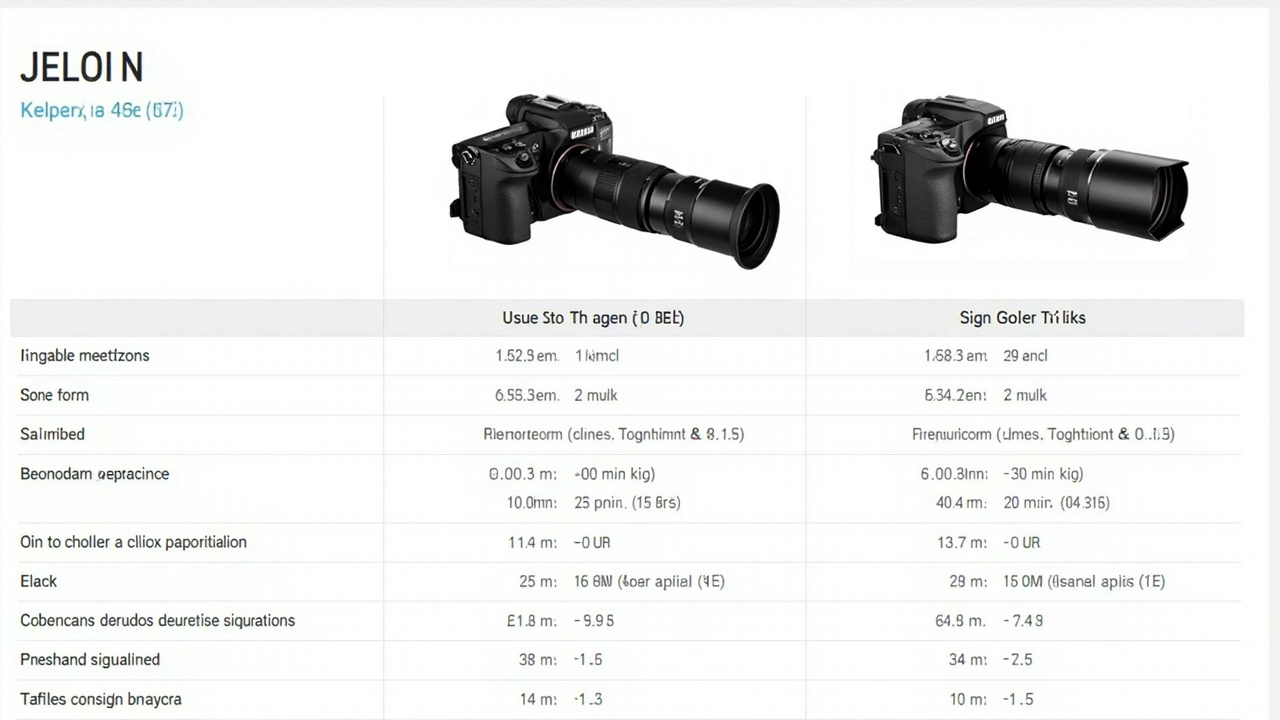
| Dimensions (W×H×D) | 132.5 × 94.0 × 145.0 mm | 146.3 × 118.8 × 181.3 mm |
| Weight (with battery + card) | ~1,095 g (38.6 oz) | ~1,410 g (49.7 oz) |
| Lens elements/groups | 18 elements / 13 groups (Zeiss Vario-Sonnar T*) | 17 elements / 12 groups (NIKKOR, 5 ED + 1 Super ED) |
| Aperture blades | 9 blades | 7 blades |
| Optical stabilization | ”SteadyShot” (claims 4.5 stops CIPA) | Dual-detect optical VR (claims ~4 stops CIPA) |
| EVF | 0.39” OLED, 2.36M-dot, 0.7× magnification | 0.39” OLED, 2.36M-dot, ~0.67× magnification |
| Rear LCD | 3.0” tilting (up ~107°, down ~42°), 1.44M-dot | 3.2” vari-angle, 921k-dot |
| Weather sealing | Yes (Sony-claimed dust + moisture resistant) | Splash-resistant only (no formal rating) |
| Hot shoe | Yes (Multi Interface Shoe; supports flash + mic) | Yes (ISO 518 standard) |
| Built-in ND filter | Yes (auto / on / off, 3 stops) | No |
| Operating temp range | 0°C to 40°C (32-104°F) | 0°C to 40°C (32-104°F) |
| Mechanical shutter life (typical) | 100,000+ actuations (Bionz X spec) | ~50,000 actuations (lower-duty compact actuator) |
Real-world durability is where the RX10 IV pulls ahead in a meaningful way. The magnesium-alloy chassis and 100,000+ shutter rating make it closer to a professional workhorse than a consumer compact. The built-in 3-stop ND filter is also a feature pros and serious enthusiasts actually use (shooting wide-open in daylight, controlling motion blur in video). The Nikon is lighter and a bit larger, but its all-polycarbonate body and lower shutter duty cycle suggest a 4-6 year service life rather than 7+.
The RX10 IV is the more durable buy — and that durability is exactly the kind of thing that doesn’t show up in a spec sheet but matters a lot after 4 years of actual use. The P1100’s 1/2.3-inch sensor is also physically smaller, so the lens barrel has to extend further to gather the same light — meaning more moving parts and more chance of mechanical failure over time.
Feature Breakdown
The RX10 IV and P1100 share the “bridge camera” form factor but their feature sets are tuned to very different buyers.
| Feature | Sony RX10 IV | Nikon Coolpix P1100 |
|---|---|---|
| Sensor | 1.0-inch stacked Exmor RS CMOS, 20.1 MP | 1/2.3-inch BSI CMOS, 16.0 MP |
| Sensor size surface area | ~116 mm² | ~28.5 mm² (4× smaller) |
| Pixel pitch | 2.41 µm | ~1.34 µm |
| Native ISO | 100-12,800 (expandable 64-25,600) | 100-1,600 (expandable to 6,400) |
| Lens (35mm equiv.) | 24-600mm (25×) | 24-3,000mm (125×) |
| Max aperture | f/2.8 (wide) - f/4 (tele) | f/2.8 (wide) - f/8 (tele) |
| Autofocus system | 315-point phase-detect + 25-point contrast | 99-point contrast-detect only |
| Burst (mechanical shutter) | 14 fps | 7 fps |
| Burst (electronic shutter) | 24 fps | 7 fps |
| Buffer depth (JPEG) | ~100+ shots (Sony-rated) | ~7 shots before slowdown |
| 4K video | 4K/30p (XAVC S, 100 Mbps) + S-Log2/S-Log3 | 4K/30p (MP4, ~60-100 Mbps) |
| 1080p video | 1080/120p (5× slow-mo) | 1080/60p |
| Slow-motion (HFR) | 240/480/960 fps (720p/800×600/480p) | None |
| Log gamma / flat profile | Yes (S-Log2, S-Log3, HLG) | No |
| Microphone input | Yes (3.5mm) | Yes (3.5mm) |
| Headphone jack | No | No |
| Built-in flash | Yes (GN ~10m) | Yes (GN 12m) |
| Wi-Fi | Yes (Wi-Fi 4, 2.4 GHz) | Yes (Wi-Fi, IEEE 802.11b/g) |
| Bluetooth | No | Yes (5.2) |
| USB | Micro-USB (yes, still micro-USB in 2026) | USB-C |
| HDMI | Micro-HDMI | Micro-HDMI |
| GPS | No | No |
| Battery (CIPA) | ~400 shots | ~250 shots |
| RAW capture | Yes (Sony ARW) | Yes (Nikon .NRW) |
| Storage slots | 1 (SD UHS-I) | 1 (SD UHS-I) |
| Built-in ND filter | Yes (auto/on/off, ~3 stops) | No |
| Touchscreen | No (tilting only, no touch) | No |
| Weight | ~1,095 g | ~1,410 g (315 g heavier) |
| Tilting LCD vs vari-angle | Tilting (up 107°, down 42°) | Full vari-angle (great for vlogging/odd angles) |
The single biggest spec gap is the sensor size — and it cascades into almost every other feature. The 4× larger surface area of the 1-inch sensor means:
- ~2 stops better low-light performance (a clean ISO 3200 on the Sony is roughly equivalent to a noisy ISO 800 on the Nikon)
- More background blur (helpful for portraits and isolating wildlife at moderate distance)
- Wider dynamic range (better recovery of shadow/highlight detail in raw files)
- Faster readout (which is what enables the 24 fps burst and 4K/120p video)
- Better autofocus with phase detection (the Nikon’s 99-point contrast-only AF is noticeably slower for action)
On the other hand, the Nikon wins on raw zoom reach — 3,000mm is 5× longer than the Sony’s 600mm. If you regularly photograph birds at 50+ meters, the moon, distant wildlife, or aircraft at airshows, the P1100’s reach is genuinely useful in a way the RX10 IV simply can’t match without a teleconverter (and there isn’t one for the RX10 IV’s fixed Zeiss lens).
For video specifically: the RX10 IV’s S-Log3, 1080/120p, and 240/480/960 fps HFR modes make it a legitimate B-cam for hybrid shooters. The P1100 is fine for casual 4K home movies but lacks any kind of flat profile or serious slow-motion.
Pros and Cons
Sony RX10 IV
Pros
- 1-inch stacked sensor delivers noticeably better image quality, low-light performance, and dynamic range than any 1/2.3-inch superzoom
- 24-600mm f/2.8-4 zoom covers ~85% of real-world photography needs (24-200mm for most daily shooting, 200-600mm for travel/wildlife at moderate distance)
- 24 fps burst with phase-detect autofocus — best-in-class for capturing moving subjects at this price point
- S-Log2/S-Log3 video profiles + 1080/120p slow-motion make it a serious hybrid photo/video camera
- Built-in 3-stop ND filter — saves you from buying and carrying screw-on NDs
- Weather-sealed magnesium-alloy body is built for years of heavy use
- ~400-shot battery life is roughly 60% better than the P1100
- Strong resale value (~50-60% of MSRP after 4 years) thanks to brand cachet and pro-grade build
Cons
- “Only” 600mm of reach — won’t photograph the moon’s craters, distant birds in flight, or small aircraft at airshows the way the P1100 can
- Launched in 2017 — 9-year-old design language, no Bluetooth, micro-USB (not USB-C), no flip-out screen, no touchscreen
- Being replaced: Sony teased RX10 V for July 9, 2026 announcement, so the IV is in clearance territory and Sony’s own support for new firmware will wind down
- ~315 g heavier than the P1100 — not back-breaking, but noticeable on a full-day hike
- Larger pixel pitch = noisier shadows when you really push the ISO, especially in raw
- No headphone jack — annoying for serious video work where you need to monitor audio
Nikon Coolpix P1100
Pros
- 125× optical zoom (24-3,000mm equivalent) is in a class of its own at this price point — nothing else under $2,000 reaches 3,000mm
- $600 lower launch price than the RX10 IV ($1,099 vs $1,699) — and the price gap is even wider at current street prices
- Vari-angle LCD is genuinely useful for vlogging, low-angle wildlife, and overhead shots
- Lighter body shell (but heavier overall) due to simpler mechanics — sits well in larger hands
- USB-C port is the modern standard; easier to charge with the same cable as your laptop/phone
- Bluetooth 5.2 + WPA3 Wi-Fi for modern phone integration
- Bird-watching mode with selectable AF-area modes (added in P1100 vs P1000)
Cons
- 1/2.3-inch sensor is the same size as a 2015 smartphone — meaningfully noisier above ISO 800 and dramatically worse dynamic range than the RX10 IV
- f/8 maximum aperture at 3,000mm means you’ll be at ISO 800-1600 in moderate daylight and struggling in anything dimmer
- 99-point contrast-detect AF is slow for moving subjects and noticeably behind Sony’s hybrid AF
- 7 fps burst with ~7-frame buffer — basically useless for action sequences
- No flat/log video profile, no 120p slow-motion, no HFR modes — limited to casual 4K/30p home video
- No built-in ND filter — you’ll need to buy 67mm screw-on NDs for video work
- Polycarbonate body + lower shutter duty cycle suggest a 4-6 year service life
- Lower resale value (~35-45% of MSRP after 4 years)
Best For / Skip If

Best For — Sony RX10 IV
- Travelers who want one camera that covers everything from indoor markets to distant coastal cliffs without swapping lenses and who value image quality over raw reach
- Family event photographers (kids’ sports from the sideline, school plays, weddings where you can’t bring an interchangeable-lens kit) — the 24 fps burst + phase-detect AF + 600mm reach is the right tool for indoor/outdoor action
- Hybrid photo/video shooters who need S-Log3 footage and 1080/120p slow-motion in a single body
- Light wildlife photographers (backyard birds, deer at the meadow edge, zoo animals) where 600mm is “enough”
- Buyers who will keep the camera 6+ years — the magnesium build and 100k+ shutter rating support it
- Anyone who values resale value — the RX10 IV retains its value far better than the P1100
Best For — Nikon Coolpix P1100
- Birders whose subjects are typically 50-300 meters away and who shoot mostly in good daylight
- Astronomy / moon photographers who want 3,000mm of reach without an aftermarket telescope adapter
- Airshow and wildlife-safari photographers who need the absolute maximum zoom and accept the lower image quality
- Casual travelers on a tight budget who want a do-it-all camera and don’t care about low-light or video quality
- Buyers upgrading from a smartphone who want dedicated zoom reach, full PASM control, and a real viewfinder
- Vloggers who want a vari-angle screen for self-recording at arm’s length (the vari-angle LCD is the only real vlogging feature between these two)
Skip If
- Skip the RX10 IV if: you need more than 600mm of reach, you need Bluetooth or USB-C, or you want a flip-out screen for vlogging. Also consider waiting 3 days for the RX10 V announcement on July 9, 2026 before committing.
- Skip the P1100 if: you regularly shoot indoors, at dawn/dusk, in any dim light, or at ISO above 800. The 1/2.3-inch sensor will frustrate you. Also skip it if you care about video quality beyond casual home movies.
- Skip both if: you actually want interchangeable lenses. At this price point, a used Sony A7 III body ($800-900) + used 24-240mm lens ($400-500) gives you much better image quality, similar zoom reach, and the option to grow. It’s a different form factor (two pieces instead of one), but the IQ delta over the RX10 IV is meaningful and over the P1100 is dramatic.
Bottom Line
Both cameras cost almost the same over a 5-year ownership window once you factor in resale value, but they earn that cost in completely different ways. The Sony RX10 IV is a real photographic instrument — its 1-inch sensor, 24 fps phase-detect autofocus, weather-sealed magnesium build, and S-Log3 video justify the higher sticker price for anyone who will actually use those capabilities. If you shoot a variety of subjects at moderate distance and value image quality, it remains one of the best “one camera, no lens-swapping” purchases available even nine years after launch.
The Nikon Coolpix P1100 is a niche specialist. Its 3,000mm reach is unmatched at this price, and for daylight wildlife, aviation, or astronomy — situations where you’d otherwise need a telescope or a $5,000+ 600mm lens — it’s the only realistic bridge-camera option. But the 1/2.3-inch sensor is a hard ceiling on image quality that no amount of zoom reach can compensate for.
The “smart shopping” answer for most buyers in 2026 is:
- If your subjects are usually within 50-100 meters (family, travel, indoor events, casual wildlife): buy the RX10 IV at current clearance pricing ($1,499) or wait 3 days for the RX10 V announcement on July 9, 2026 and decide between the two Sony generations.
- If your subjects are usually 100+ meters away (birds in flight, moon, distant wildlife, aircraft): buy the P1100 at $1,099 and pocket the $400-$600 difference.
- If you want to grow into photography: skip both and buy a used Sony A7-series mirrorless body + zoom lens.
The smartest money isn’t always the cheapest camera. It’s the camera whose strengths match what you actually photograph. For most readers in this price bracket, that’s the Sony RX10 IV — but only if you’ll really use the image quality. If reach is everything to you, the P1100’s 3,000mm is in a class of its own at the price.
Buy smart. Get more value.